Department of Chemistry, Chemical Biology, and Biomedical Engineering, Charles V. Schaefer School of Engineering and Sciences, Stevens Institute of Technology, Hoboken, NJ 07030, USA.
Biofouling. 2011 Aug;27(7):763-72. doi: 10.1080/08927014.2011.602188.
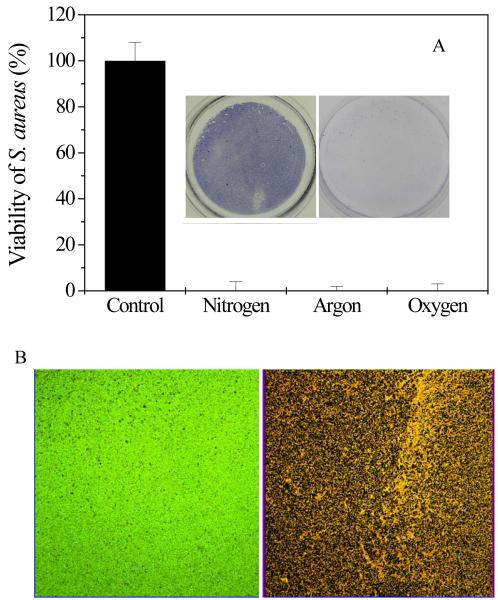
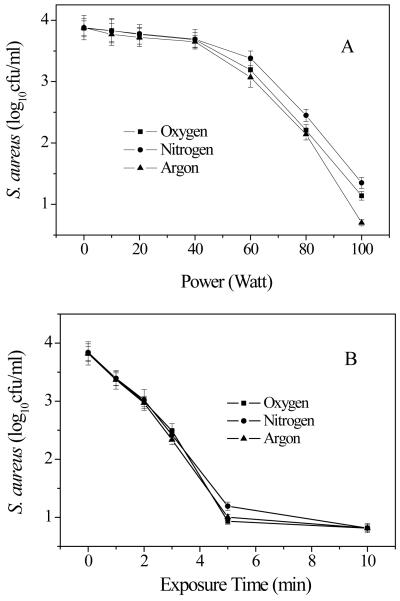
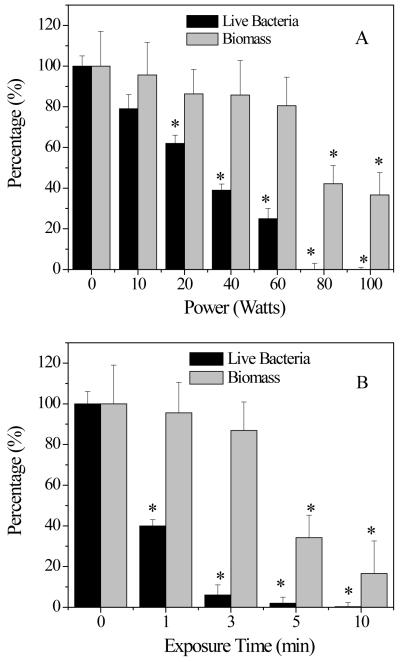
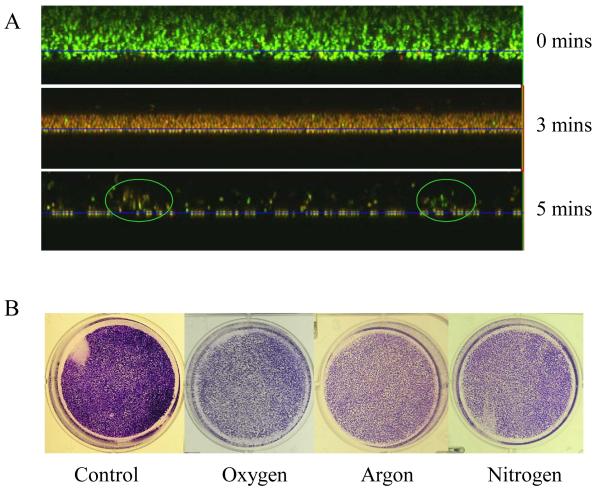
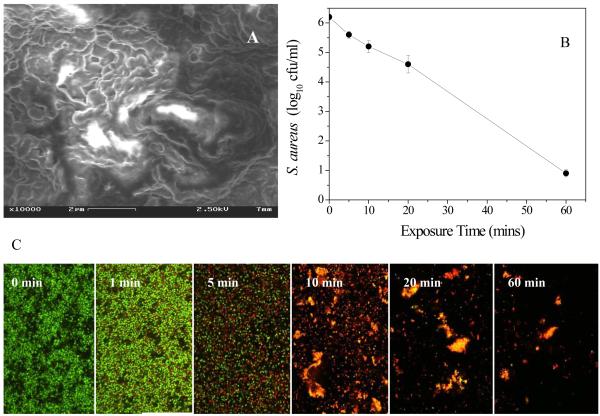
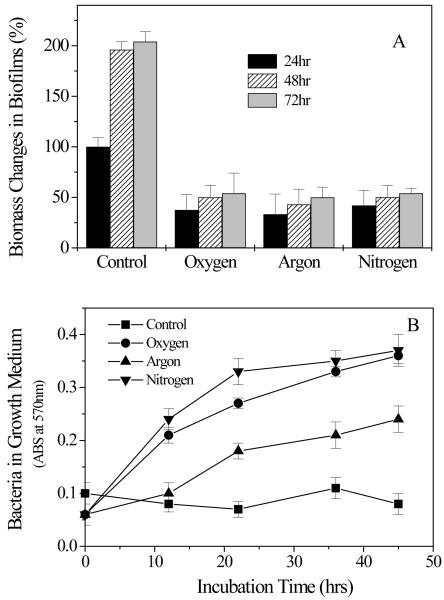
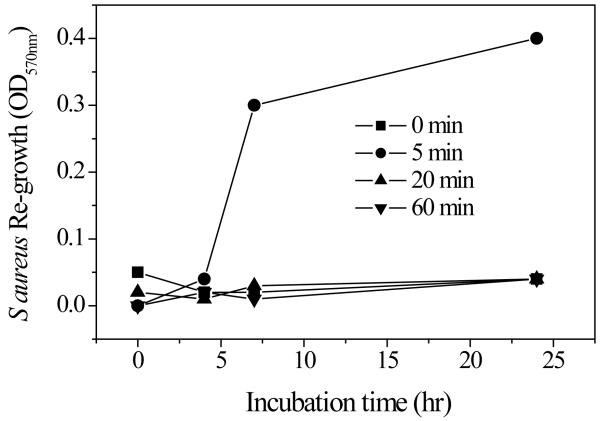
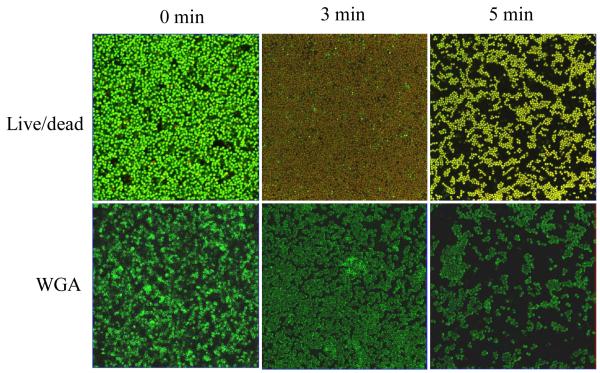
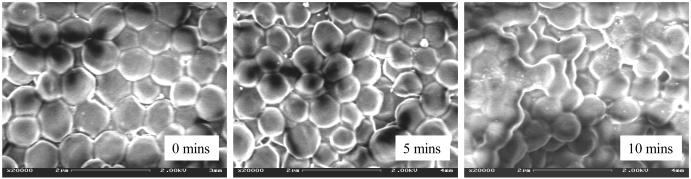
Formation of bacterial biofilms at solid-liquid interfaces creates numerous problems in both industrial and biomedical sciences. In this study, the susceptibility of Staphylococcus aureus biofilms to discharge gas generated from plasma was tested. It was found that despite distinct chemical/physical properties, discharge gases from oxygen, nitrogen, and argon demonstrated very potent and almost the same anti-biofilm activity. The bacterial cells in S. aureus biofilms were killed (>99.9%) by discharge gas within minutes of exposure. Under optimal experimental conditions, no bacteria and biofilm re-growth from discharge gas treated biofilms was found. Further studies revealed that the anti-biofilm activity of the discharge gas occurred by two distinct mechanisms: (1) killing bacteria in biofilms by causing severe cell membrane damage, and (2) damaging the extracellular polymeric matrix in the architecture of the biofilm to release biofilm from the surface of the solid substratum. Information gathered from this study provides an insight into the anti-biofilm mechanisms of plasma and confirms the applications of discharge gas in the treatment of biofilms and biofilm related bacterial infections.
在固液界面形成的细菌生物膜会给工业和生物医学科学带来诸多问题。本研究测试了金黄色葡萄球菌生物膜对等离子体产生的放电气体的敏感性。结果发现,尽管放电气体具有明显不同的化学/物理特性,但来自氧气、氮气和氩气的放电气体具有非常强大且几乎相同的抗生物膜活性。在接触放电气体几分钟内,生物膜中的细菌细胞(>99.9%)被杀死。在最佳实验条件下,未发现来自放电气体处理过的生物膜的细菌和生物膜再次生长。进一步的研究表明,放电气体的抗生物膜活性通过两种不同的机制发生:(1)通过严重破坏细胞膜导致生物膜中的细菌死亡,以及(2)破坏生物膜结构中的细胞外聚合物基质,从而将生物膜从固体基底表面释放出来。从这项研究中收集到的信息深入了解了等离子体的抗生物膜机制,并证实了放电气体在处理生物膜和与生物膜相关的细菌感染方面的应用。