Laboratory of Inflammation, Department of Pharmacology, Universidade Federal do Paraná, Curitiba, PR, Brazil.
Evid Based Complement Alternat Med. 2011;2011:908059. doi: 10.1093/ecam/neq026. Epub 2011 May 2.
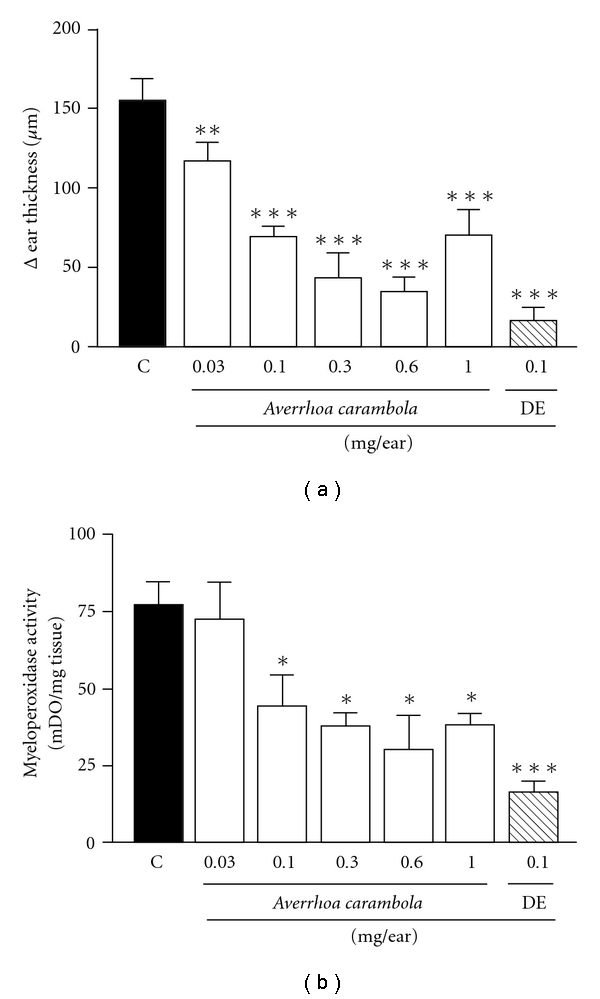
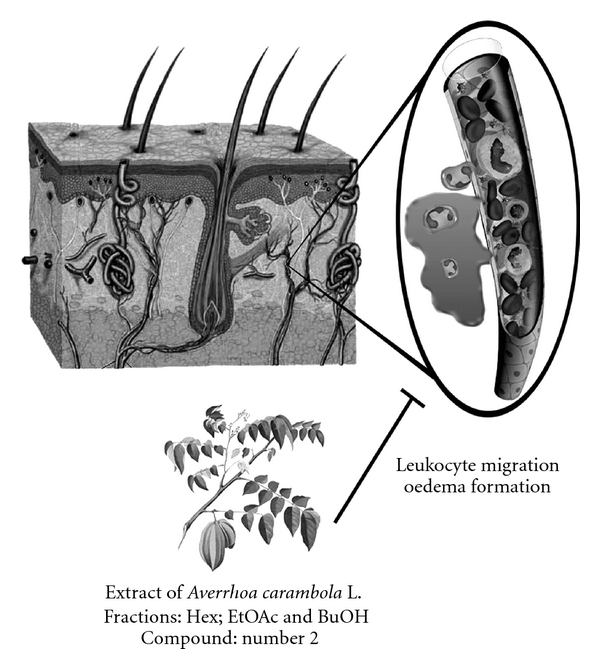
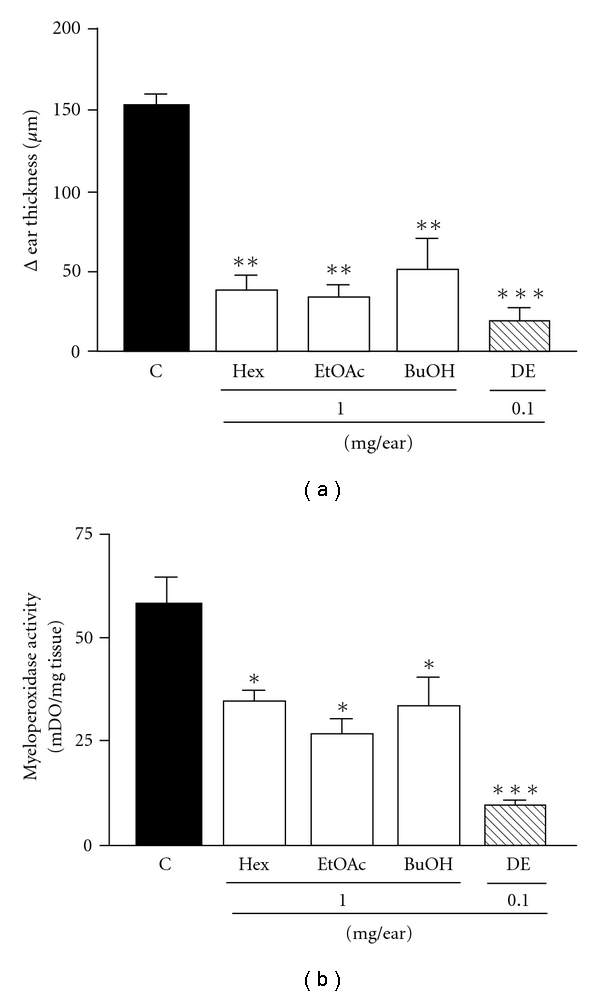
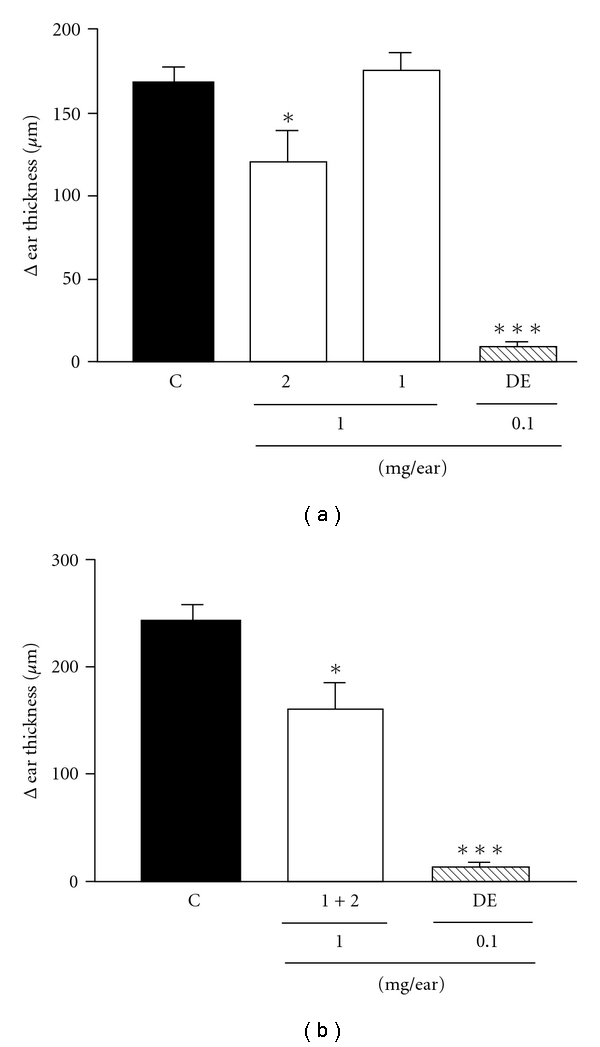
Inflammatory skin disorders, such as psoriasis and atopic dermatitis, are very common in the population; however, the treatments currently available are not well tolerated and are often ineffective. Averrhoa carambola L. (Oxalidaceae) is an Asian tree that has been used in traditional folk medicine in the treatment of several skin disorders. The present study evaluates the topical anti-inflammatory effects of the crude ethanolic extract of A. carambola leaves, its hexane, ethyl acetate, and butanol fractions and two isolated flavonoids on skin inflammation. Anti-inflammatory activity was measured using a croton oil-induced ear edema model of inflammation in mice. Topically applied ethanolic extract reduced edema in a dose-dependent manner, resulting in a maximum inhibition of 73 ± 3% and an ID(50) value of 0.05 (range: 0.02-0.13) mg/ear. Myeloperoxidase (MPO) activity was also inhibited by the extract, resulting in a maximum inhibition of 60 ± 6% (0.6 mg/ear). All of the fractions tested caused inhibition of edema formation and of MPO activity. Treatment with the ethyl acetate fraction was the most effective, resulting in inhibition levels of 75 ± 5 and 54 ± 8% for edema formation and MPO activity, respectively. However, treatment of mice with isolated compounds [apigenin-6-C-β-l-fucopyranoside and apigenin-6-C-(2″-O-α-l-rhamnopyranosyl)-β-l-fucopyranoside] did not yield successful results. Apigenin-6-C-(2″-O-α-l-rhamnopyranosyl)-β-l-fucopyranoside caused only a mild reduction in edema formation (28 ± 11%). Taken together, these preliminary results support the popular use of A. carambola as an anti-inflammatory agent and open up new possibilities for its use in skin disorders.
炎症性皮肤疾病,如银屑病和特应性皮炎,在人群中非常常见;然而,目前可用的治疗方法不太耐受,而且往往无效。杨桃(酢浆草科)是一种亚洲树,在传统民间医学中被用于治疗多种皮肤疾病。本研究评估了杨桃叶粗乙醇提取物、其正己烷、乙酸乙酯和正丁醇部分以及两种分离的类黄酮对皮肤炎症的局部抗炎作用。使用小鼠巴豆油诱导的耳肿胀炎症模型测量抗炎活性。局部应用乙醇提取物以剂量依赖的方式减轻肿胀,最大抑制率为 73 ± 3%,ID(50)值为 0.05(范围:0.02-0.13)mg/耳。提取物还抑制髓过氧化物酶(MPO)活性,最大抑制率为 60 ± 6%(0.6 mg/耳)。所有测试的馏分均导致水肿形成和 MPO 活性的抑制。用乙酸乙酯馏分治疗的效果最为显著,导致水肿形成和 MPO 活性的抑制水平分别为 75 ± 5%和 54 ± 8%。然而,用分离化合物[芹菜素-6-C-β-l-岩藻糖苷和芹菜素-6-C-(2″-O-α-l-鼠李吡喃糖苷基)-β-l-岩藻糖苷]治疗小鼠并未取得成功结果。芹菜素-6-C-(2″-O-α-l-鼠李吡喃糖苷基)-β-l-岩藻糖苷仅导致水肿形成轻度减少(28 ± 11%)。综上所述,这些初步结果支持杨桃作为抗炎剂的民间应用,并为其在皮肤疾病中的应用开辟了新的可能性。