Department of Medicine and Molecular Science, Gunma University Graduate School of Medicine, 3-39-15 Showa-machi, Maebashi 371-8511, Japan.
Allergy Asthma Clin Immunol. 2011 Sep 19;7(1):15. doi: 10.1186/1710-1492-7-15.
The fractional concentration of nitric oxide in exhaled air (FENO) is used as a biomarker of eosinophilic airway inflammation. FENO is increased in patients with asthma. The relationship between subjective asthma symptoms and airway inflammation is an important issue. We expected that the subjective asthma symptoms in women might be different from those in men. Therefore, we investigated the gender differences of asthma symptoms and FENO in a survey of asthma prevalence in university students.
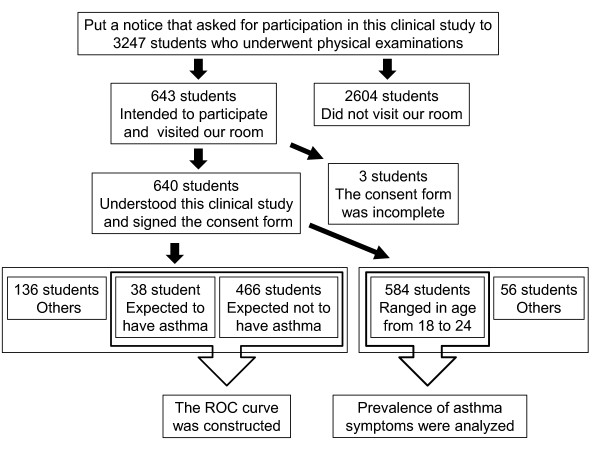
The information about asthma symptoms was obtained from answers to the European Community Respiratory Health Survey (ECRHS) questionnaire, and FENO was measured by an offline method in 640 students who were informed of this study and consented to participate.
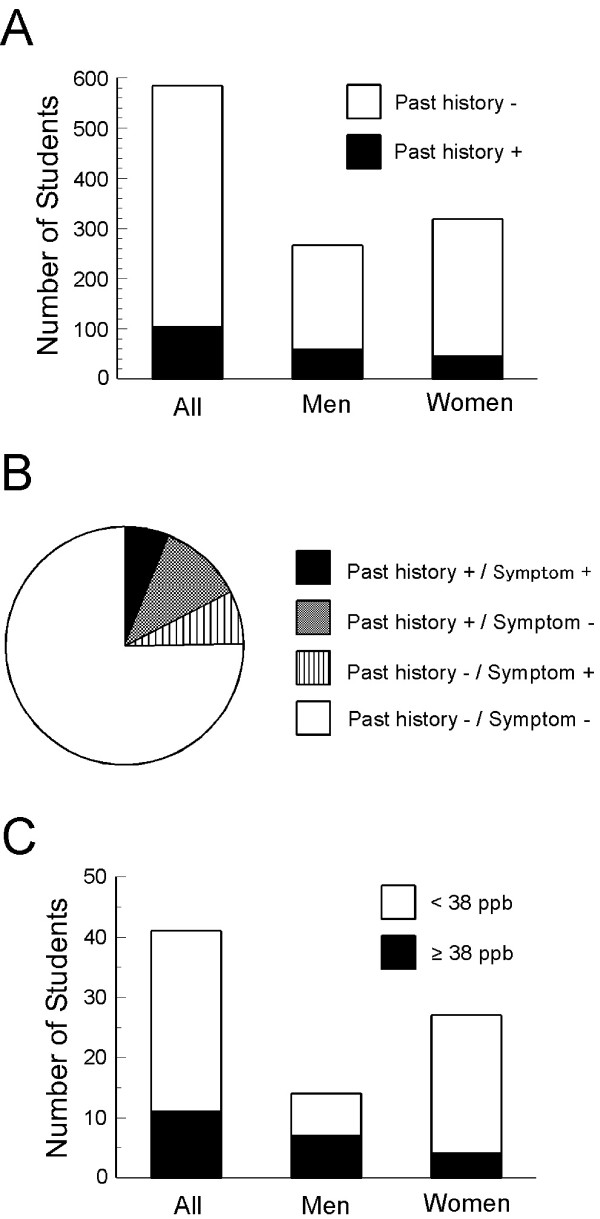
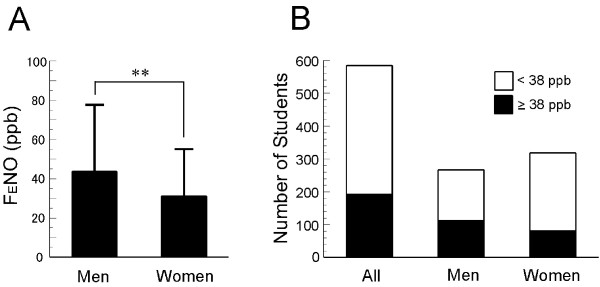
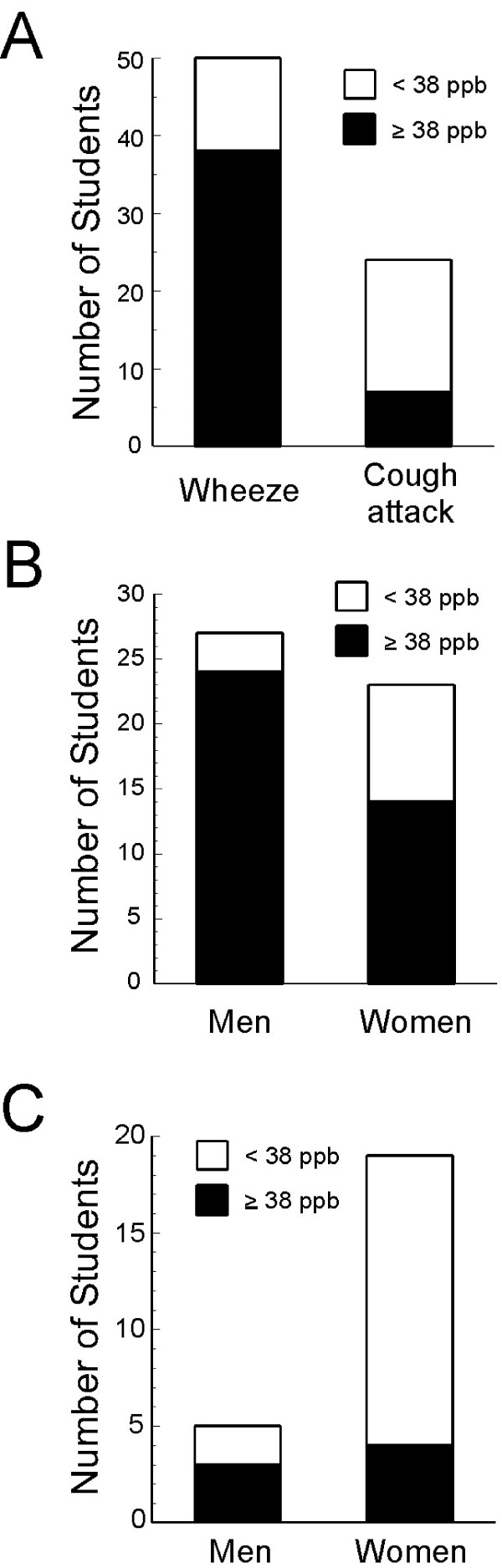
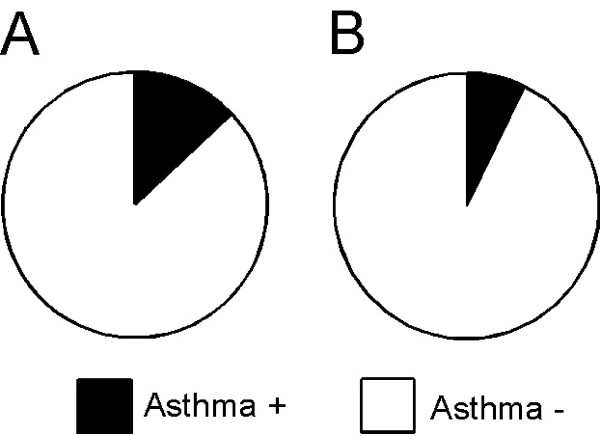
The prevalence of asthma symptoms on the basis of data obtained from 584 students (266 men and 318 women), ranging in age from 18 to 24 years, was analyzed. Wheeze, chest tightness, an attack of shortness of breath, or an attack of cough within the last year was observed in 13.2% of 584 students. When 38.0 ppb was used as the cut-off value of FENO to make the diagnosis of asthma, the sensitivity was 86.8% and the specificity was 74.0%. FENO was ≥ 38.0 ppb in 32.7% of students. FENO was higher in men than in women. The prevalence of asthma symptoms estimated by considering FENO was 7.2%; the prevalence was greater in men (9.4%) than women (5.3%). A FENO ≥ 38.0 ppb was common in students who reported wheeze, but not in students, especially women, who reported cough attacks.
The prevalence of asthma symptoms in university students age 18 to 24 years in Japan was estimated to be 7.2% on the basis of FENO levels as well as subjective symptoms. Gender differences were observed in both FENO levels and asthma symptoms reflecting the presence of eosinophilic airway inflammation.
UMIN000003244.
呼气中一氧化氮的分数浓度(FENO)可作为嗜酸性气道炎症的生物标志物。哮喘患者的 FENO 升高。主观哮喘症状与气道炎症之间的关系是一个重要问题。我们预计女性的主观哮喘症状可能与男性不同。因此,我们在一项大学生哮喘患病率调查中研究了哮喘症状的性别差异和 FENO。
哮喘症状的信息是通过回答欧洲社区呼吸健康调查(ECRHS)问卷获得的,并且通过离线方法在 640 名知情并同意参与的学生中测量了 FENO。
对年龄在 18 至 24 岁的 584 名学生(266 名男性和 318 名女性)的数据进行了哮喘症状流行率分析。584 名学生中有 13.2%在过去一年中出现喘息、胸闷、呼吸急促发作或咳嗽发作。当将 FENO 的 38.0 ppb 作为诊断哮喘的截止值时,灵敏度为 86.8%,特异性为 74.0%。32.7%的学生 FENO 为≥38.0 ppb。男性的 FENO 高于女性。考虑 FENO 后,哮喘症状的患病率为 7.2%;男性(9.4%)高于女性(5.3%)。报告喘息的学生中 FENO≥38.0 ppb 很常见,但报告咳嗽发作的学生中则不然,尤其是女性。
根据 FENO 水平以及主观症状,日本 18 至 24 岁大学生的哮喘症状患病率估计为 7.2%。在 FENO 水平和反映嗜酸性气道炎症存在的哮喘症状方面均观察到性别差异。
UMIN000003244。