Neuroscience Program, Brandeis University Waltham, MA, USA.
Front Comput Neurosci. 2011 Sep 12;5:37. doi: 10.3389/fncom.2011.00037. eCollection 2011.
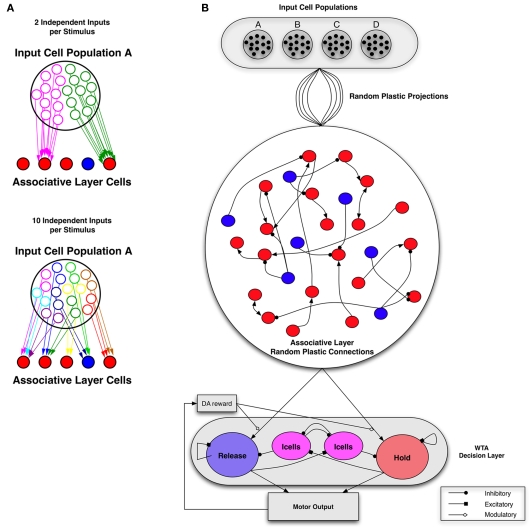
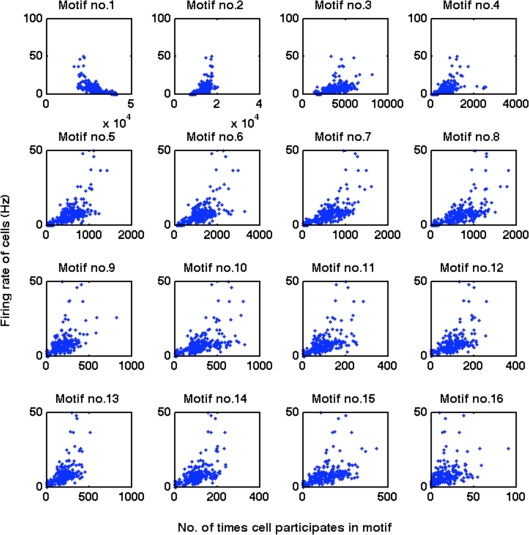
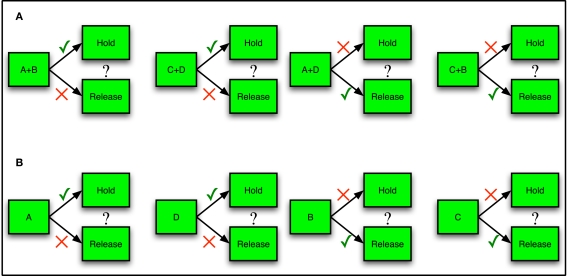
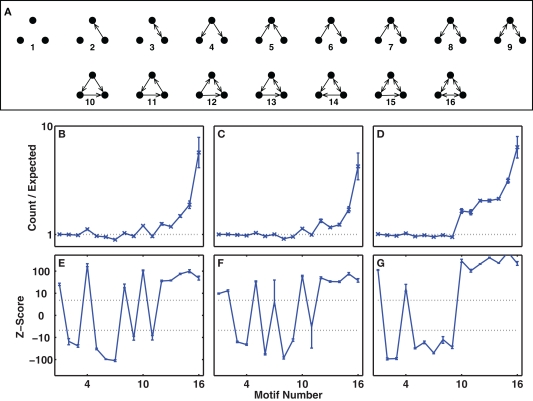
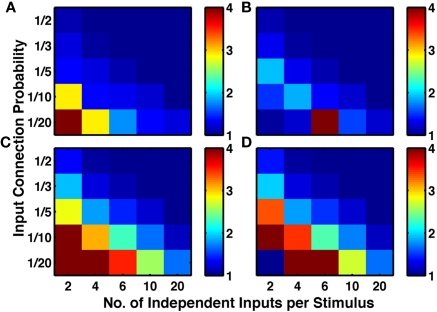
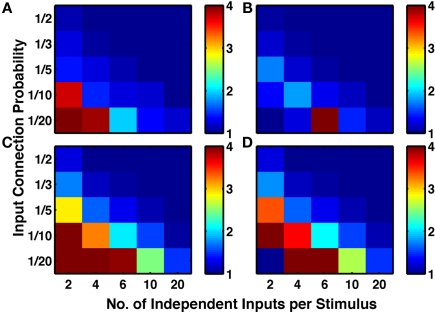
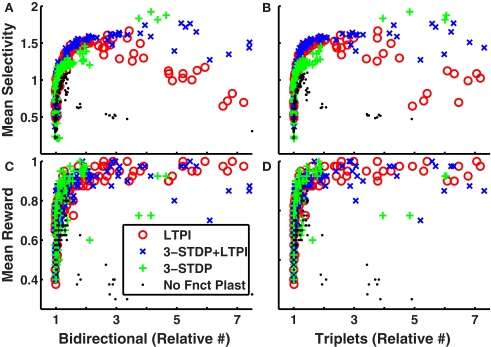
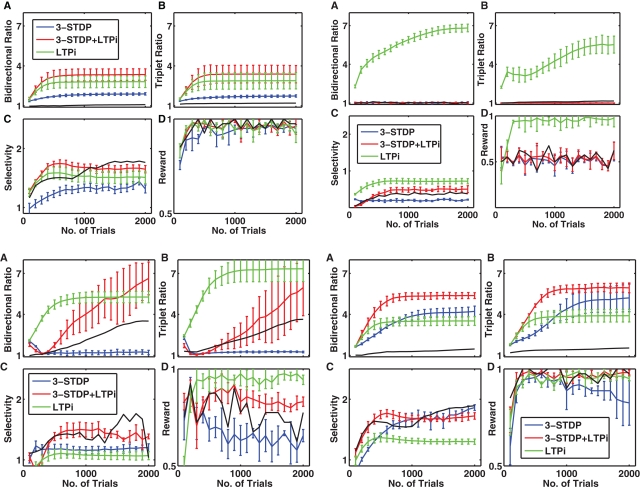
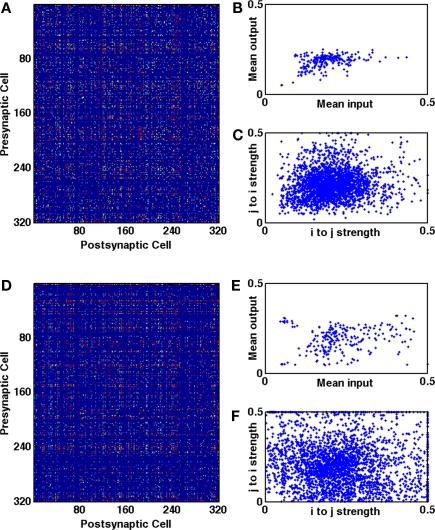
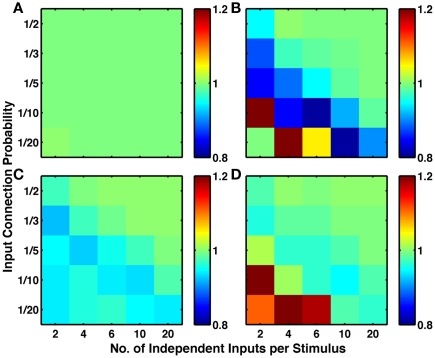
The pattern of connections among cortical excitatory cells with overlapping arbors is non-random. In particular, correlations among connections produce clustering - cells in cliques connect to each other with high probability, but with lower probability to cells in other spatially intertwined cliques. In this study, we model initially randomly connected sparse recurrent networks of spiking neurons with random, overlapping inputs, to investigate what functional and structural synaptic plasticity mechanisms sculpt network connections into the patterns measured in vitro. Our Hebbian implementation of structural plasticity causes a removal of connections between uncorrelated excitatory cells, followed by their random replacement. To model a biconditional discrimination task, we stimulate the network via pairs (A + B, C + D, A + D, and C + B) of four inputs (A, B, C, and D). We find networks that produce neurons most responsive to specific paired inputs - a building block of computation and essential role for cortex - contain the excessive clustering of excitatory synaptic connections observed in cortical slices. The same networks produce the best performance in a behavioral readout of the networks' ability to complete the task. A plasticity mechanism operating on inhibitory connections, long-term potentiation of inhibition, when combined with structural plasticity, indirectly enhances clustering of excitatory cells via excitatory connections. A rate-dependent (triplet) form of spike-timing-dependent plasticity (STDP) between excitatory cells is less effective and basic STDP is detrimental. Clustering also arises in networks stimulated with single stimuli and in networks undergoing raised levels of spontaneous activity when structural plasticity is combined with functional plasticity. In conclusion, spatially intertwined clusters or cliques of connected excitatory cells can arise via a Hebbian form of structural plasticity operating in initially randomly connected networks.
皮质兴奋性细胞之间重叠树突的连接模式是非随机的。具体来说,连接之间的相关性产生聚类——具有高概率相互连接的细胞簇,但与其他空间交织的细胞簇中的细胞连接的概率较低。在这项研究中,我们最初对具有随机、重叠输入的稀疏、递归、放电神经元网络进行建模,以研究何种功能和结构突触可塑性机制将网络连接塑造为体外测量的模式。我们的结构可塑性赫布学习机制导致不相关的兴奋性细胞之间的连接被去除,然后随机替换。为了模拟双条件辨别任务,我们通过两对输入(A+B、C+D、A+D 和 C+B)来刺激网络。我们发现,产生对特定成对输入最敏感的神经元的网络——这是计算的基石,对皮层至关重要——包含了在皮质切片中观察到的兴奋性突触连接过度聚类。相同的网络在网络完成任务能力的行为读数中产生最佳性能。作用于抑制性连接的可塑性机制,即抑制性长时程增强,与结构可塑性结合时,通过兴奋性连接间接增强兴奋性细胞的聚类。兴奋性细胞之间的依赖于速率的(三联体)形式的尖峰时间依赖可塑性(STDP)效果较差,而基本 STDP 则有害。当结构可塑性与功能可塑性结合时,聚类也会出现在受单一刺激刺激的网络中和自发性活动水平升高的网络中。总之,通过在最初随机连接的网络中运行赫布形式的结构可塑性,可以产生空间交织的连接兴奋性细胞簇或细胞簇。