Howard Hughes Medical Institute, University of Texas, Southwestern Medical Center, Dallas, TX 75390-9050, USA. .
Proteins. 2011;79 Suppl 10(Suppl 10):59-73. doi: 10.1002/prot.23181. Epub 2011 Oct 14.
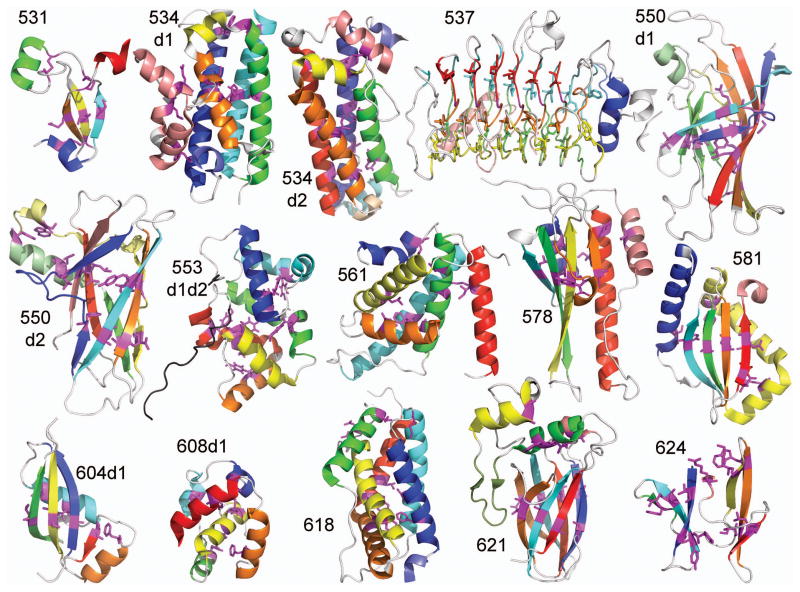
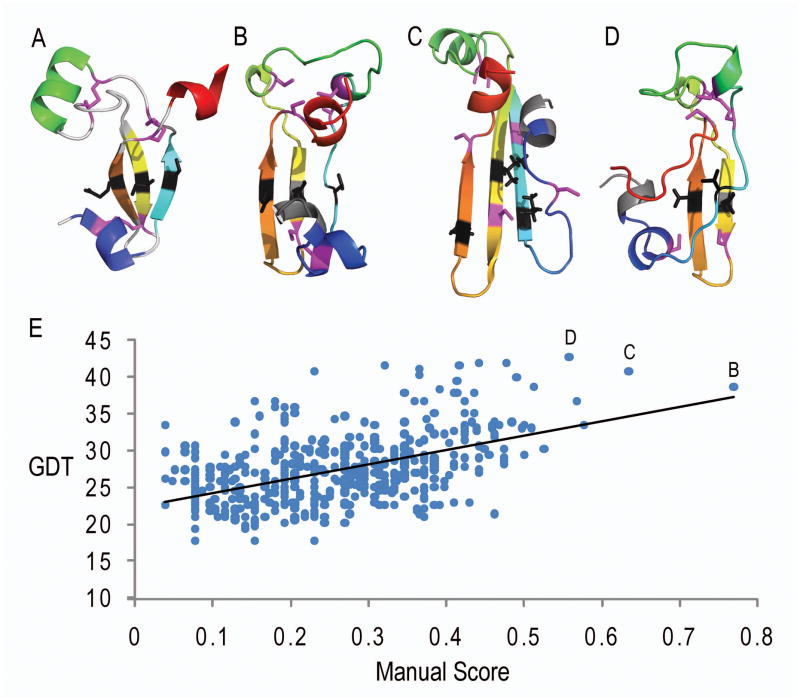
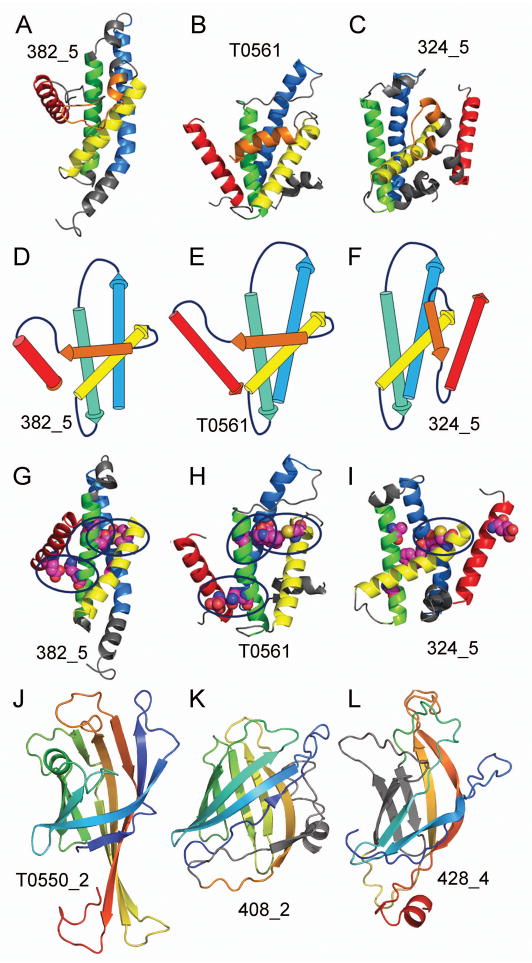
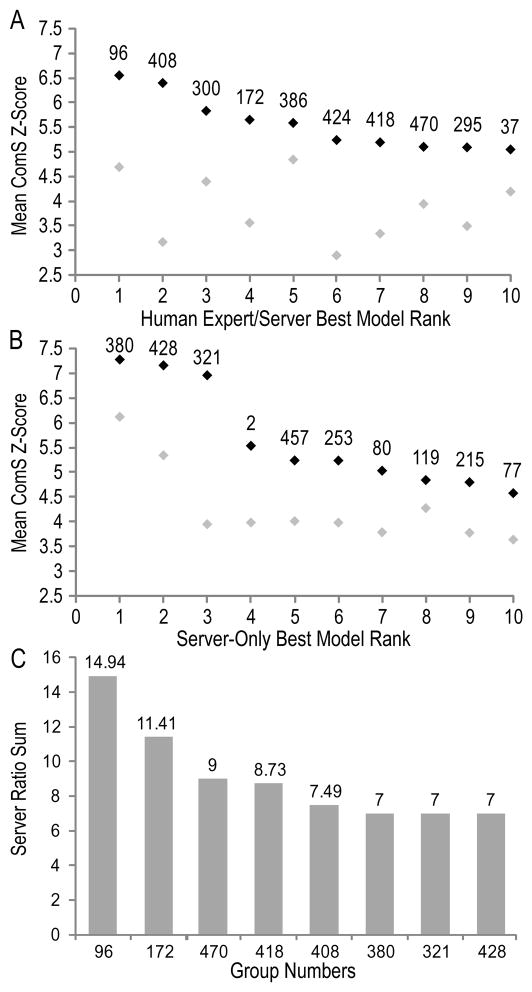
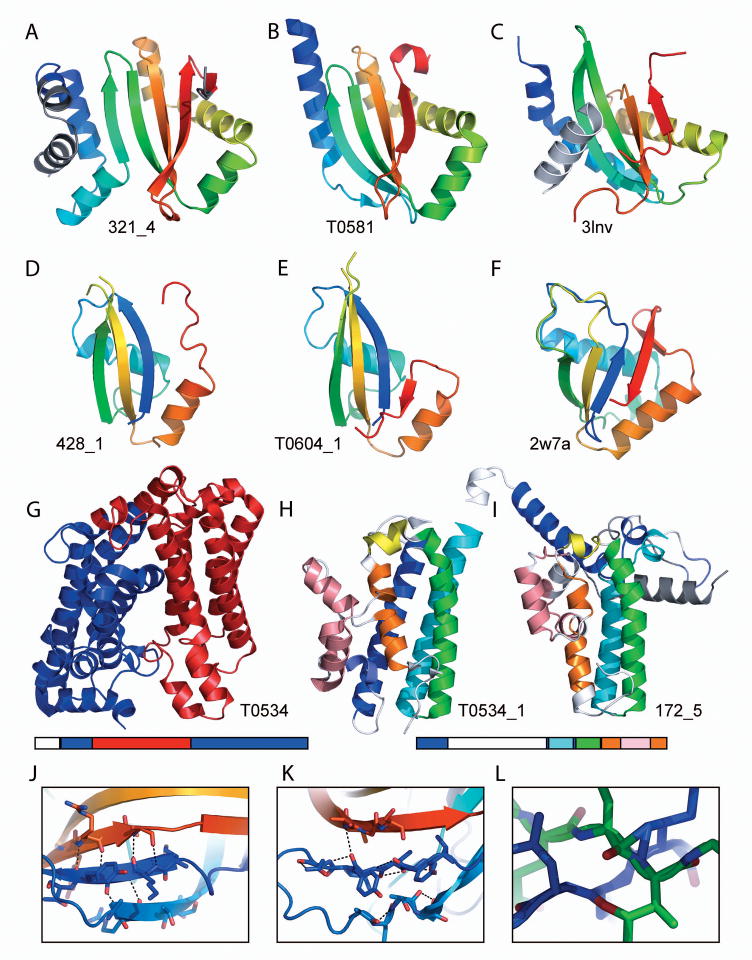
We present an overview of the ninth round of Critical Assessment of Protein Structure Prediction (CASP9) "Template free modeling" category (FM). Prediction models were evaluated using a combination of established structural and sequence comparison measures and a novel automated method designed to mimic manual inspection by capturing both global and local structural features. These scores were compared to those assigned manually over a diverse subset of target domains. Scores were combined to compare overall performance of participating groups and to estimate rank significance. Moreover, we discuss a few examples of free modeling targets to highlight the progress and bottlenecks of current prediction methods. Notably, a server prediction model for a single target (T0581) improved significantly over the closest structure template (44% GDT increase). This accomplishment represents the "winner" of the CASP9 FM category. A number of human expert groups submitted slight variations of this model, highlighting a trend for human experts to act as "meta predictors" by correctly selecting among models produced by the top-performing automated servers. The details of evaluation are available at http://prodata.swmed.edu/CASP9/ .
我们介绍了蛋白质结构预测关键评估第九轮(CASP9)“无模板建模”类别(FM)的概述。预测模型使用经过验证的结构和序列比较指标以及一种新的自动化方法进行评估,该方法旨在通过捕获全局和局部结构特征来模拟手动检查。这些分数与在目标域的多样化子集中手动分配的分数进行了比较。分数进行了组合,以比较参与组的整体性能并估计排名显著性。此外,我们讨论了一些自由建模目标的示例,以突出当前预测方法的进展和瓶颈。值得注意的是,单个目标(T0581)的服务器预测模型相对于最接近的结构模板(GDT 增加 44%)有了显著提高。这一成就代表了 CASP9 FM 类别的“优胜者”。许多人类专家组提交了该模型的细微变化,突出了人类专家通过正确选择表现最佳的自动化服务器生成的模型来充当“元预测器”的趋势。评估的详细信息可在 http://prodata.swmed.edu/CASP9/ 获得。