Swiss Institute of Bioinformatics, Centre Medical Universitaire, 1 rue Michel-Servet, 1211 Genève 4, Switzerland.
Toxins (Basel). 2010 Feb;2(2):262-82. doi: 10.3390/toxins2020262. Epub 2010 Feb 21.
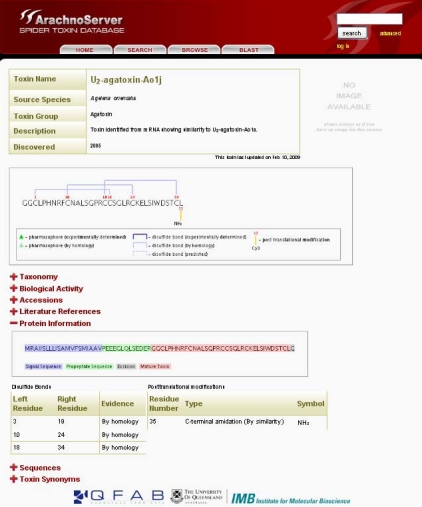
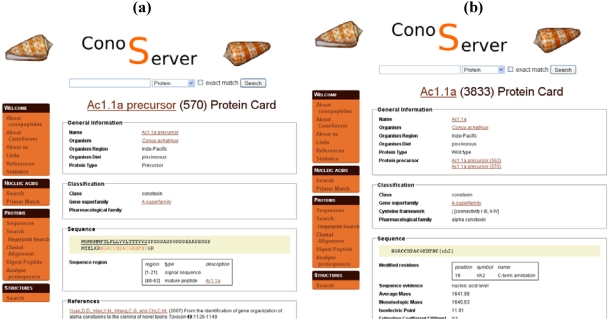
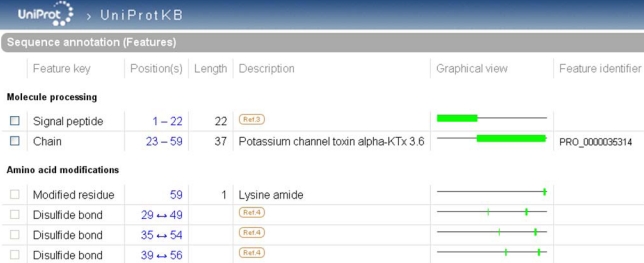
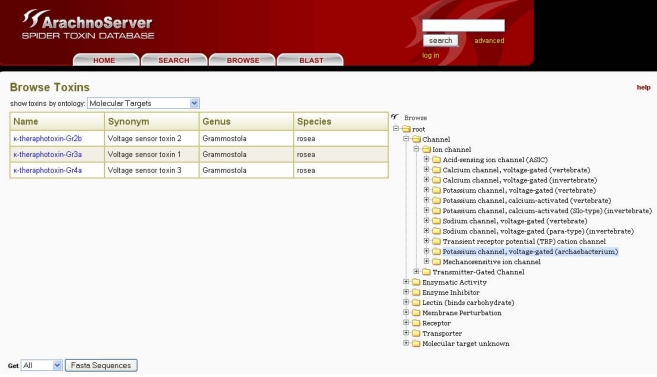
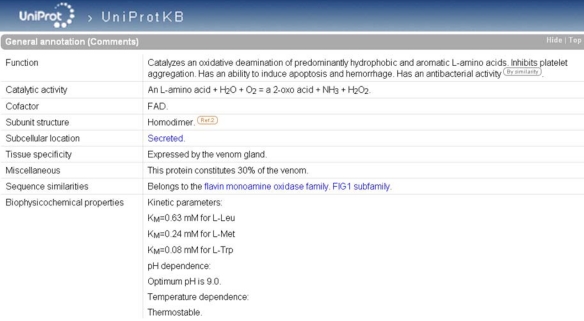
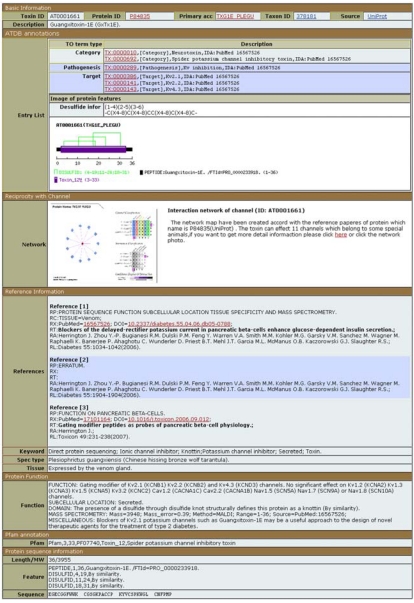
Peptide toxins synthesized by venomous animals have been extensively studied in the last decades. To be useful to the scientific community, this knowledge has been stored, annotated and made easy to retrieve by several databases. The aim of this article is to present what type of information users can access from each database. ArachnoServer and ConoServer focus on spider toxins and cone snail toxins, respectively. UniProtKB, a generalist protein knowledgebase, has an animal toxin-dedicated annotation program that includes toxins from all venomous animals. Finally, the ATDB metadatabase compiles data and annotations from other databases and provides toxin ontology.
在过去的几十年里,人们对来自有毒动物的肽毒素进行了广泛的研究。为了使科学界受益,这些知识已经被储存在多个数据库中,并进行了注释和便于检索。本文旨在介绍用户可以从每个数据库中获取哪些类型的信息。ArachnoServer 和 ConoServer 分别专注于蜘蛛毒素和锥形蜗牛毒素。UniProtKB 是一个通用的蛋白质知识库,它有一个专门用于动物毒素的注释程序,其中包括来自所有有毒动物的毒素。最后,ATDB 元数据库整合了来自其他数据库的数据和注释,并提供了毒素本体。