Department of Behavioral and Social Sciences, TNO Netherlands Organization for Applied Scientific Research, P.O. Box 23, 3769 ZG, Soesterberg, Netherlands.
Psychopharmacology (Berl). 2012 Aug;222(3):391-9. doi: 10.1007/s00213-011-2549-0. Epub 2011 Nov 11.
In party circuits dexamphetamine is frequently used in combination with alcohol. It is hypothesized that co-administration of dexamphetamine to alcohol might reduce the sedative effects of alcohol, but may potentiate risk-taking behaviour.
The study was aimed at assessing the effects of alcohol, dexamphetamine and the combination of both on simulated driving and cognitive performance.
Eighteen subjects participated in a randomized, crossover, placebo-controlled study employing four conditions: 10 mg dexamphetamine, 0.8 g/kg alcohol, 10 mg dexamphetamine + 0.8 g/kg alcohol, and placebo. Fundamental driving skills and risk-taking behaviour were assessed in a driving simulator. Subjects also completed vigilance and divided attention tasks, and subjective ratings.
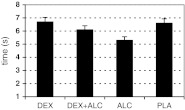
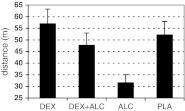
Mean BAC levels during simulated driving were between 0.91‰ and 0.64‰. Subjects using alcohol showed a significantly larger mean standard deviation of lateral position and shorter accepted gap time and distance. Use of alcohol or dexamphetamine + alcohol was associated with a higher frequency of red light running and collisions than the dexamphetamine or placebo conditions. Performance of vigilance and divided attention tasks was significantly impaired in the alcohol condition and, to a lesser degree, in the dexamphetamine + alcohol condition.
Single doses of 0.8 g/kg alcohol increased risk-taking behaviours and impaired tracking, attention and reaction time during a 3-h period after drinking when BACs declined from 0.9 to 0.2 mg/ml. The stimulatory effects of co-administration of dexamphetamine 10 mg were not sufficient to overcome the impairing effects of alcohol on skills related to driving.
在聚会上,右旋苯丙胺经常与酒精一起使用。据推测,同时给予右旋苯丙胺和酒精可能会降低酒精的镇静作用,但可能会增强冒险行为。
本研究旨在评估酒精、右旋苯丙胺和两者联合使用对模拟驾驶和认知表现的影响。
18 名受试者参加了一项随机、交叉、安慰剂对照研究,采用四种条件:10mg 右旋苯丙胺、0.8g/kg 酒精、10mg 右旋苯丙胺+0.8g/kg 酒精和安慰剂。在驾驶模拟器中评估基本驾驶技能和冒险行为。受试者还完成了警觉和分散注意力任务以及主观评分。
模拟驾驶过程中的平均 BAC 水平在 0.91‰和 0.64‰之间。使用酒精的受试者显示出更大的横向位置标准差平均值和更短的可接受间隙时间和距离。使用酒精或右旋苯丙胺+酒精与比右旋苯丙胺或安慰剂条件更高的闯红灯和碰撞频率相关。在酒精条件下,警觉和分散注意力任务的表现明显受损,在右旋苯丙胺+酒精条件下,受损程度较轻。
单次 0.8g/kg 酒精剂量增加了冒险行为,并在 BAC 从 0.9 降至 0.2mg/ml 期间的 3 小时内损害了跟踪、注意力和反应时间相关的驾驶技能。同时给予 10mg 右旋苯丙胺的刺激作用不足以克服酒精对与驾驶相关技能的损害作用。