Department of Medicine, 13-103 Clinical Sciences Building, University of Alberta, Edmonton, Alberta, T6G 2G3 Canada.
BMC Med. 2011 Nov 17;9:123. doi: 10.1186/1741-7015-9-123.
The major metabolic complications of obesity and type 2 diabetes may be prevented and managed with dietary modification. The use of sweeteners that provide little or no calories may help to achieve this objective.
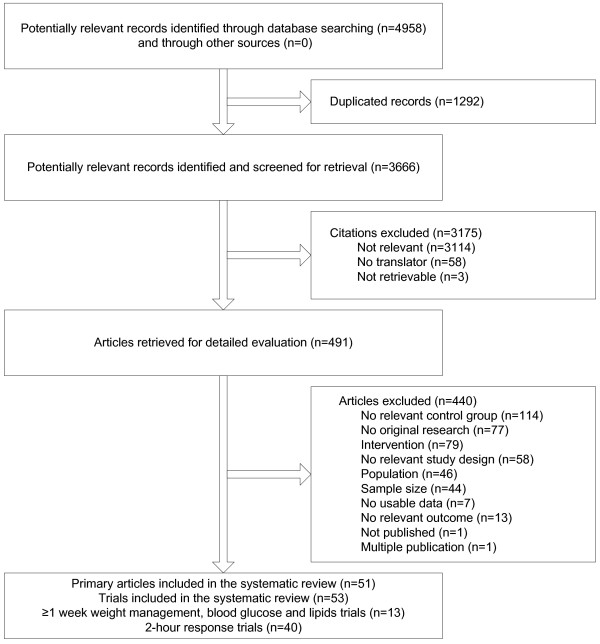
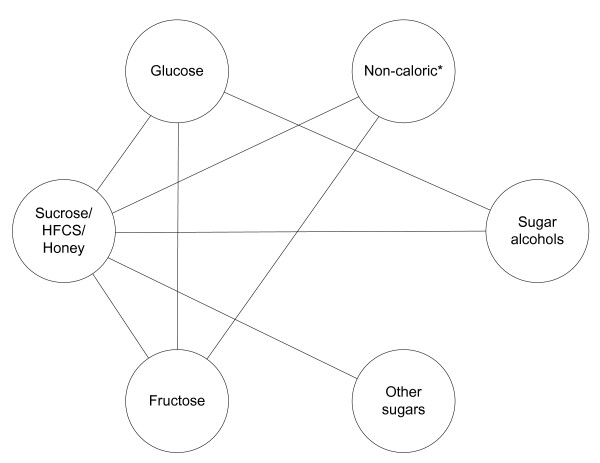
We did a systematic review and network meta-analysis of the comparative effectiveness of sweetener additives using Bayesian techniques. MEDLINE, EMBASE, CENTRAL and CAB Global were searched to January 2011. Randomized trials comparing sweeteners in obese, diabetic, and healthy populations were selected. Outcomes of interest included weight change, energy intake, lipids, glycated hemoglobin, markers of insulin resistance and glycemic response. Evidence-based items potentially indicating risk of bias were assessed.
Of 3,666 citations, we identified 53 eligible randomized controlled trials with 1,126 participants. In diabetic participants, fructose reduced 2-hour blood glucose concentrations by 4.81 mmol/L (95% CI 3.29, 6.34) compared to glucose. Two-hour blood glucose concentration data comparing hypocaloric sweeteners to sucrose or high fructose corn syrup were inconclusive. Based on two ≤10-week trials, we found that non-caloric sweeteners reduced energy intake compared to the sucrose groups by approximately 250-500 kcal/day (95% CI 153, 806). One trial found that participants in the non-caloric sweetener group had a decrease in body mass index compared to an increase in body mass index in the sucrose group (-0.40 vs 0.50 kg/m2, and -1.00 vs 1.60 kg/m2, respectively). No randomized controlled trials showed that high fructose corn syrup or fructose increased levels of cholesterol relative to other sweeteners.
Considering the public health importance of obesity and its consequences; the clearly relevant role of diet in the pathogenesis and maintenance of obesity; and the billions of dollars spent on non-caloric sweeteners, little high-quality clinical research has been done. Studies are needed to determine the role of hypocaloric sweeteners in a wider population health strategy to prevent, reduce and manage obesity and its consequences.
肥胖和 2 型糖尿病的主要代谢并发症可以通过饮食调整来预防和控制。使用提供很少或没有热量的甜味剂可能有助于实现这一目标。
我们使用贝叶斯技术对甜味剂添加剂的相对有效性进行了系统评价和网络荟萃分析。检索了 MEDLINE、EMBASE、CENTRAL 和 CAB Global,检索时间截至 2011 年 1 月。选择了比较肥胖、糖尿病和健康人群中甜味剂的随机试验。感兴趣的结局包括体重变化、能量摄入、血脂、糖化血红蛋白、胰岛素抵抗和血糖反应标志物。评估了可能表明偏倚风险的循证项目。
在 3666 条引文的基础上,我们确定了 53 项符合条件的随机对照试验,涉及 1126 名参与者。与葡萄糖相比,果糖可使糖尿病患者的 2 小时血糖浓度降低 4.81mmol/L(95%CI 3.29,6.34)。比较低热量甜味剂与蔗糖或高果糖玉米糖浆的 2 小时血糖浓度数据尚无定论。基于两项≤10 周的试验,我们发现与蔗糖组相比,非热量甜味剂可使能量摄入减少约 250-500kcal/天(95%CI 153,806)。一项试验发现,与蔗糖组的体重指数增加相比,非热量甜味剂组的参与者的体重指数下降(-0.40 对 0.50kg/m2,-1.00 对 1.60kg/m2)。没有随机对照试验表明高果糖玉米糖浆或果糖会增加胆固醇水平,与其他甜味剂相比。
考虑到肥胖及其后果的公共卫生重要性;饮食在肥胖的发病机制和维持中的明显相关作用;以及数十亿美元花在非热量甜味剂上,几乎没有进行高质量的临床研究。需要进行研究以确定低热量甜味剂在预防、减少和管理肥胖及其后果的更广泛人群健康策略中的作用。