CBS-KNAW Fungal Biodiversity Centre, Uppsalalaan 8, 3584 CT Utrecht, The Netherlands.
Stud Mycol. 2011 Nov 15;70(1):53-138. doi: 10.3114/sim.2011.70.02.
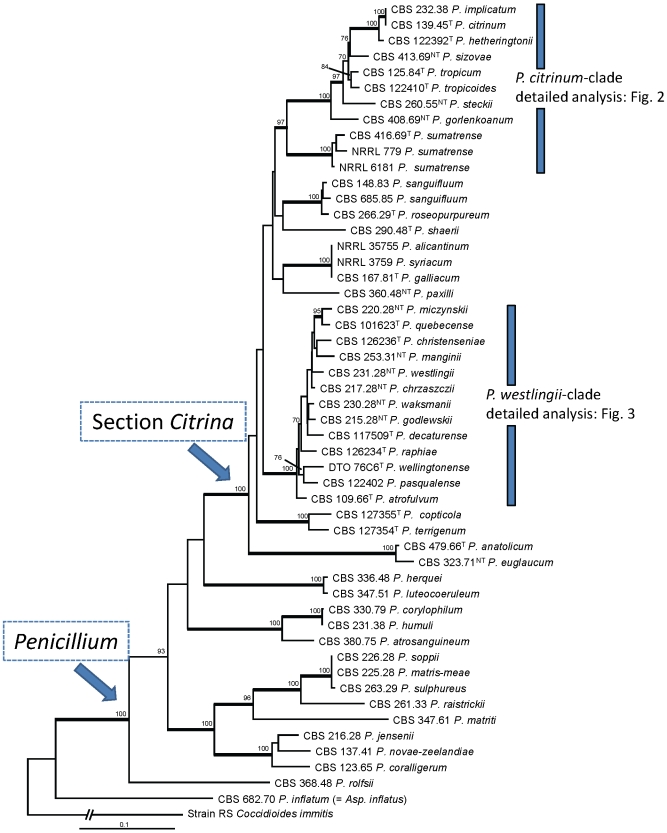
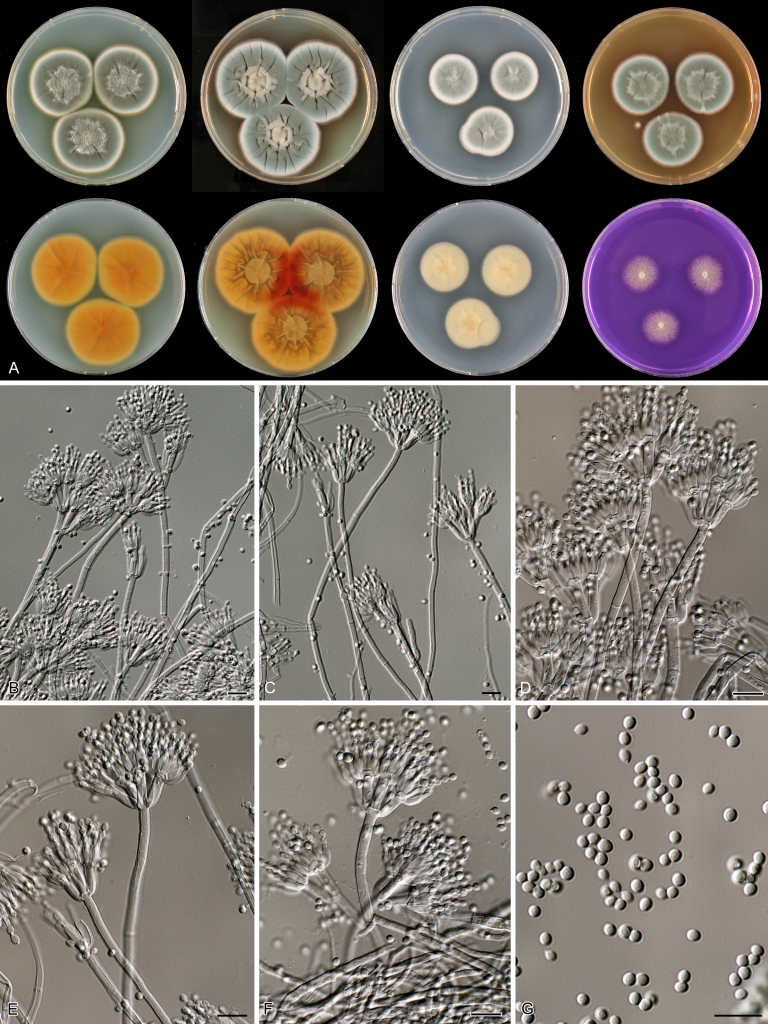
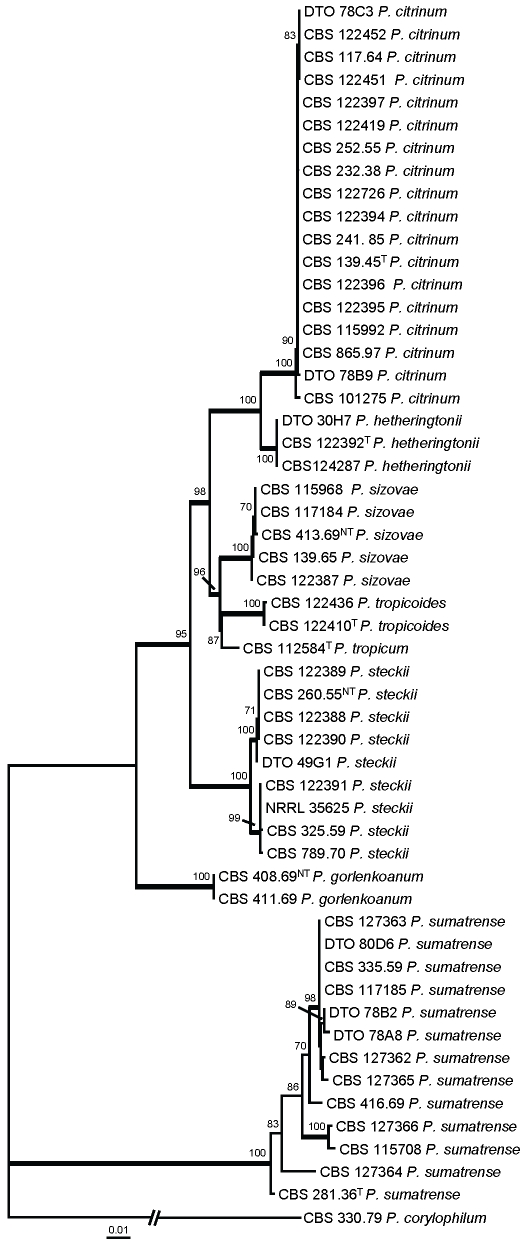
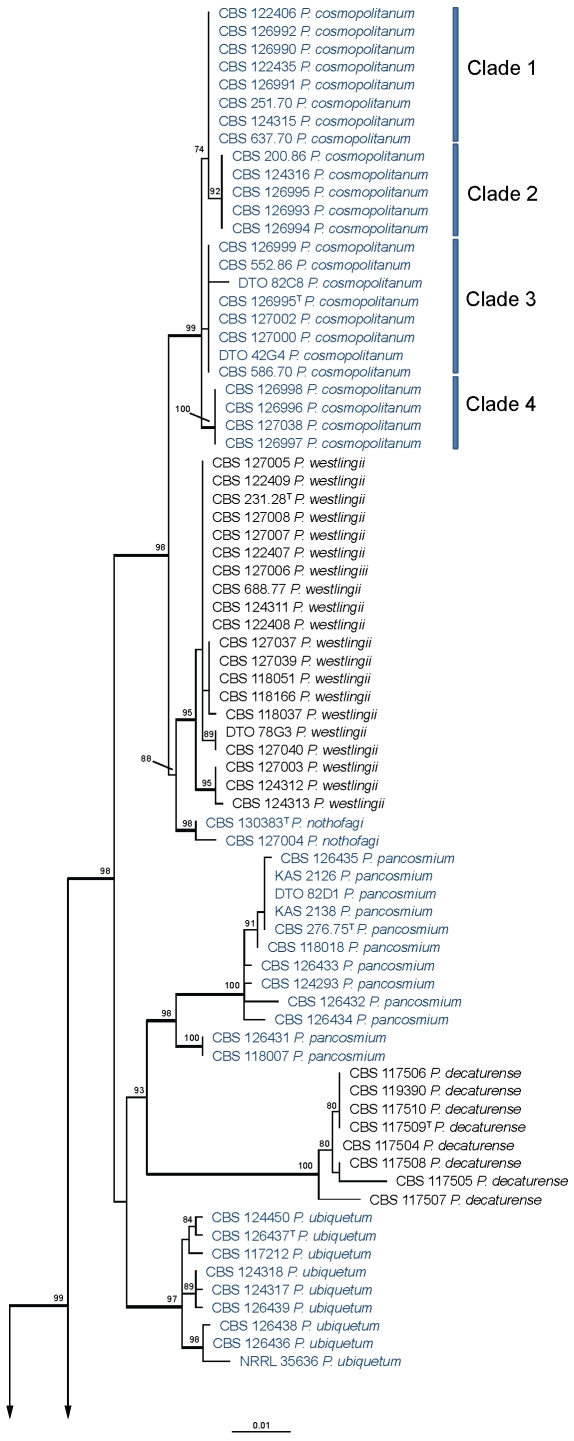
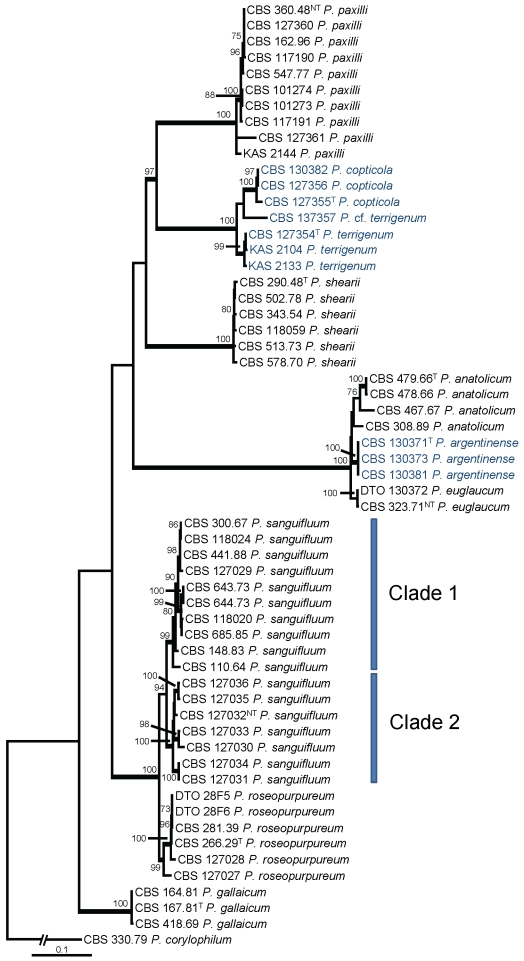
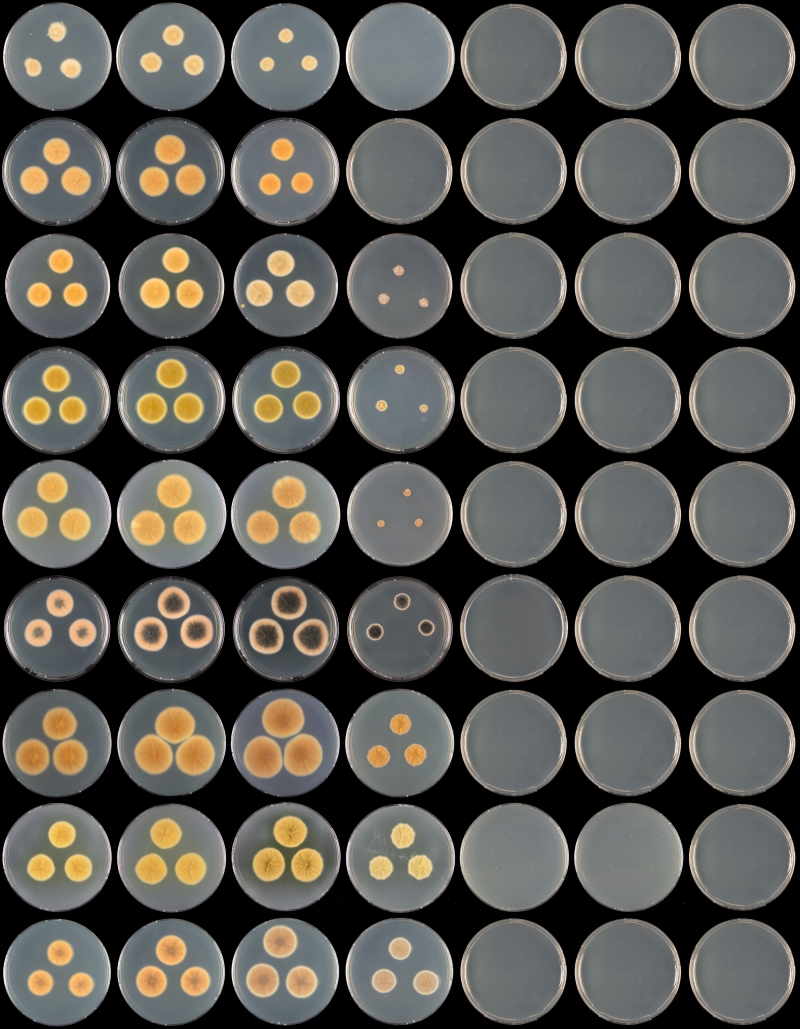
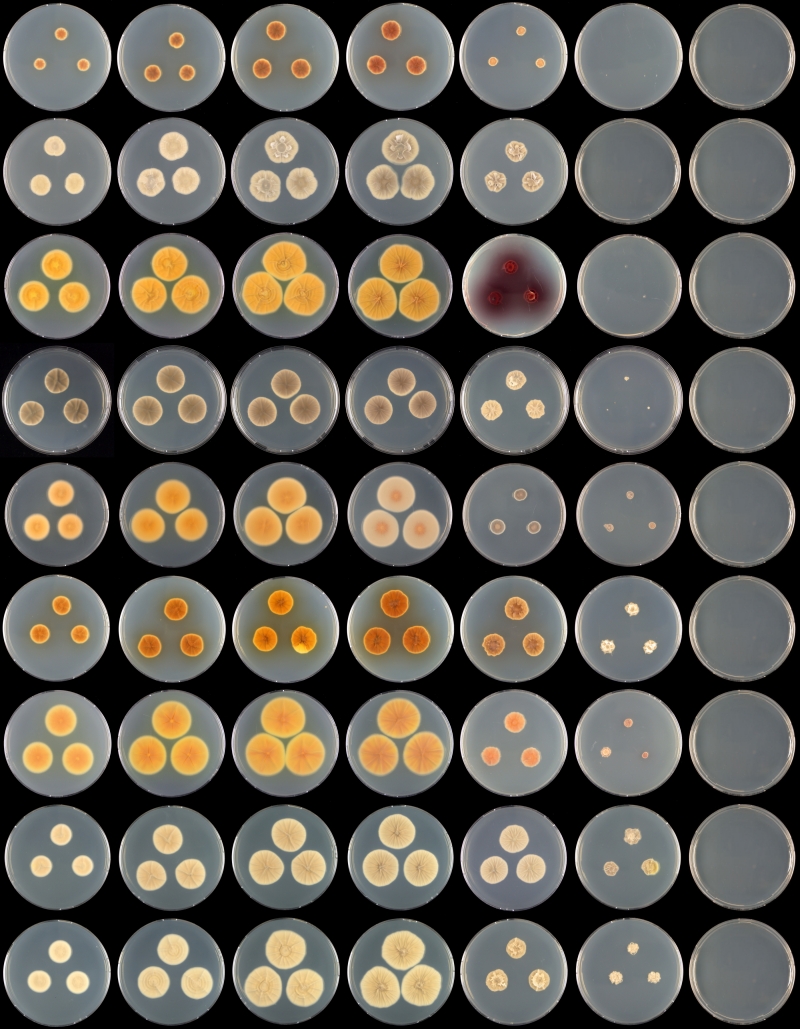
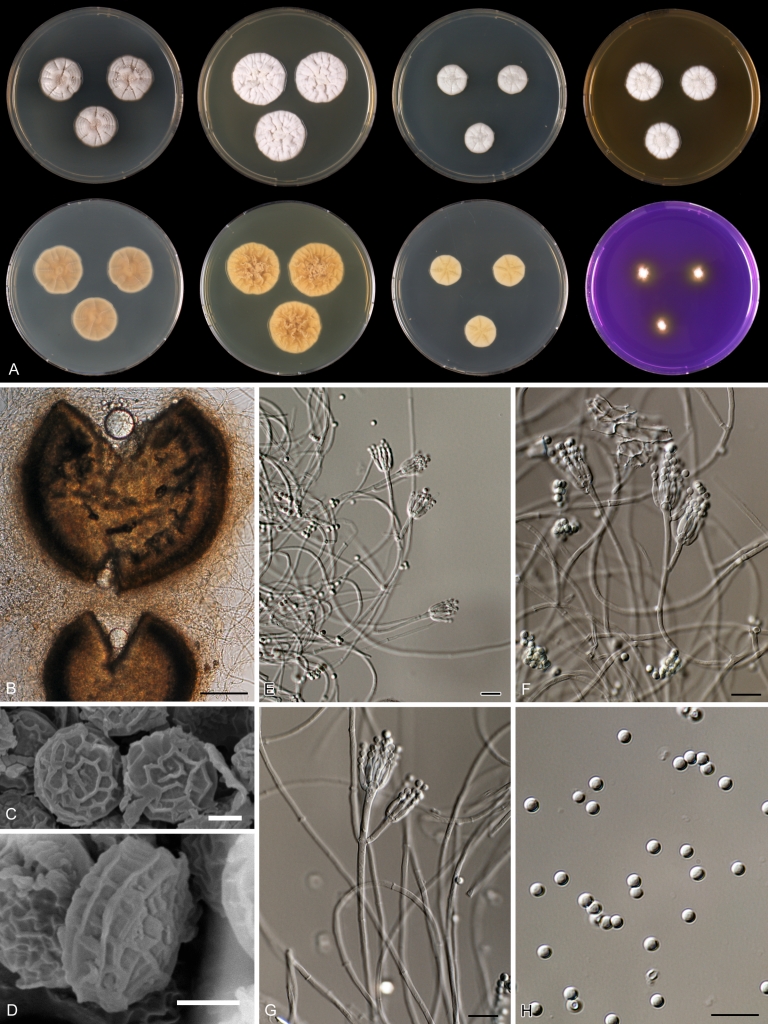
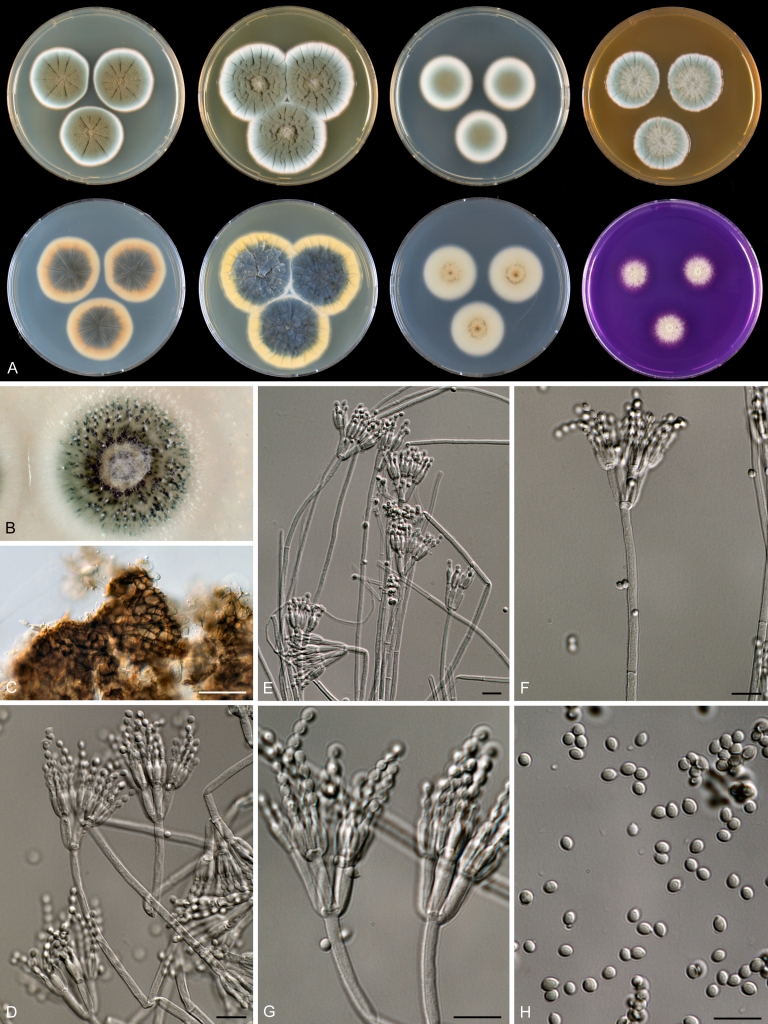
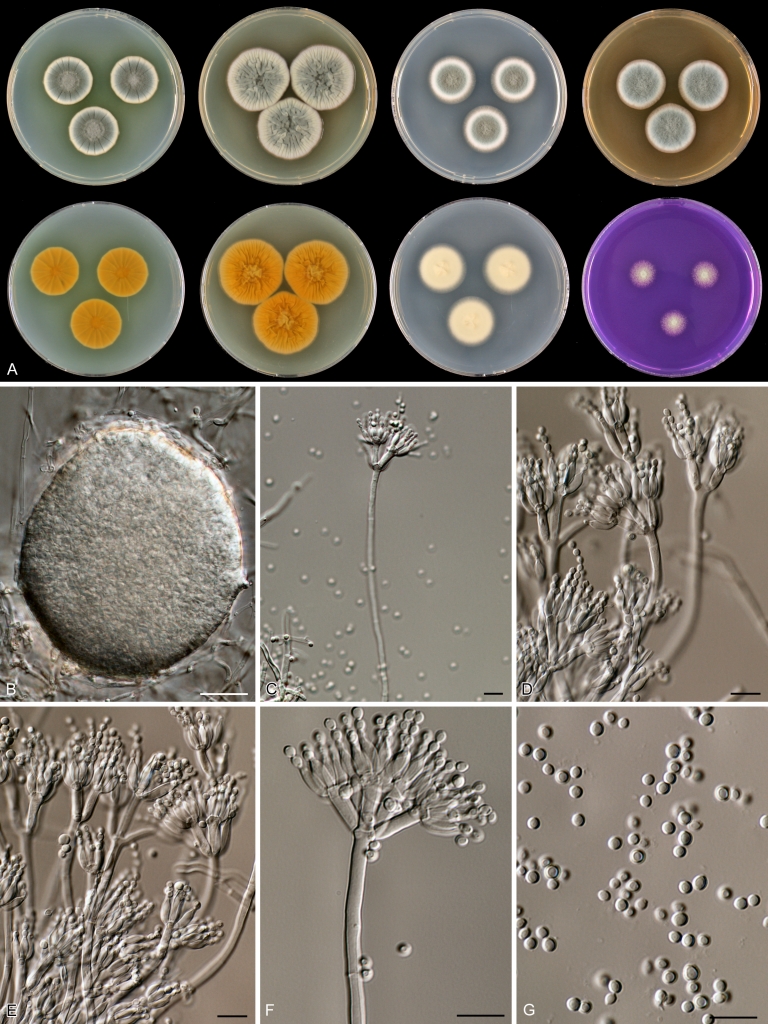
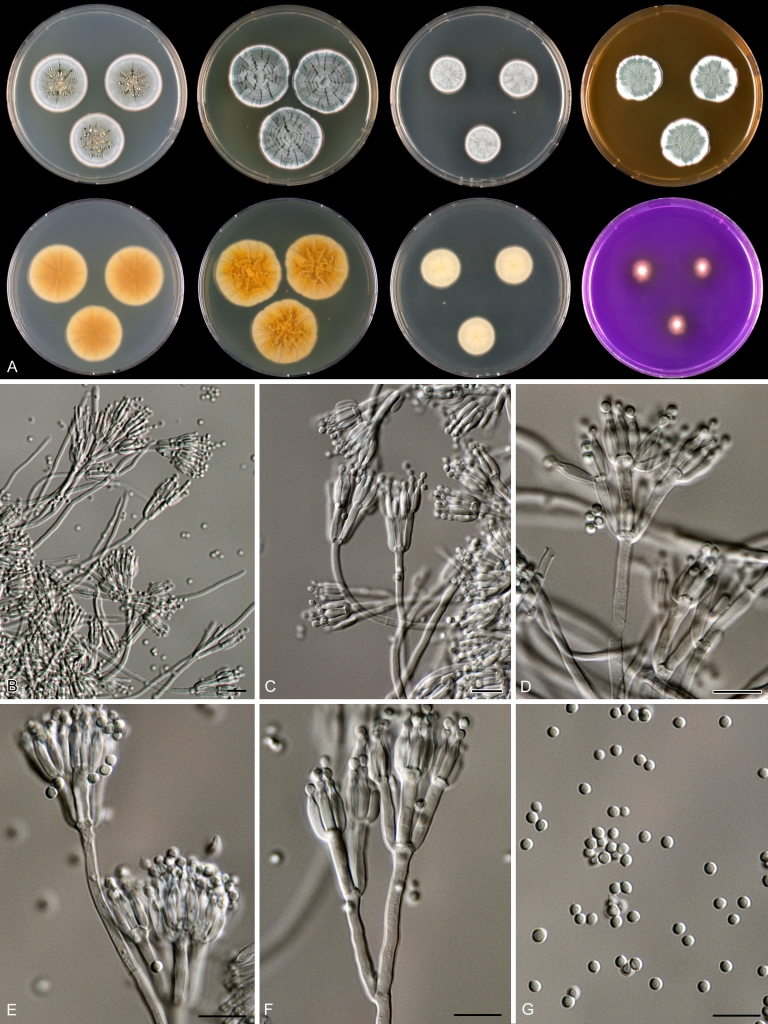
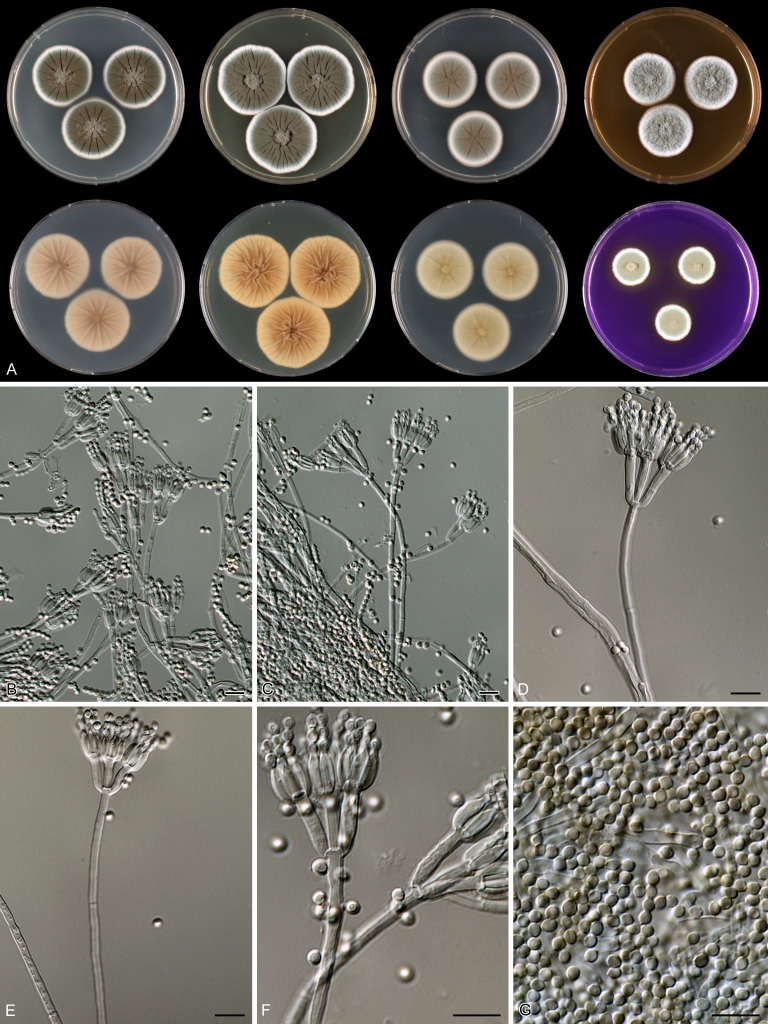
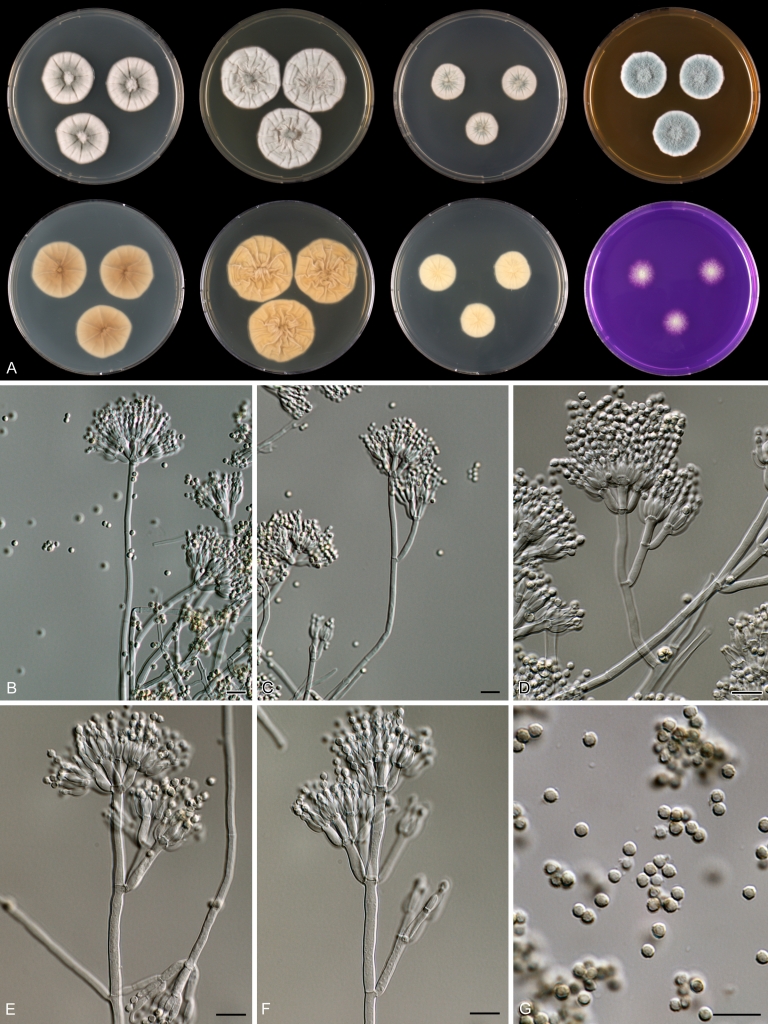
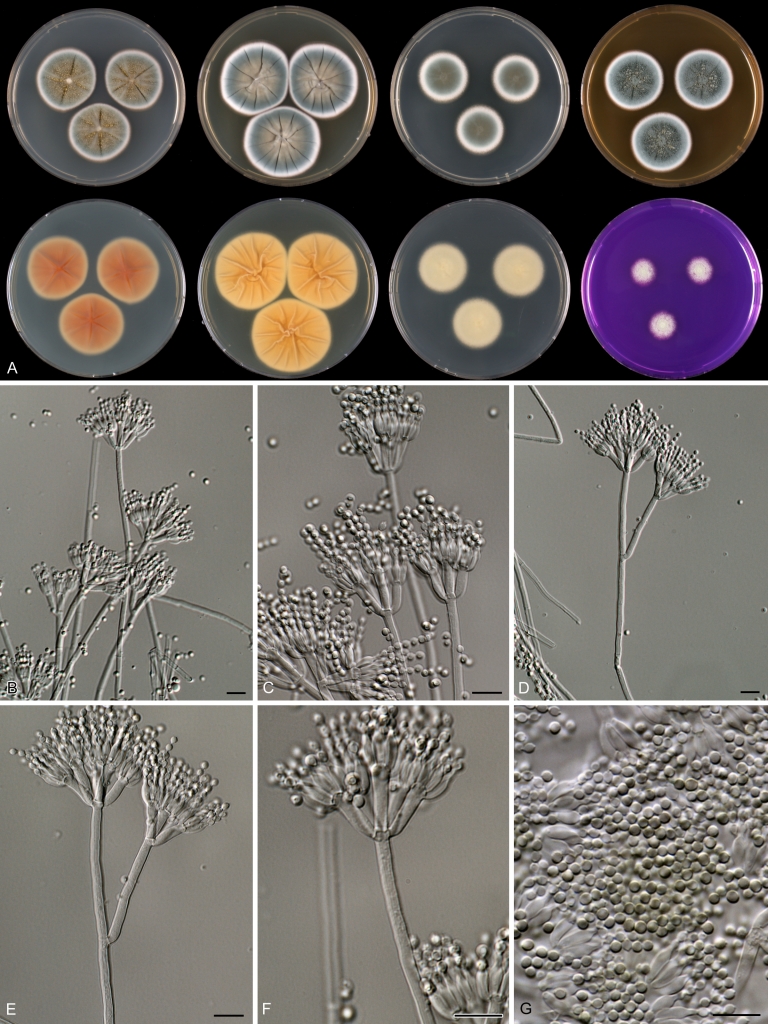
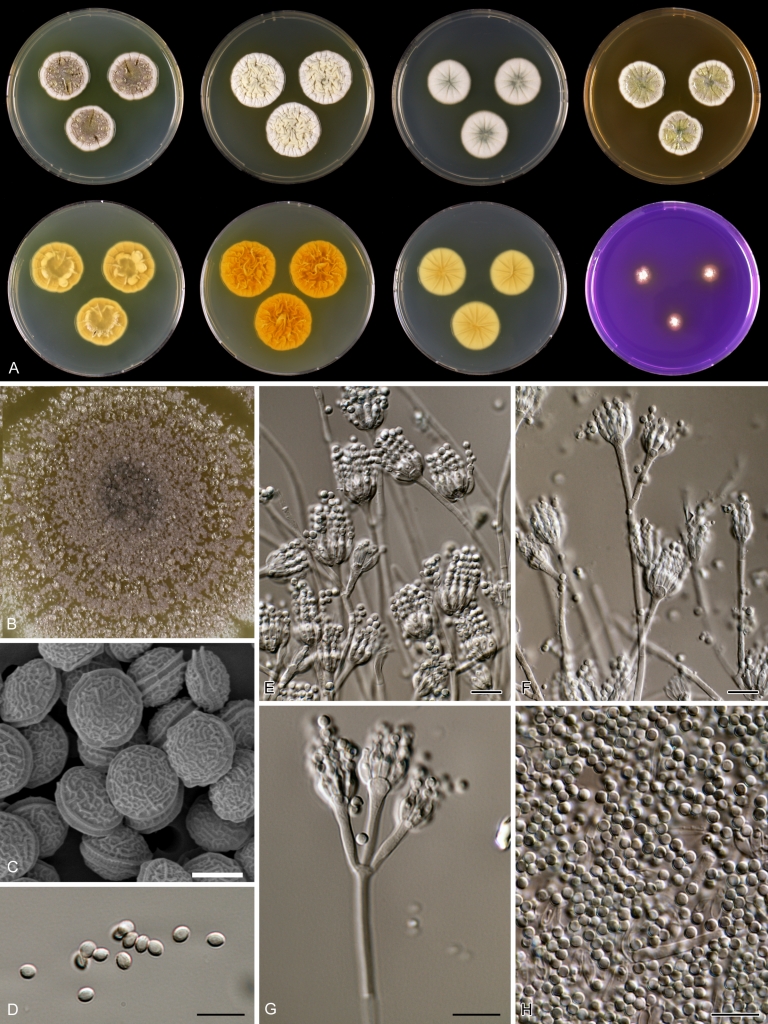
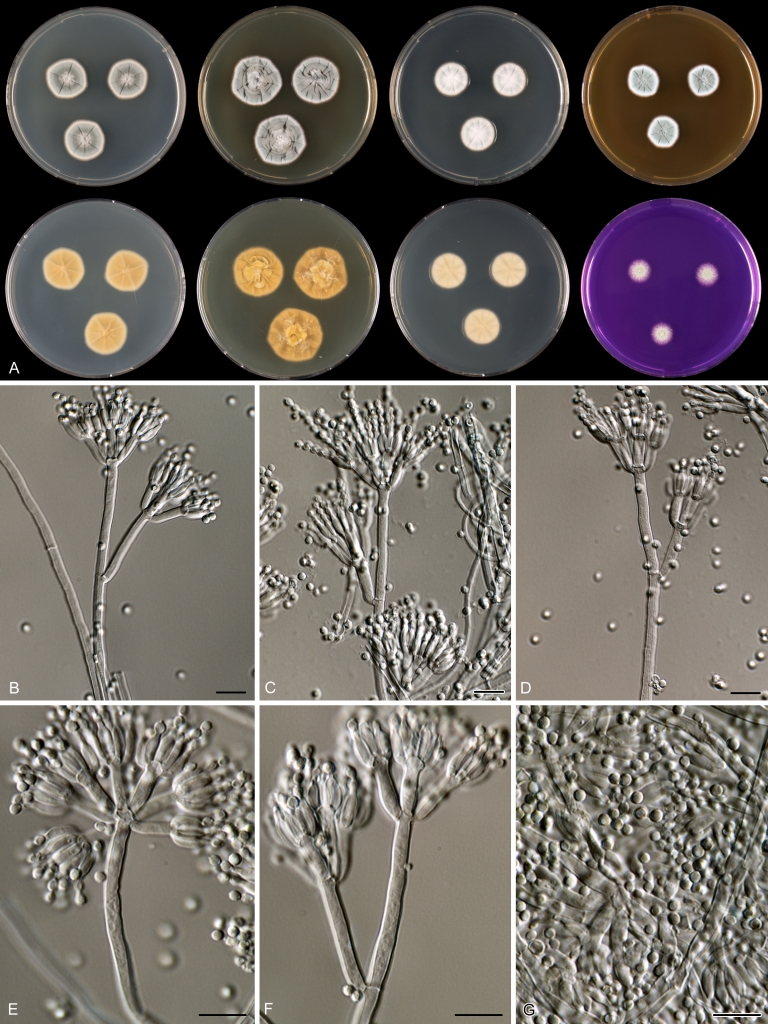
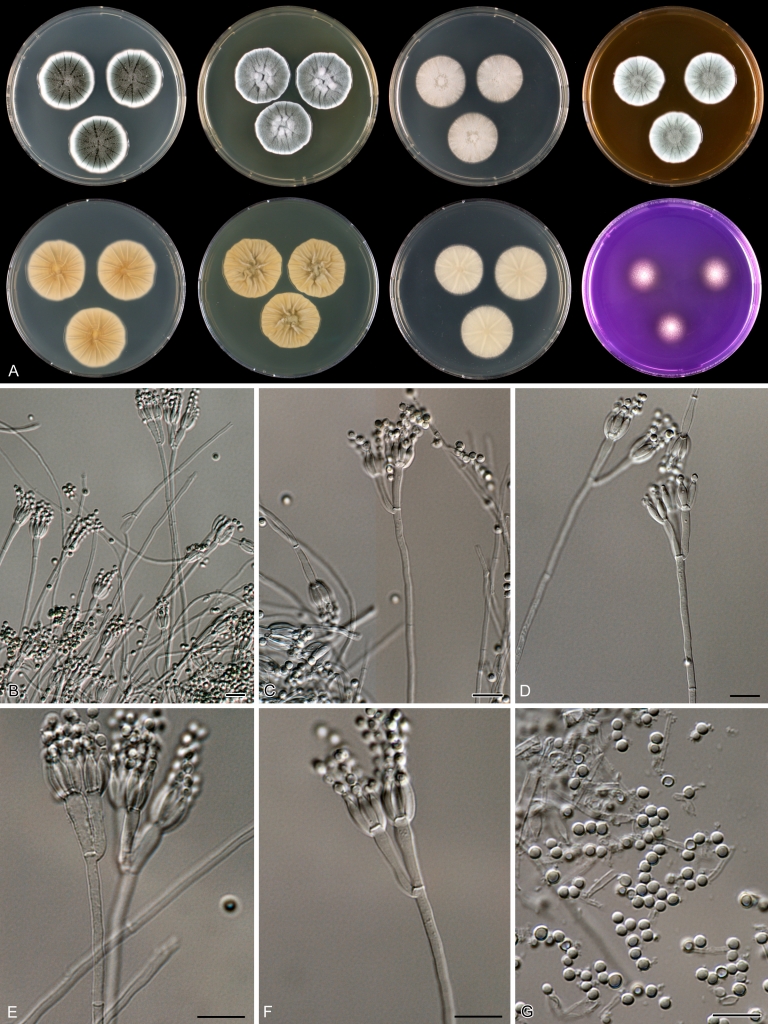
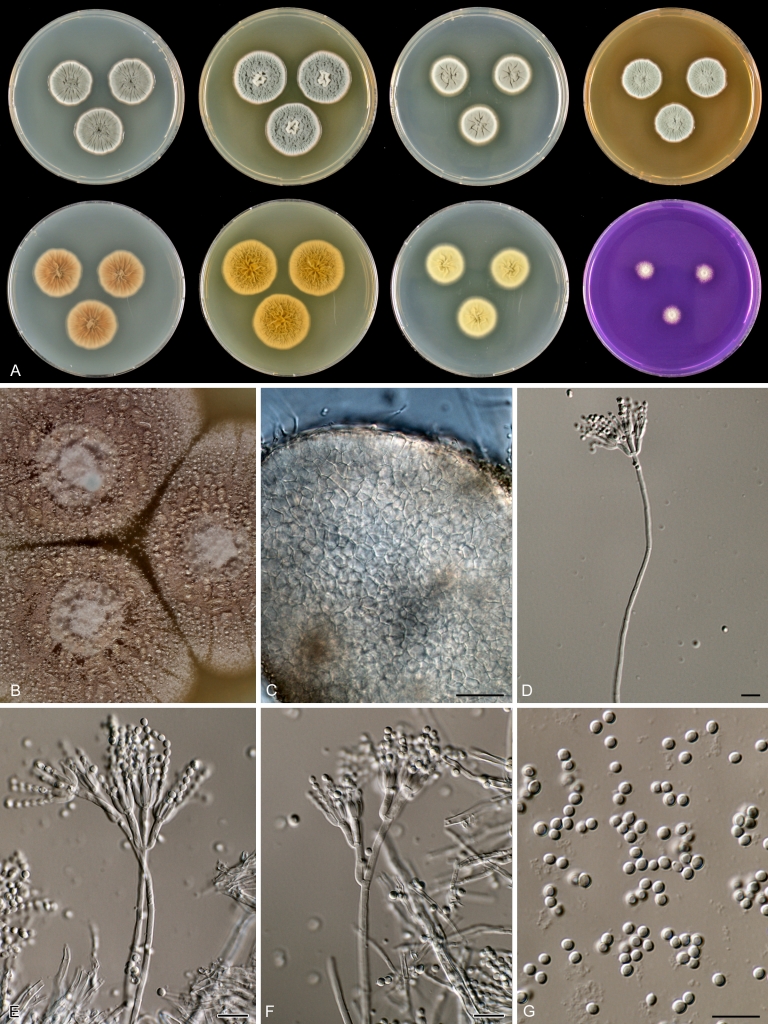
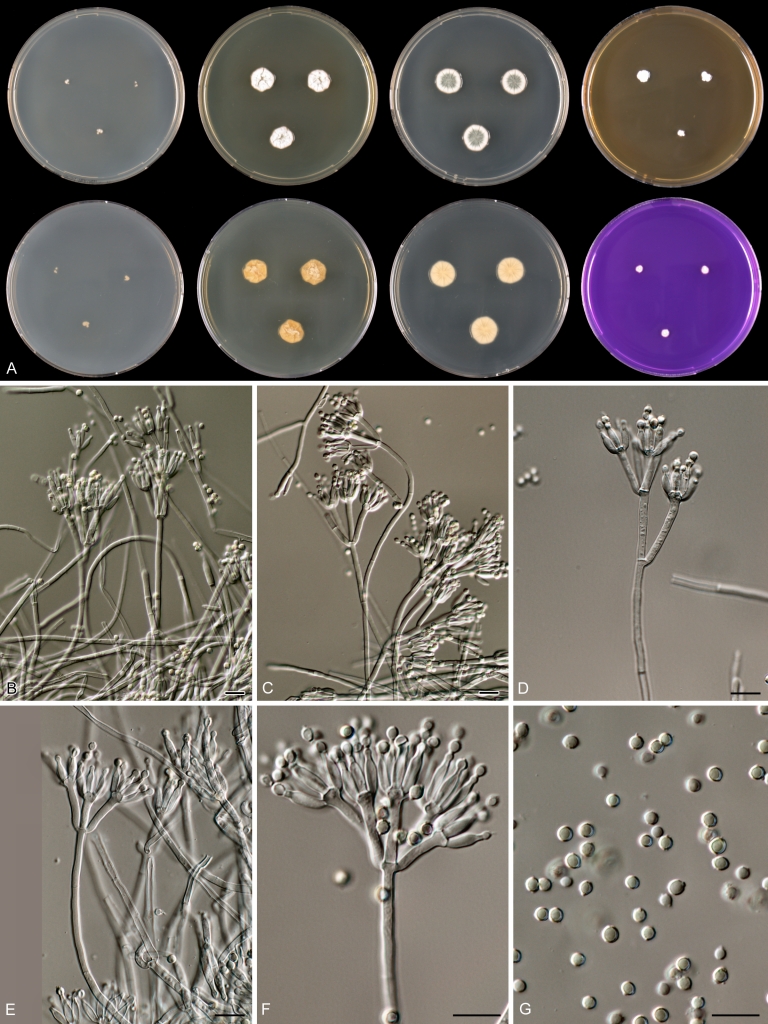
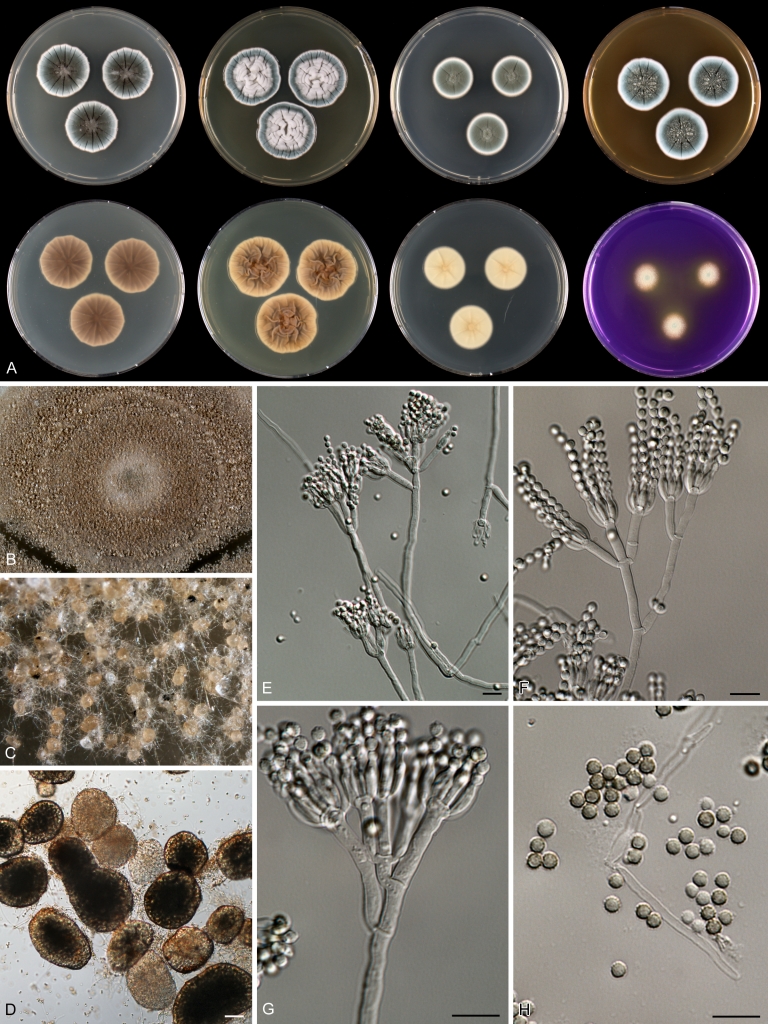
Species of Penicillium section Citrina have a worldwide distribution and occur commonly in soils. The section is here delimited using a combination of phenotypic characters and sequences of the nuclear ribosomal RNA gene operon, including the internal transcribed spacer regions ITS1 and ITS2, the 5.8S nrDNA (ITS) and partial RPB2 sequences. Species assigned to section Citrina share the production of symmetrically biverticillate conidiophores, flask shaped phialides (7.0-9.0 μm long) and relatively small conidia (2.0-3.0 μm diam). Some species can produce greyish-brown coloured cleistothecia containing flanged ascospores. In the present study, more than 250 isolates presumably belonging to section Citrina were examined using a combined analysis of phenotypic and physiological characters, extrolite profiles and ITS, β-tubulin and/or calmodulin sequences. Section Citrina includes 39 species, and 17 of those are described here as new. The most important phenotypic characters for distinguishing species are growth rates and colony reverse colours on the agar media CYA, MEA and YES; shape, size and ornamentation of conidia and the production of sclerotia or cleistothecia. Temperature-growth profiles were made for all examined species and are a valuable character characters for species identification. Species centered around P. citrinum generally have a higher maximum growth temperature (33-36 °C) than species related to P. westlingii (27-33 °C). Extrolite patterns and partial calmodulin and β-tubulin sequences can be used for sequence based identification and resolved all species. In contrast, ITS sequences were less variable and only 55 % of the species could be unambiguously identified with this locus.
Penicillium argentinense Houbraken, Frisvad & Samson, P. atrofulvum Houbraken, Frisvad & Samson, P. aurantiacobrunneum Houbraken, Frisvad & Samson, P. cairnsense Houbraken, Frisvad & Samson, P. christenseniae Houbraken, Frisvad & Samson, P. copticola Houbraken, Frisvad & Samson, P. cosmopolitanum Houbraken, Frisvad & Samson, P. neomiczynskii Cole, Houbraken, Frisvad & Samson, P. nothofagi Houbraken, Frisvad & Samson, P. pancosmium Houbraken, Frisvad & Samson, P. pasqualense Houbraken, Frisvad & Samson, P. quebecense Seifert, Houbraken, Frisvad & Samson, P. raphiae Houbraken, Frisvad & Samson, P. terrigenum Seifert, Houbraken, Frisvad & Samson, P. ubiquetum Houbraken, Frisvad & Samson, P. vancouverense Houbraken, Frisvad & Samson, P. wellingtonense Cole, Houbraken, Frisvad & Samson.
青霉属 Citrina 节的物种分布广泛,常见于土壤中。该节采用表型特征和核核糖体 RNA 基因操纵子序列(包括内部转录间隔区 ITS1 和 ITS2、5.8S nrDNA(ITS)和部分 RPB2 序列)的组合来限定。属于 Citrina 节的物种具有对称双轮生分生孢子梗、瓶形产孢细胞(7.0-9.0μm 长)和相对较小的分生孢子(2.0-3.0μm 直径)的特征。一些物种可以产生含有有翅子囊孢子的灰棕色闭囊壳。在本研究中,使用表型和生理特征、外生代谢产物谱以及 ITS、β-微管蛋白和/或钙调蛋白序列的综合分析,检查了 250 多个可能属于 Citrina 节的分离物。Citrina 节包括 39 个种,其中 17 个种在此被描述为新种。区分种的最重要的表型特征是在 CYA、MEA 和 YES 琼脂培养基上的生长速度和菌落反转颜色;分生孢子的形状、大小和装饰以及是否产生菌核或闭囊壳。对所有检查的物种都进行了温度生长曲线的制作,这是种鉴定的一个有价值的特征。以 P. citrinum 为中心的种通常具有较高的最大生长温度(33-36°C),而与 P. westlingii 相关的种的最大生长温度(27-33°C)较低。外生代谢产物模式和部分钙调蛋白和β-微管蛋白序列可用于基于序列的鉴定,并解决了所有种的问题。相比之下,ITS 序列的变异性较小,只有 55%的种可以用该基因座明确鉴定。
阿根廷青霉 Houbraken、Frisvad & Samson、暗橘青霉 Houbraken、Frisvad & Samson、橙棕色青霉 Houbraken、Frisvad & Samson、凯恩斯青霉 Houbraken、Frisvad & Samson、克里斯滕森青霉 Houbraken、Frisvad & Samson、考特科拉青霉 Houbraken、Frisvad & Samson、世界性青霉 Houbraken、Frisvad & Samson、新木素青霉 Cole、Houbraken、Frisvad & Samson、Nothofagus 青霉 Houbraken、Frisvad & Samson、泛孢青霉 Houbraken、Frisvad & Samson、帕斯夸尔青霉 Houbraken、Frisvad & Samson、魁北克青霉 Seifert、Houbraken、Frisvad & Samson、Raphaelispora 青霉 Houbraken、Frisvad & Samson、生境青霉 Seifert、Houbraken、Frisvad & Samson、 ubiquetum 青霉 Houbraken、Frisvad & Samson、温哥华青霉 Houbraken、Frisvad & Samson、惠灵顿青霉 Cole、Houbraken、Frisvad & Samson。