Biosciences Center, National Renewable Energy Laboratory, Golden, CO 80401, USA.
Biotechnol Biofuels. 2012 Apr 10;5(1):20. doi: 10.1186/1754-6834-5-20.
Understanding the dynamics of the microbial communities that, along with their secreted enzymes, are involved in the natural process of biomass composting may hold the key to breaking the major bottleneck in biomass-to-biofuels conversion technology, which is the still-costly deconstruction of polymeric biomass carbohydrates to fermentable sugars.However, the complexity of both the structure of plant biomass and its counterpart microbial degradation communities makes it difficult to investigate the composting process.
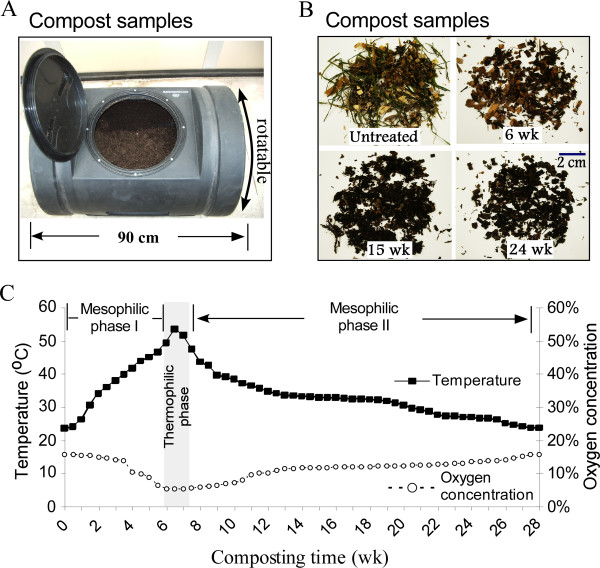
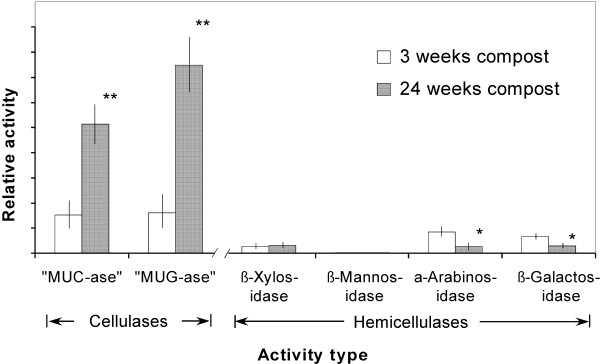
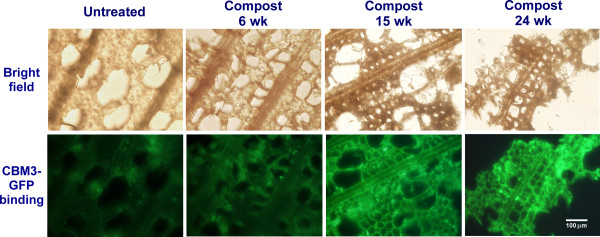
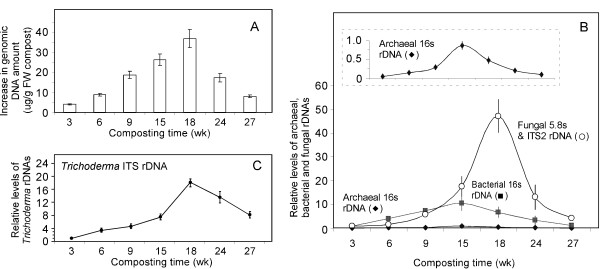
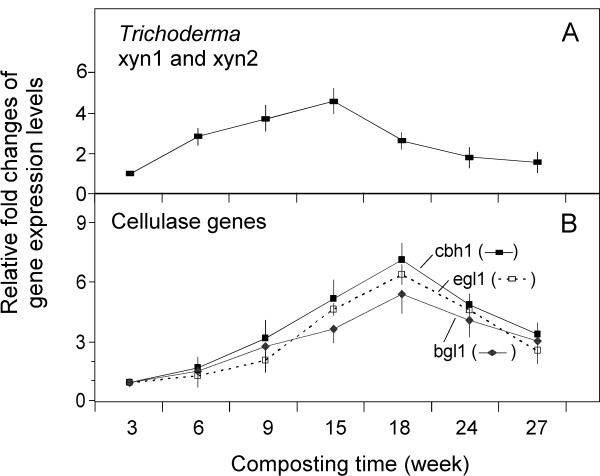
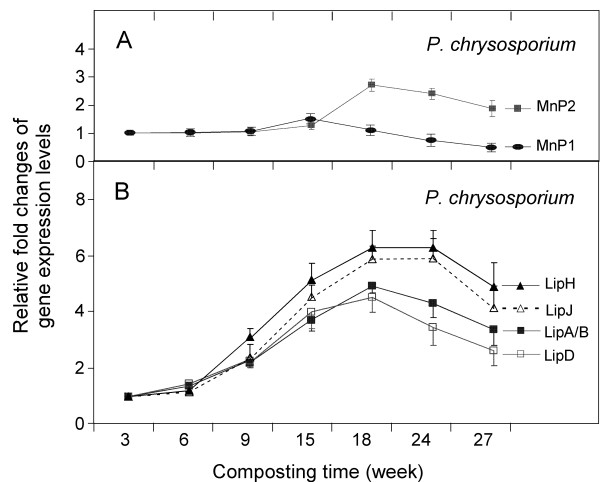
In this study, a composter was set up with a mix of yellow poplar (Liriodendron tulipifera) wood-chips and mown lawn grass clippings (85:15 in dry-weight) and used as a model system. The microbial rDNA abundance data obtained from analyzing weekly-withdrawn composted samples suggested population-shifts from bacteria-dominated to fungus-dominated communities. Further analyses by an array of optical microscopic, transcriptional and enzyme-activity techniques yielded correlated results, suggesting that such population shifts occurred along with early removal of hemicellulose followed by attack on the consequently uncovered cellulose as the composting progressed.
The observed shifts in dominance by representative microbial groups, along with the observed different patterns in the gene expression and enzymatic activities between cellulases, hemicellulases, and ligninases during the composting process, provide new perspectives for biomass-derived biotechnology such as consolidated bioprocessing (CBP) and solid-state fermentation for the production of cellulolytic enzymes and biofuels.
了解参与生物质堆肥自然过程的微生物群落及其分泌的酶的动态,可能是突破生物质转化为生物燃料技术的主要瓶颈的关键,该瓶颈是仍然昂贵的将聚合生物质碳水化合物解构为可发酵糖。然而,植物生物质的结构及其对应的微生物降解群落的复杂性使得难以研究堆肥过程。
本研究使用混合的黄杨木(Liriodendron tulipifera)木屑和割草(干重 85:15)建立了一个堆肥器,用作模型系统。从每周抽取的堆肥样品中分析得出的微生物 rDNA 丰度数据表明,从细菌为主的群落向真菌为主的群落发生了种群转移。进一步通过一系列光学显微镜、转录和酶活性技术的分析得出了相关的结果,表明随着堆肥的进行,这种种群转移伴随着半纤维素的早期去除,然后攻击随之暴露的纤维素。
观察到代表性微生物群体的优势变化,以及在堆肥过程中纤维素酶、半纤维素酶和木质素酶之间的基因表达和酶活性的不同模式,为基于生物质的生物技术提供了新的视角,如整合生物加工(CBP)和固态发酵,以生产纤维素酶和生物燃料。