Department of Psychiatry, University of California-San Francisco, CA, USA.
Alcohol Clin Exp Res. 2012 Nov;36(11):1932-41. doi: 10.1111/j.1530-0277.2012.01811.x. Epub 2012 May 2.
Fetal alcohol spectrum disorders result from heavy prenatal alcohol exposure and are characterized, in some cases, by central nervous system anomalies and cognitive impairment. Regional patterns of neuroanatomical abnormalities suggest that alcohol exerts selective damage on the developing fetal brain. This study assessed brain-behavior relationships in a sample of youth with histories of heavy prenatal alcohol exposure. The aim was to characterize how structural brain alterations observed in our previous studies relate to cognitive deficits commonly reported in individuals with histories of heavy prenatal alcohol exposure.
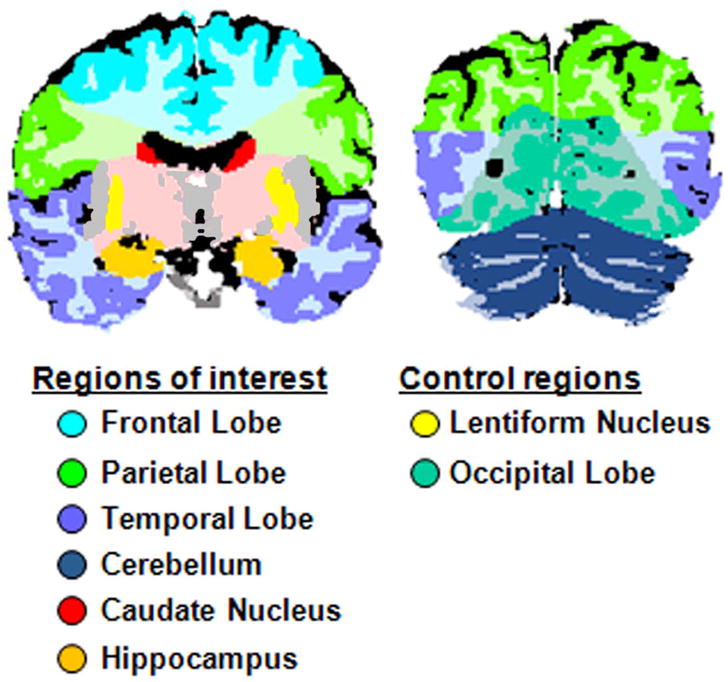
Twenty-one youth (mean age 13 years) with histories of heavy prenatal alcohol exposure and 7 nonexposed healthy comparison subjects underwent structural magnetic resonance imaging and neurobehavioral testing. Regional brain volumes within the alcohol-exposed group were correlated with neuropsychological measures of cognitive control and verbal learning/recall, as these aspects of cognition have previously been shown to be vulnerable to alcohol teratogenesis.
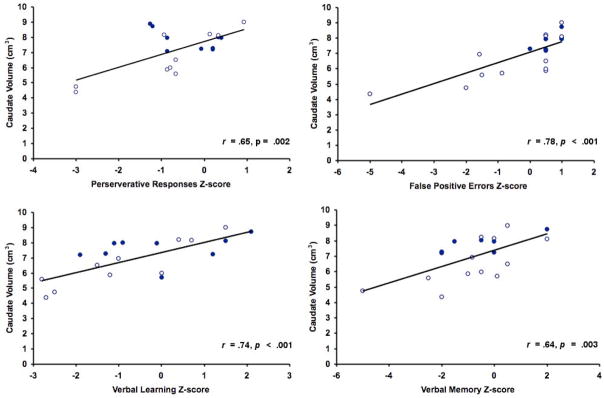
Between-group effect sizes revealed moderate to large cognitive performance and brain volume decrements in alcohol-exposed subjects, compared with typically developing peers. Within the alcohol-exposed group, volume of the caudate nuclei was the most consistent predictor of neuropsychological performance, after controlling for potentially confounding variables including total brain volume, IQ, and age.
These data are consistent with previous research associating gestational alcohol exposure with structural and functional changes of the caudate nucleus. Our findings extend this previous work by demonstrating that volume reductions of the caudate have behavioral relevance for this population, in relation to cognitive control and verbal learning and recall abilities.
胎儿酒精谱系障碍是由大量产前酒精暴露引起的,其特征在某些情况下表现为中枢神经系统异常和认知障碍。神经解剖异常的区域模式表明,酒精对发育中的胎儿大脑具有选择性损伤。本研究评估了一组有大量产前酒精暴露史的年轻人的大脑-行为关系。目的是描述我们之前的研究中观察到的结构脑改变与大量产前酒精暴露史个体常见的认知缺陷有何关系。
21 名(平均年龄 13 岁)有大量产前酒精暴露史的年轻人和 7 名无暴露的健康对照组接受了结构磁共振成像和神经行为测试。在酒精暴露组中,对大脑各区域的体积与认知控制和语言学习/记忆的神经心理学测量结果进行了相关性分析,因为这些认知方面之前已经被证明容易受到酒精致畸的影响。
与正常发育的同龄人相比,酒精暴露组的组间效应大小显示出中等至较大的认知表现和大脑体积下降。在酒精暴露组中,在控制了潜在的混杂变量(包括总脑体积、智商和年龄)后,尾状核的体积是神经心理学表现的最一致预测因素。
这些数据与以前将妊娠酒精暴露与尾状核的结构和功能变化联系起来的研究结果一致。我们的研究结果扩展了以前的工作,表明该人群的尾状核体积减少与认知控制和语言学习和记忆能力有关,具有行为相关性。