Graduate Program for Neuroscience, Department of Psychology, Center for Memory and Brain, Boston University Boston, MA, USA.
Front Neural Circuits. 2012 May 28;6:30. doi: 10.3389/fncir.2012.00030. eCollection 2012.
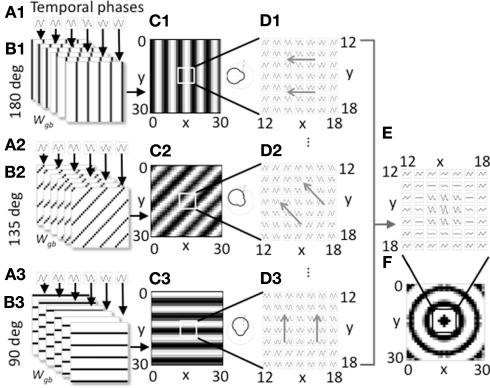
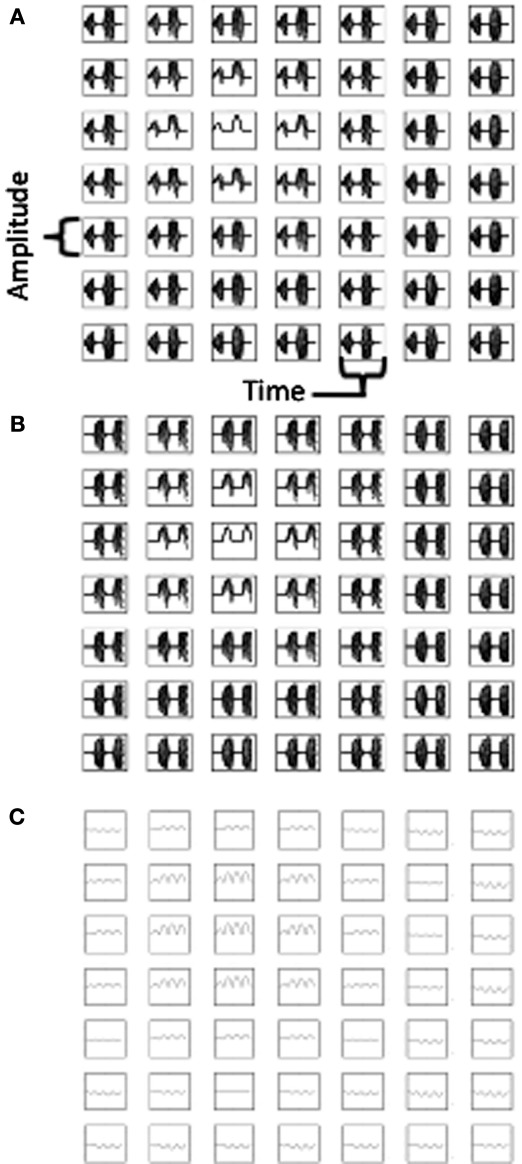
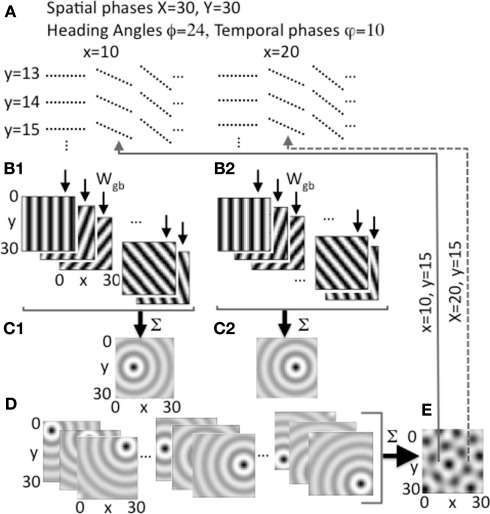
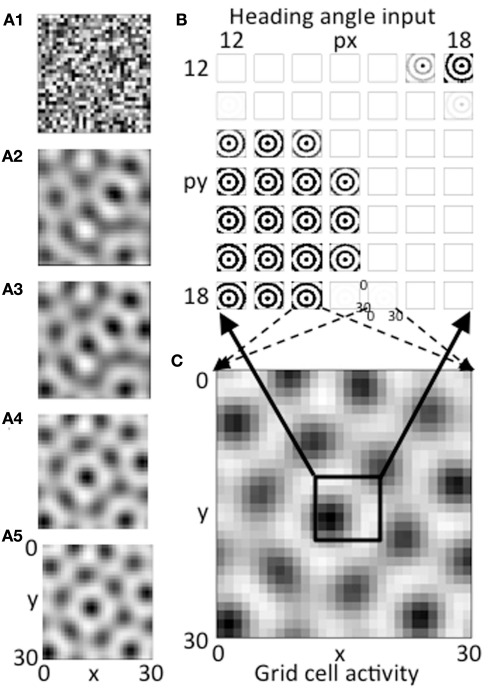
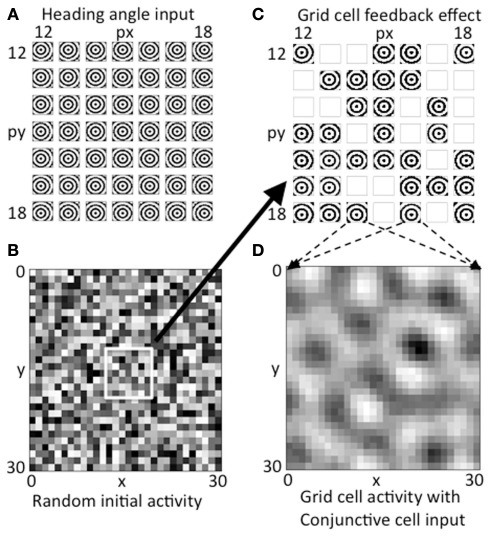
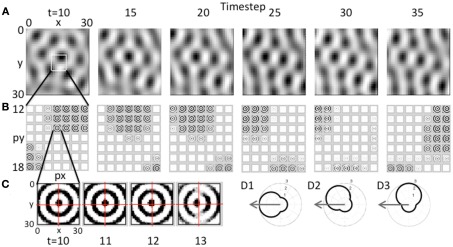
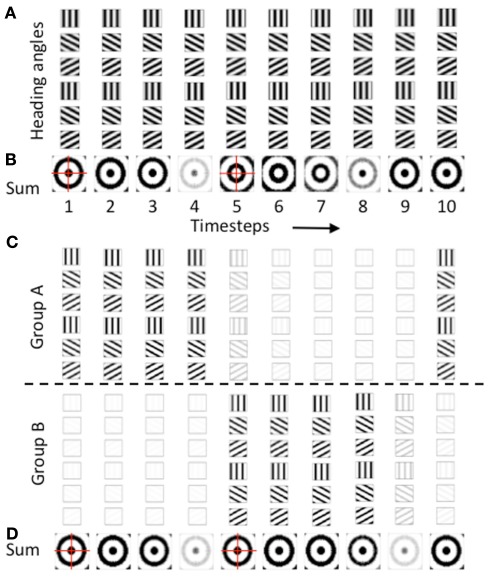
Different models have been able to account for different features of the data on grid cell firing properties, including the relationship of grid cells to cellular properties and network oscillations. This paper describes a model that combines elements of two major classes of models of grid cells: models using interactions of oscillations and models using attractor dynamics. This model includes a population of units with oscillatory input representing input from the medial septum. These units are termed heading angle cells because their connectivity depends upon heading angle in the environment as well as the spatial phase coded by the cell. These cells project to a population of grid cells. The sum of the heading angle input results in standing waves of circularly symmetric input to the grid cell population. Feedback from the grid cell population increases the activity of subsets of the heading angle cells, resulting in the network settling into activity patterns that resemble the patterns of firing fields in a population of grid cells. The properties of heading angle cells firing as conjunctive grid-by-head-direction cells can shift the grid cell firing according to movement velocity. The pattern of interaction of oscillations requires use of separate populations that fire on alternate cycles of the net theta rhythmic input to grid cells.
不同的模型已经能够解释网格细胞放电特性数据的不同特征,包括网格细胞与细胞特性和网络振荡的关系。本文描述了一个模型,它结合了两种主要的网格细胞模型的元素:使用振荡相互作用的模型和使用吸引子动力学的模型。该模型包括一个具有振荡输入的单元群体,代表来自中隔核的输入。这些单元被称为朝向角细胞,因为它们的连接性不仅取决于环境中的朝向角,还取决于细胞编码的空间相位。这些细胞投射到一个网格细胞群体。朝向角输入的总和导致网格细胞群体的圆形对称输入的驻波。来自网格细胞群体的反馈增加了朝向角细胞子集的活动,导致网络稳定为类似于网格细胞群体中放电场模式的活动模式。作为联合网格-朝向方向细胞的朝向角细胞的发射特性可以根据运动速度改变网格细胞的发射。振荡的相互作用模式需要使用单独的群体,这些群体在网格细胞的净θ节律输入的交替周期上发射。