School of Public Health and Institute of Health and Biomedical Innovation, Queensland University of Technology, Brisbane, Australia.
PLoS One. 2012;7(7):e42232. doi: 10.1371/journal.pone.0042232. Epub 2012 Jul 25.
Asthma is a serious global health problem. However, few studies have investigated the relationship between cold spells and pediatric outpatient visits for asthma.
To examine the association between cold spells and pediatric outpatient visits for asthma in Shanghai, China.
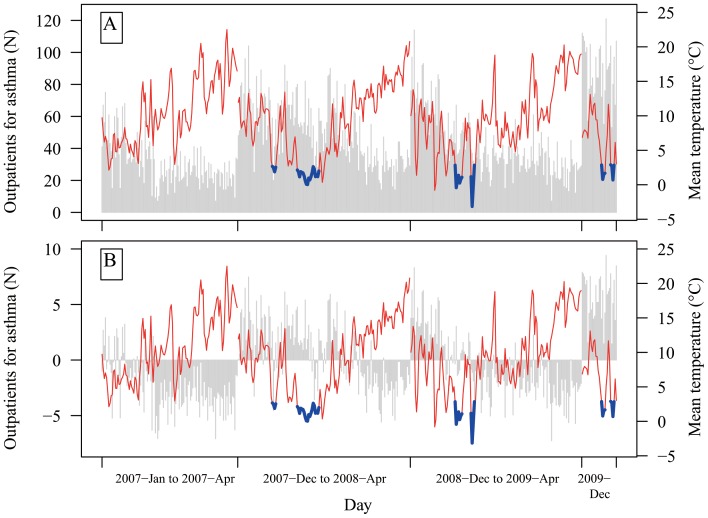
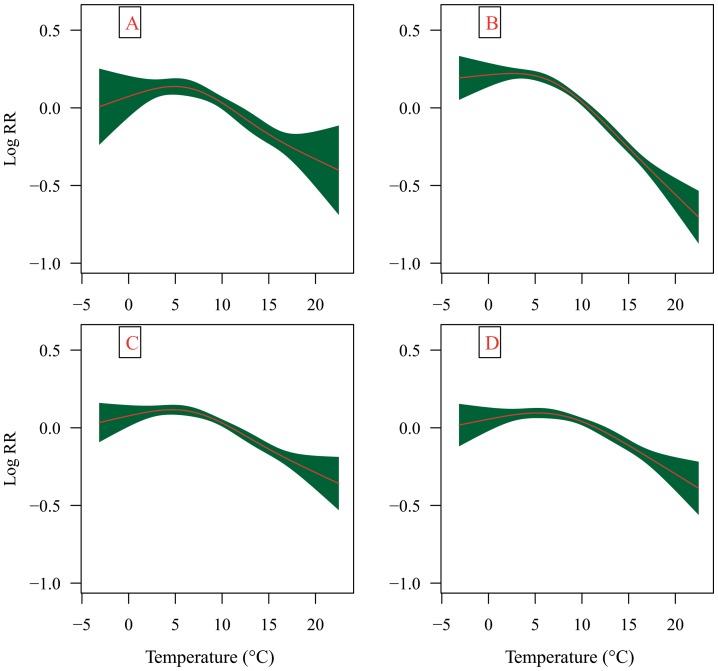
We collected daily data on pediatric outpatient visits for asthma, mean temperature, relative humidity, and ozone from Shanghai between 1 January 2007 and 31 December 2009. We defined cold spells as four or more consecutive days with temperature below the 5(th) percentile of temperature during 2007-2009. We used a Poisson regression model to examine the impact of temperature on pediatric outpatient visits for asthma in cold seasons during 2007 and 2009. We examined the effect of cold spells on asthma compared with non-cold spell days.
There was a significant relationship between cold temperatures and pediatric outpatient visits for asthma. The cold effects on children's asthma were observed at different lags. The lower the temperatures, the higher the risk for asthma attacks among children.
Cold temperatures, particularly cold spells, significantly increase the risk of pediatric outpatient visits for asthma. The findings suggest that asthma children need to be better protected from cold effects in winter.
哮喘是一个严重的全球性健康问题。然而,很少有研究调查寒冷天气与儿科哮喘门诊就诊之间的关系。
研究寒冷天气与中国上海儿科哮喘门诊就诊之间的关系。
我们收集了 2007 年 1 月 1 日至 2009 年 12 月 31 日期间上海儿科哮喘门诊就诊、平均温度、相对湿度和臭氧的每日数据。我们将寒冷天气定义为连续四天或以上的温度低于 2007-2009 年期间温度的第 5 百分位数。我们使用泊松回归模型检验了寒冷季节温度对 2007 年和 2009 年儿科哮喘门诊就诊的影响。我们研究了寒冷天气对哮喘的影响与非寒冷天气日的差异。
低温与儿科哮喘门诊就诊之间存在显著关系。寒冷天气对儿童哮喘的影响在不同的时间滞后下有所不同。温度越低,儿童哮喘发作的风险越高。
低温,特别是寒冷天气,显著增加了儿科哮喘门诊就诊的风险。研究结果表明,哮喘患儿在冬季需要更好地免受寒冷天气的影响。