Energy Biosciences Institute, University of Illinois, Urbana, Illinois, United States of America.
PLoS One. 2012;7(8):e43828. doi: 10.1371/journal.pone.0043828. Epub 2012 Aug 27.
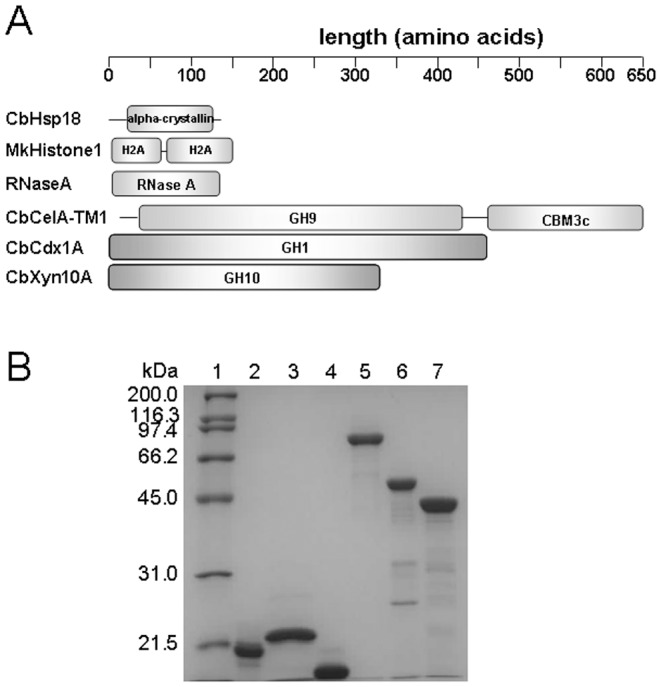
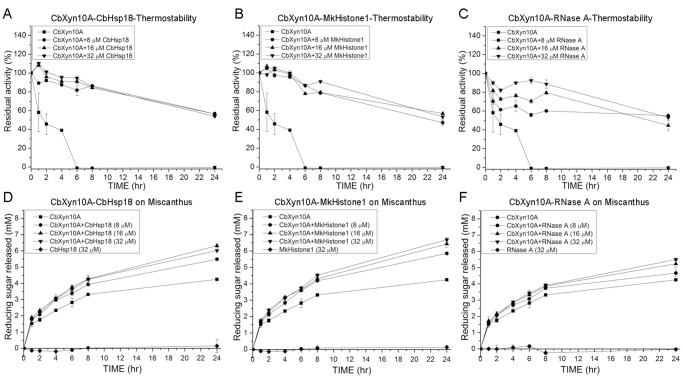
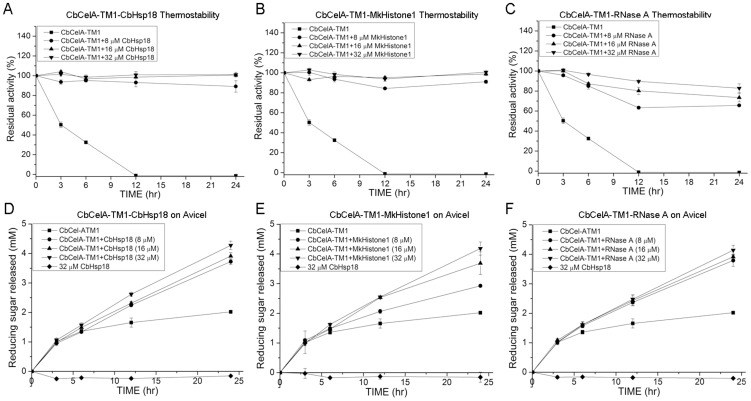
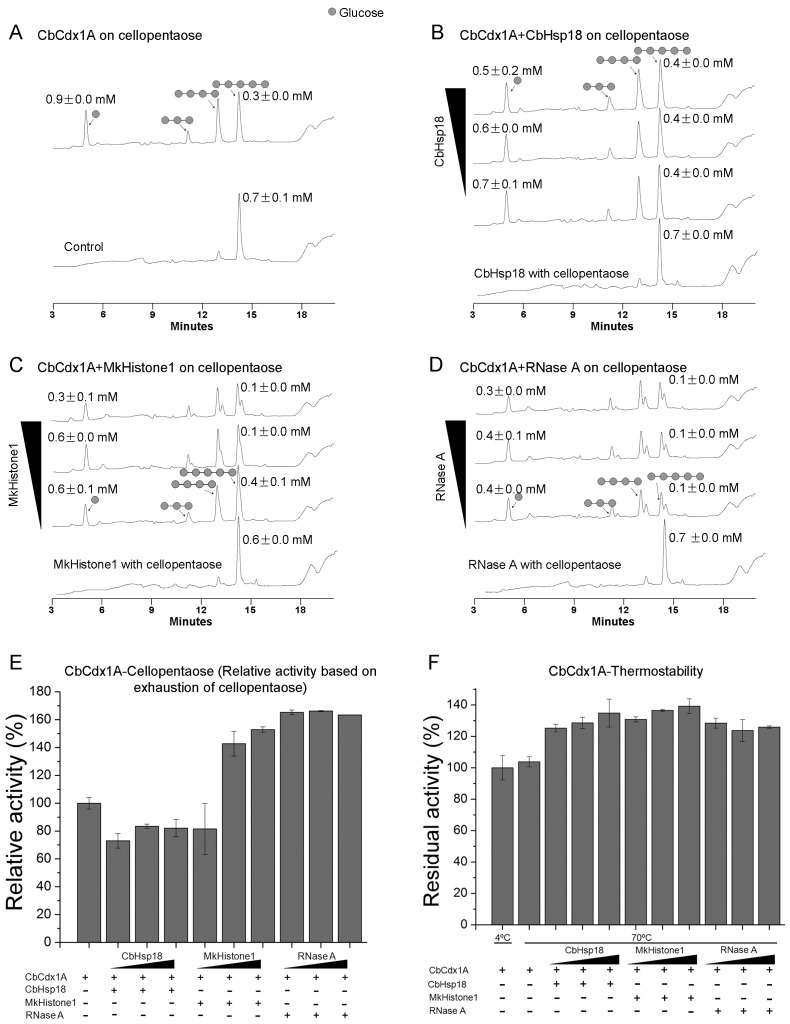
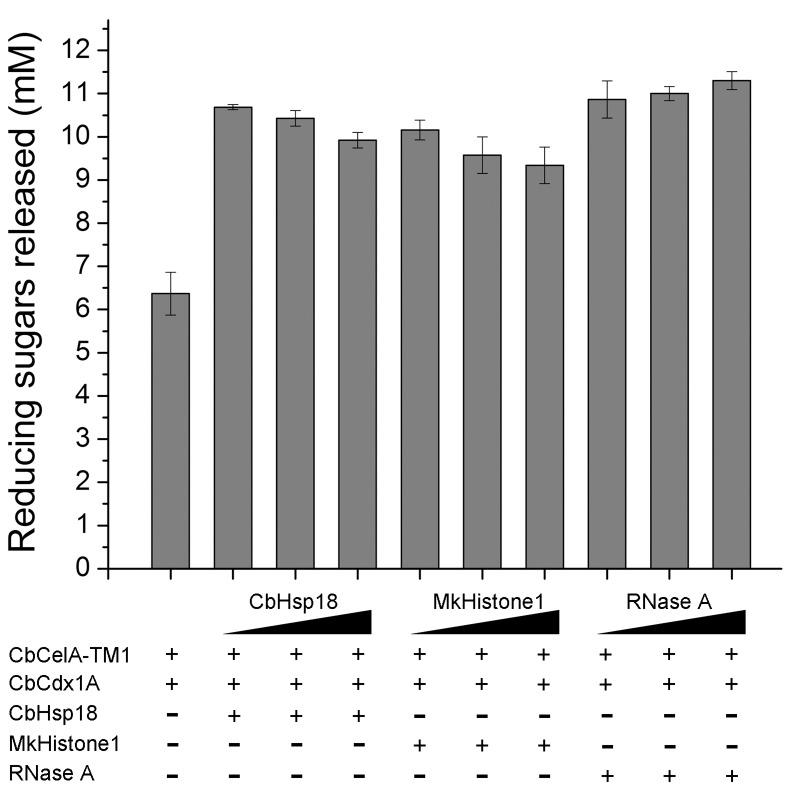
The glycoside hydrolases (GH) of Caldicellulosiruptor bescii are thermophilic enzymes, and therefore they can hydrolyze plant cell wall polysaccharides at high temperatures. Analyses of two C. bescii glycoside hydrolases, CbCelA-TM1 and CbXyn10A with cellulase and endoxylanase activity, respectively, demonstrated that each enzyme is highly thermostable under static incubation at 70°C. Both enzymes, however, rapidly lost their enzymatic activities when incubated at 70°C with end-over-end shaking. Since crowding conditions, even at low protein concentrations, seem to influence enzymatic properties, three non-glycoside hydrolase proteins were tested for their capacity to stabilize the thermophilic proteins at high temperatures. The three proteins investigated were a small heat shock protein CbHsp18 from C. bescii, a histone MkHistone1 from Methanopyrus kandleri, and bovine RNase A, from a commercial source. Fascinatingly, each of these proteins increased the thermostability of the glycoside hydrolases at 70°C during end-over-end shaking incubation, and this property translated into increases in hydrolysis of several substrates including the bioenergy feedstock Miscanthus. Furthermore, MkHistone1 and RNase A also altered the initial products released from the cello-oligosaccharide cellopentaose during hydrolysis with the cellodextrinase CbCdx1A, which further demonstrated the capacity of the three non-GH proteins to influence hydrolysis of substrates by the thermophilic glycoside hydrolases. The non-GH proteins used in the present report were small proteins derived from each of the three lineages of life, and therefore expand the space from which different polypeptides can be tested for their influence on plant cell wall hydrolysis, a critical step in the emerging biofuel industry.
热纤梭菌的糖苷水解酶(GH)是嗜热酶,因此它们可以在高温下水解植物细胞壁多糖。对具有纤维素酶和内切木聚糖酶活性的两种热纤梭菌糖苷水解酶 CbCelA-TM1 和 CbXyn10A 的分析表明,每种酶在 70°C 下静态孵育时都具有很高的热稳定性。然而,当在 70°C 下进行端到端搅拌孵育时,这两种酶的酶活性迅速丧失。由于拥挤条件(即使在低蛋白浓度下)似乎会影响酶的性质,因此测试了三种非糖苷水解酶蛋白在高温下稳定嗜热蛋白的能力。研究的三种蛋白质是来自热纤梭菌的小热休克蛋白 CbHsp18、来自产甲烷球菌的组蛋白 MkHistone1 以及来自商业来源的牛核糖核酸酶 A。令人着迷的是,这些蛋白质中的每一种都在端到端搅拌孵育期间提高了糖苷水解酶在 70°C 时的热稳定性,并且这种特性转化为增加了几种底物的水解,包括生物能源原料芒草。此外,MkHistone1 和 RNase A 还改变了在纤维素酶 CbCdx1A 水解时从纤维五糖中释放的初始产物,这进一步证明了这三种非 GH 蛋白影响嗜热糖苷水解酶水解底物的能力。本报告中使用的非 GH 蛋白是来自三个生命谱系的每种的小蛋白,因此扩大了可以测试不同多肽对植物细胞壁水解影响的空间,植物细胞壁水解是新兴生物燃料行业的关键步骤。