Department of Electrical and Computer Engineering, University of Minnesota, Minneapolis, MN 55455, USA.
Sci Rep. 2012;2:622. doi: 10.1038/srep00622. Epub 2012 Sep 3.
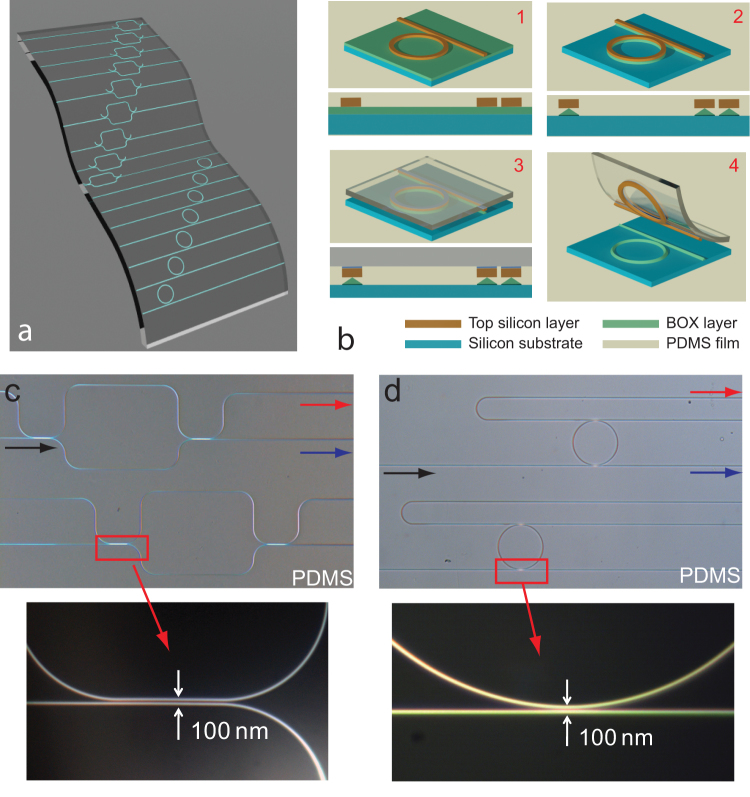
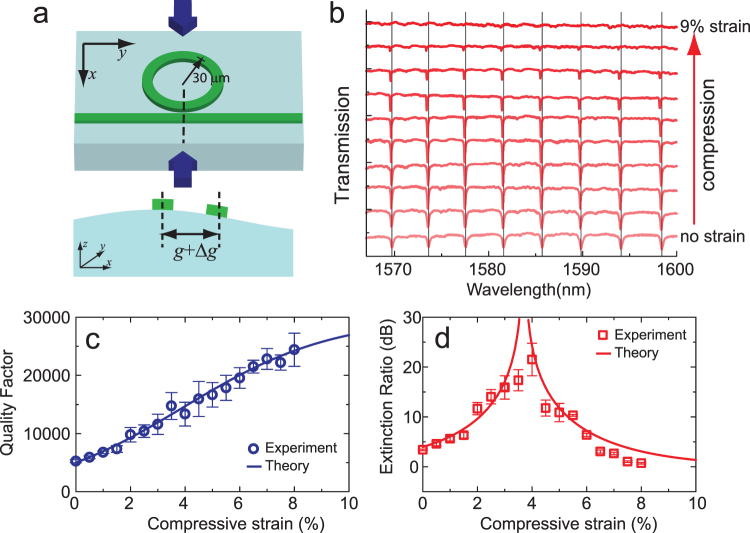
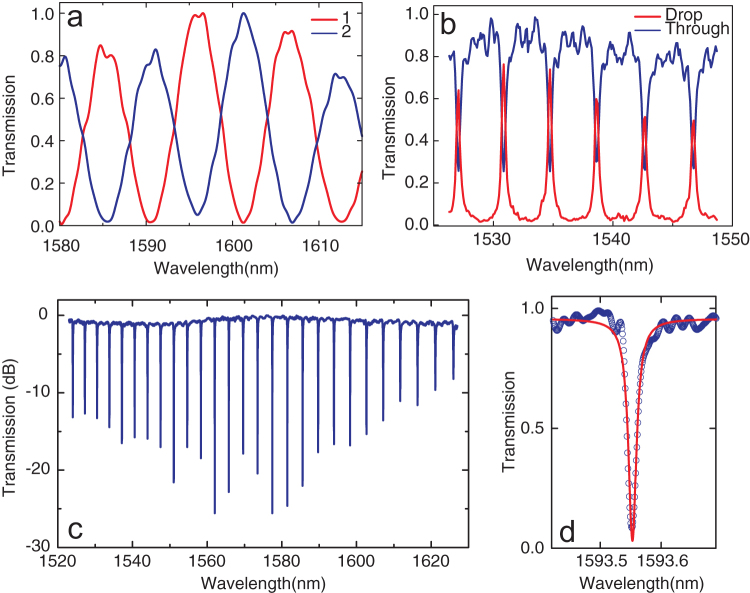
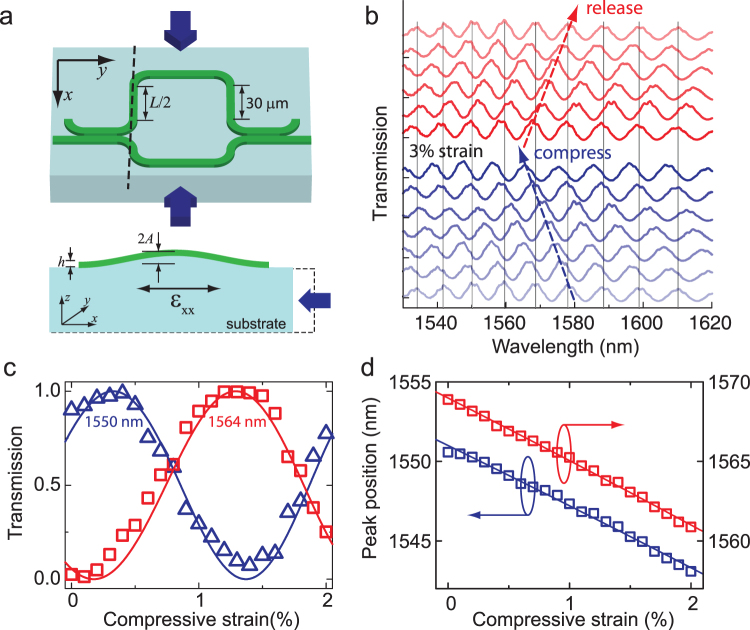
Flexible microelectronics has shown tremendous promise in a broad spectrum of applications, especially those that cannot be addressed by conventional microelectronics in rigid materials and constructions. These unconventional yet important applications range from flexible consumer electronics to conformal sensor arrays and biomedical devices. A recent paradigm shift in implementing flexible electronics is to physically transfer highly integrated devices made in high-quality, crystalline semiconductors on to plastic substrates. Here we demonstrate a flexible form of silicon photonics using the transfer-and-bond fabrication method. Photonic circuits including interferometers and resonators have been transferred onto flexible plastic substrates with preserved functionalities and performance. By mechanically deforming, the optical characteristics of the devices can be tuned reversibly over a remarkably large range. The demonstration of the new flexible photonic systems based on the silicon-on-plastic (SOP) platform could open the door to many future applications, including tunable photonics, optomechanical sensors and biomechanical and bio-photonic probes.
柔性微电子在广泛的应用中展现出了巨大的潜力,尤其是在传统微电子学无法应用于刚性材料和结构的领域。这些非传统但重要的应用包括从柔性消费电子产品到共形传感器阵列和生物医学设备。最近,在实现柔性电子产品方面出现了一种新的范例转变,即将高质量、结晶半导体制成的高度集成器件物理转移到塑料衬底上。在这里,我们使用转移和键合制造方法展示了一种柔性形式的硅光子学。包括干涉仪和谐振器在内的光子电路已被转移到具有保留功能和性能的柔性塑料衬底上。通过机械变形,可以在非常大的范围内可逆地调整器件的光学特性。基于硅上塑料(SOP)平台的新型柔性光子系统的演示为许多未来的应用打开了大门,包括可调谐光子学、光机械传感器以及生物力学和生物光子学探头。