Department of Electrical and Computer Engineering, Texas A&M University, College Station, Texas, 77843, United States.
Department of Materials Science and Engineering, Texas A&M University, College Station, Texas, 77843, United States.
Sci Rep. 2019 Mar 11;9(1):4153. doi: 10.1038/s41598-019-39062-z.
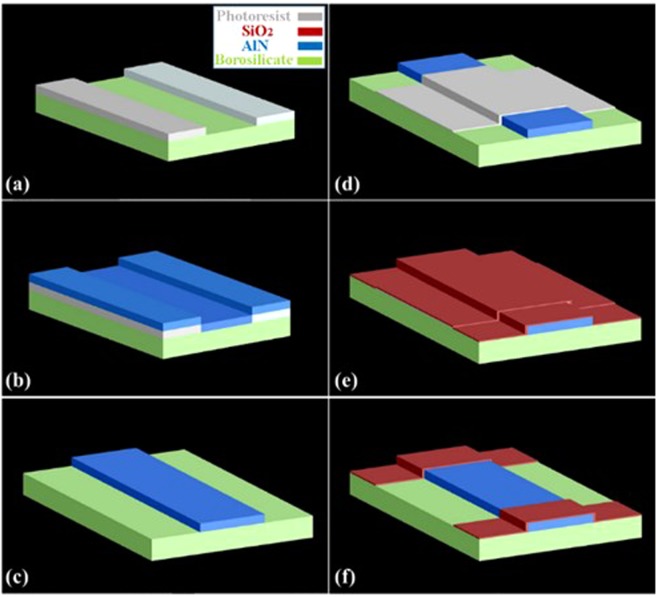
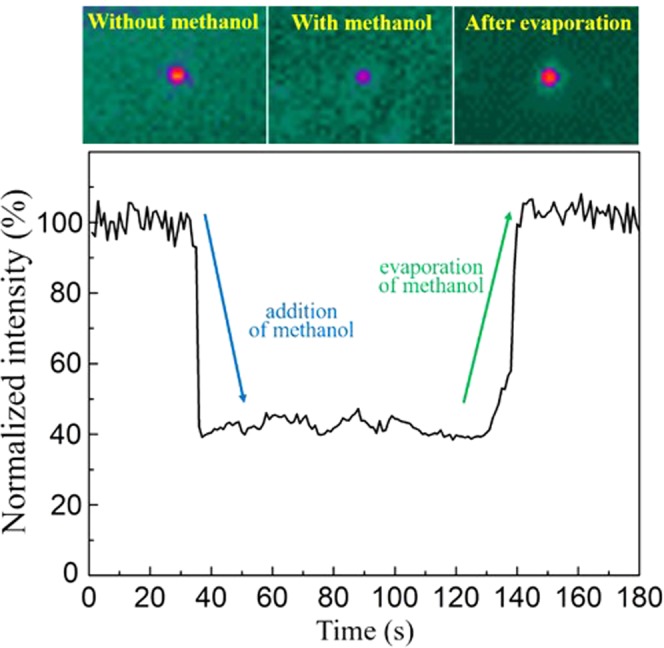
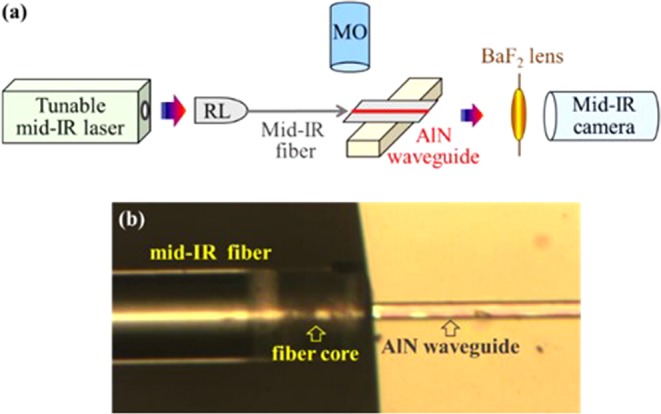
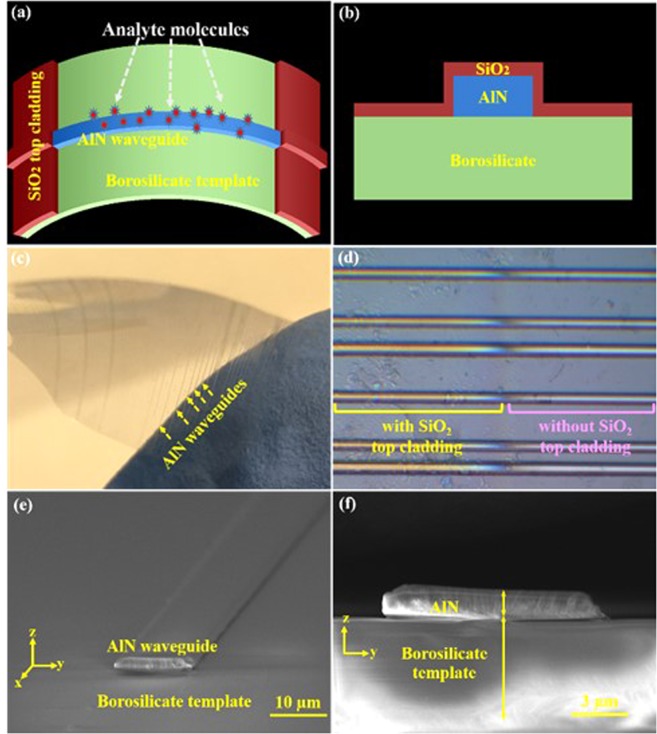
Chip-scale chemical detections were demonstrated by mid-Infrared (mid-IR) integrated optics made by aluminum nitride (AlN) waveguides on flexible borosilicate templates. The AlN film was deposited using sputtering at room temperature, and it exhibited a broad infrared transmittance up to λ = 9 µm. The AlN waveguide profile was created by microelectronic fabrication processes. The sensor is bendable because it has a thickness less than 30 µm that significantly decreases the strain. A bright fundamental mode was obtained at λ = 2.50-2.65 µm without mode distortion or scattering observed. By spectrum scanning at the -OH absorption band, the waveguide sensor was able to identify different hydroxyl compounds, such as water, methanol, and ethanol, and the concentrations of their mixtures. Real-time methanol monitoring was achieved by reading the intensity change of the waveguide mode at λ = 2.65 μm, which overlap with the stretch absorption of the hydroxyl bond. Due to the advantages of mechanical flexibility and broad mid-IR transparency, the AlN chemical sensor will enable microphotonic devices for wearables and remote biomedical and environmental detection.
通过在柔性硼硅酸盐模板上制造的氮化铝 (AlN) 波导实现了片上化学检测。采用室温溅射法沉积 AlN 薄膜,其红外透过率在 λ = 9 μm 以上。AlN 波导轮廓由微电子制造工艺创建。由于厚度小于 30 μm,传感器具有柔韧性,可显著降低应变。在 λ = 2.50-2.65 μm 处获得了明亮的基模,没有观察到模式失真或散射。通过在 -OH 吸收带进行光谱扫描,波导传感器能够识别不同的羟基化合物,如水、甲醇和乙醇,以及它们混合物的浓度。通过读取与羟基键伸缩吸收重叠的 λ = 2.65 μm 处波导模式强度变化,实现了实时甲醇监测。由于具有机械柔韧性和宽中红外透明度的优势,AlN 化学传感器将使可穿戴设备以及远程生物医学和环境检测的微光子器件成为可能。