Biophysics Group, Institute of Experimental Physics, Otto von Guericke University, Magdeburg, Germany.
PLoS One. 2012;7(9):e43276. doi: 10.1371/journal.pone.0043276. Epub 2012 Sep 11.
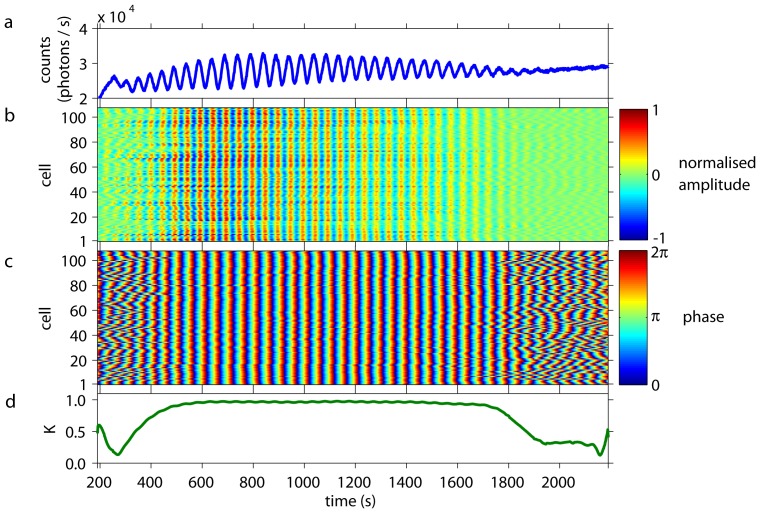
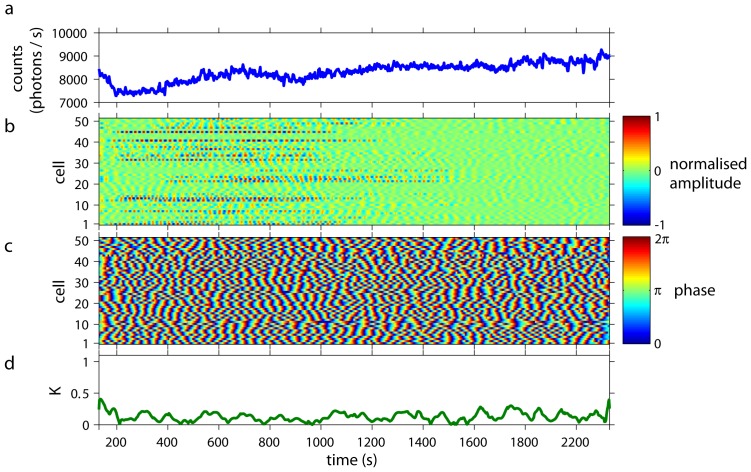
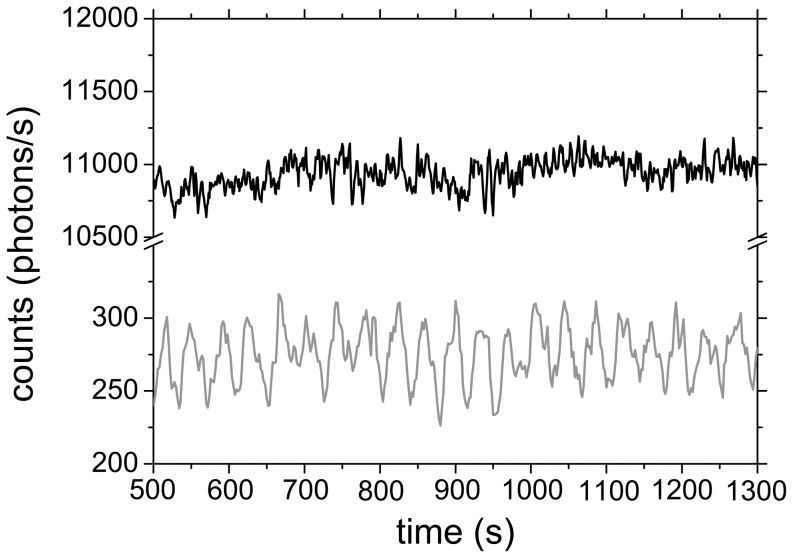
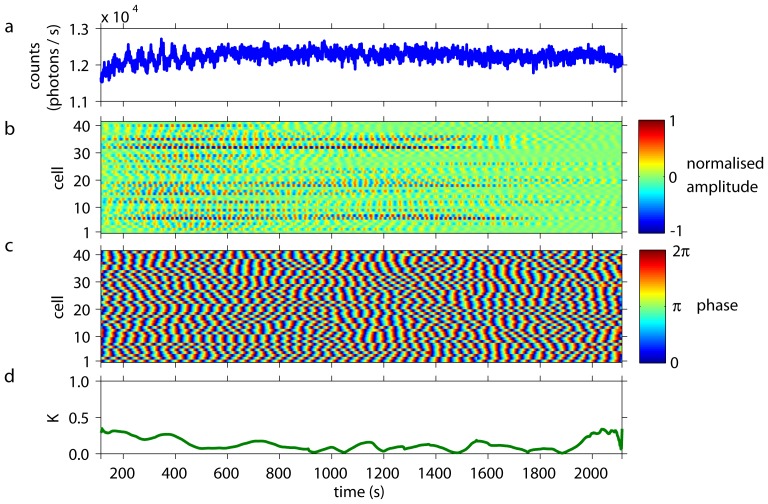
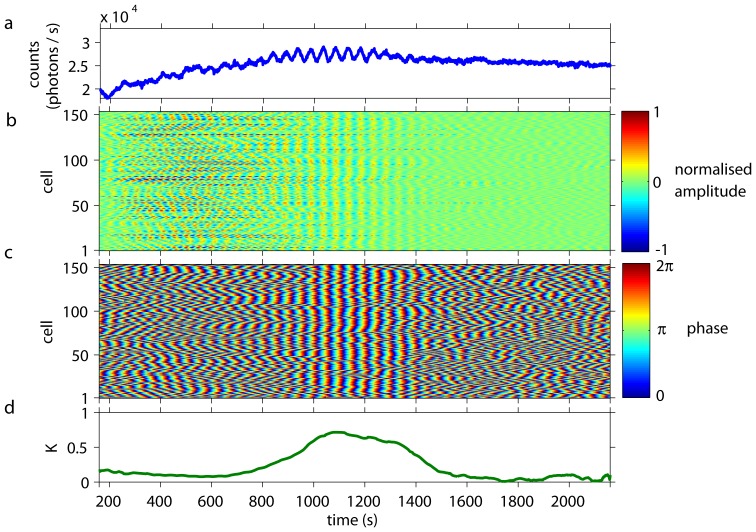
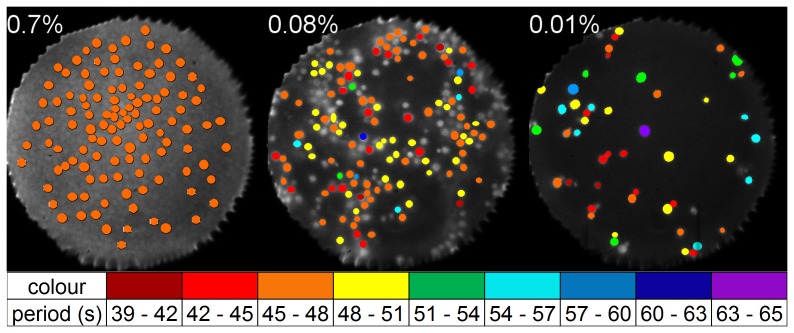
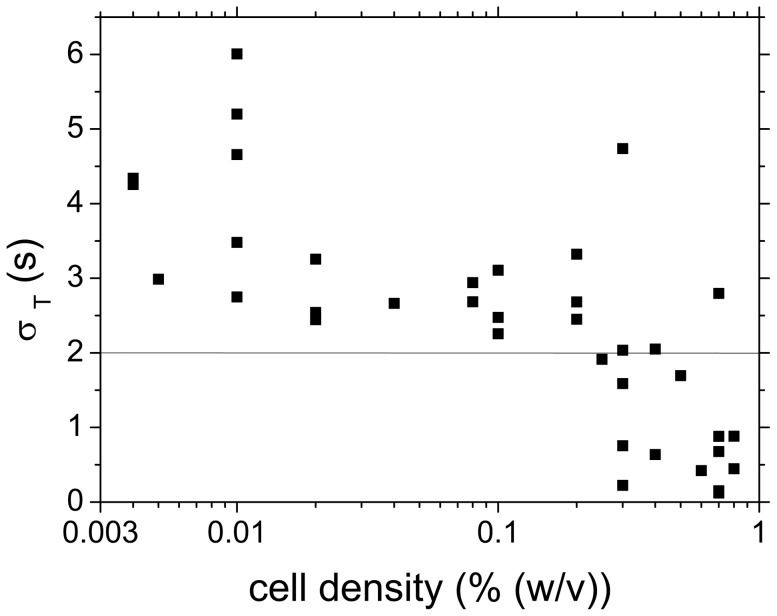
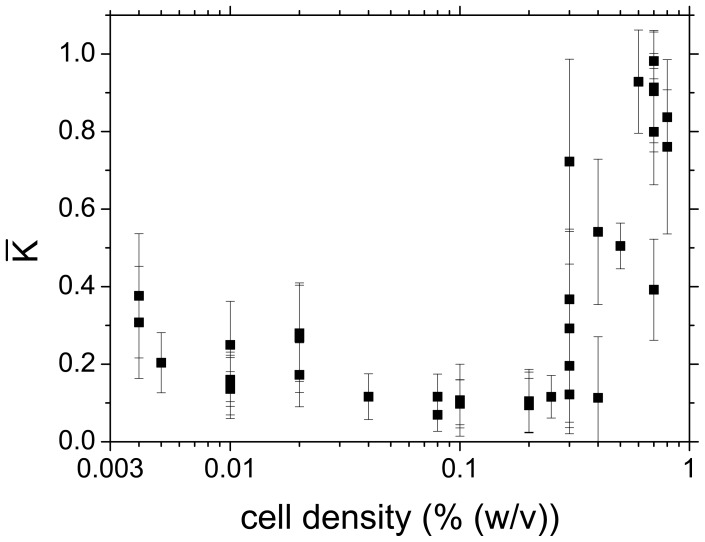
Glycolytic oscillations of intact yeast cells of the strain Saccharomyces carlsbergensis were investigated at both the levels of cell populations and of individual cells. Individual cells showed glycolytic oscillations even at very low cell densities (e.g. 1.0 x 10(5) cells/ml). By contrast, the collective behaviour on the population level was cell density-dependent: at high cell densities it is oscillatory, but below the threshold density of 1.0 x 10(6) cells/ml the collective dynamics becomes quiescent. We demonstrate that the transition in the collective dynamics is caused by the desynchronisation of the oscillations of individual cells. This is characteristic for a Kuramoto transition. Spatially resolved measurements at low cell densities revealed that even cells that adhere to their neighbours oscillated with their own, independent frequencies and phases.
我们研究了酿酒酵母细胞株卡尔酵母的完整细胞在细胞群体和单个细胞水平上的糖酵解振荡。即使在非常低的细胞密度(例如 1.0 x 10(5) 个细胞/ml)下,单个细胞也表现出糖酵解振荡。相比之下,群体水平上的集体行为取决于细胞密度:在高细胞密度下是振荡的,但低于 1.0 x 10(6) 个细胞/ml 的阈值密度时,集体动力学变得静止。我们证明,集体动力学的转变是由单个细胞振荡的去同步引起的。这是一个典型的 Kuramoto 转变。在低细胞密度下进行的空间分辨测量表明,即使与相邻细胞粘附的细胞也以自己独立的频率和相位振荡。