Basevi Hector R A, Tichauer Kenneth M, Leblond Frederic, Dehghani Hamid, Guggenheim James A, Holt Robert W, Styles Iain B
PSIBS, University of Birmingham, Edgbaston, Birmingham, B15 2TT, UK ; School of Computer Science, University of Birmingham, Edgbaston, Birmingham, B15 2TT, UK.
Biomed Opt Express. 2012 Sep 1;3(9):2131-41. doi: 10.1364/BOE.3.002131. Epub 2012 Aug 15.
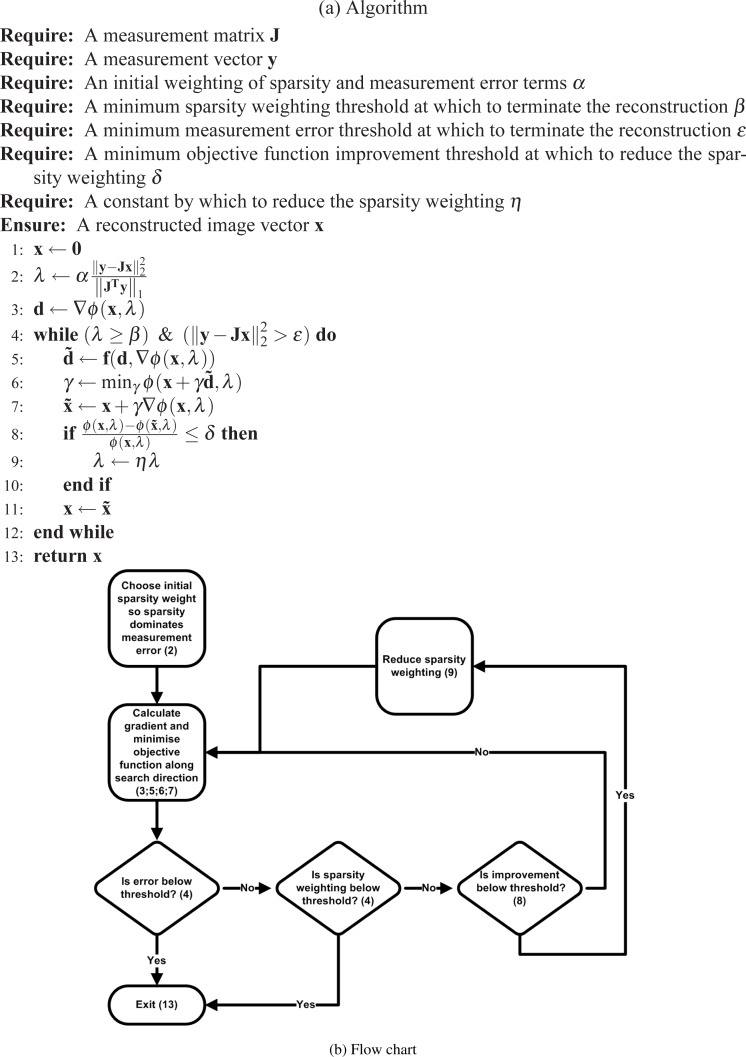
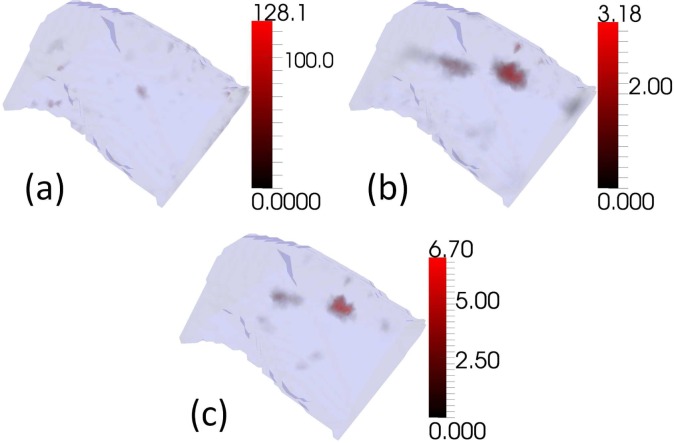
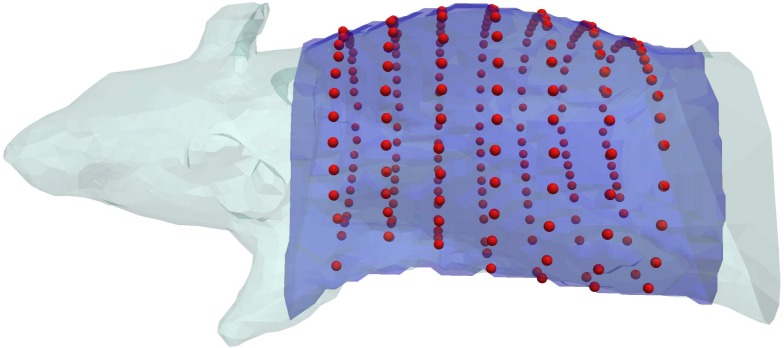
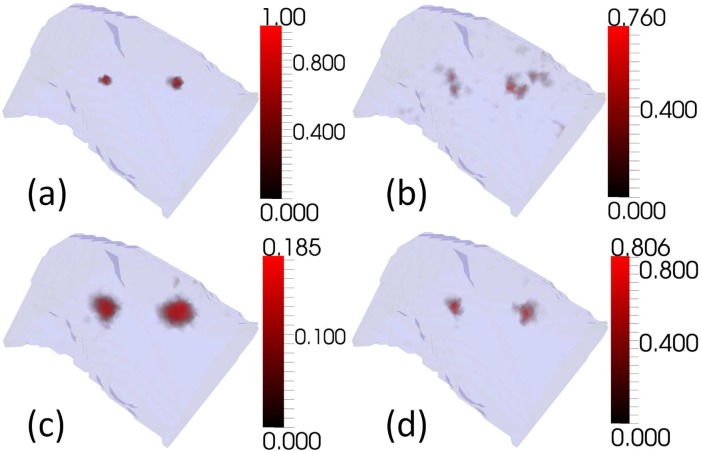
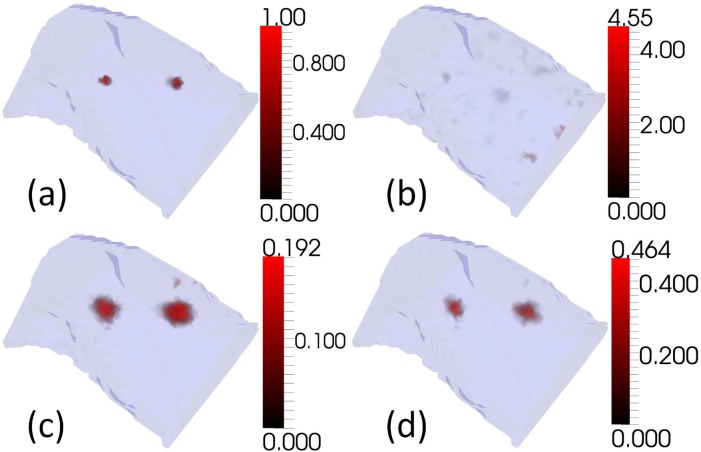
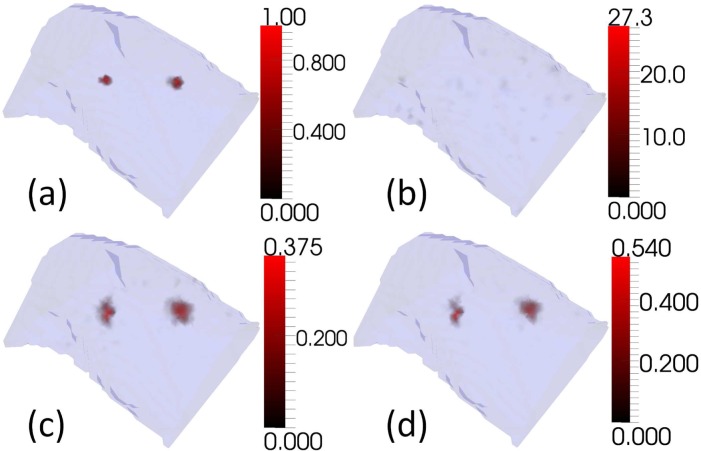
Bioluminescence Tomography attempts to quantify 3-dimensional luminophore distributions from surface measurements of the light distribution. The reconstruction problem is typically severely under-determined due to the number and location of measurements, but in certain cases the molecules or cells of interest form localised clusters, resulting in a distribution of luminophores that is spatially sparse. A Conjugate Gradient-based reconstruction algorithm using Compressive Sensing was designed to take advantage of this sparsity, using a multistage sparsity reduction approach to remove the need to choose sparsity weighting a priori. Numerical simulations were used to examine the effect of noise on reconstruction accuracy. Tomographic bioluminescence measurements of a Caliper XPM-2 Phantom Mouse were acquired and reconstructions from simulation and this experimental data show that Compressive Sensing-based reconstruction is superior to standard reconstruction techniques, particularly in the presence of noise.
生物发光断层扫描试图通过光分布的表面测量来量化三维发光团分布。由于测量的数量和位置,重建问题通常严重欠定,但在某些情况下,感兴趣的分子或细胞形成局部簇,导致发光团分布在空间上稀疏。设计了一种基于共轭梯度的使用压缩感知的重建算法,以利用这种稀疏性,采用多阶段稀疏性降低方法,无需事先选择稀疏性加权。使用数值模拟来研究噪声对重建精度的影响。获取了卡尺XPM - 2幻影小鼠的断层生物发光测量数据,模拟和该实验数据的重建表明,基于压缩感知的重建优于标准重建技术,尤其是在存在噪声的情况下。