Department of Bioinformatics, Friedrich Schiller University Jena, Jena, Germany.
PLoS Comput Biol. 2012;8(9):e1002697. doi: 10.1371/journal.pcbi.1002697. Epub 2012 Sep 20.
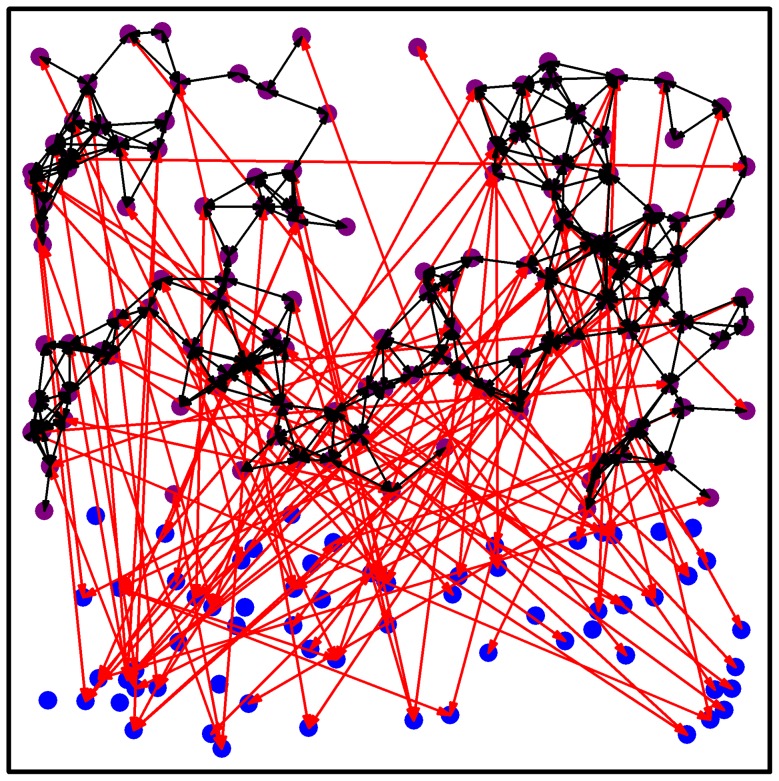
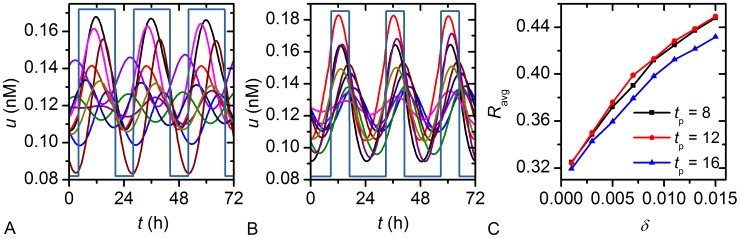
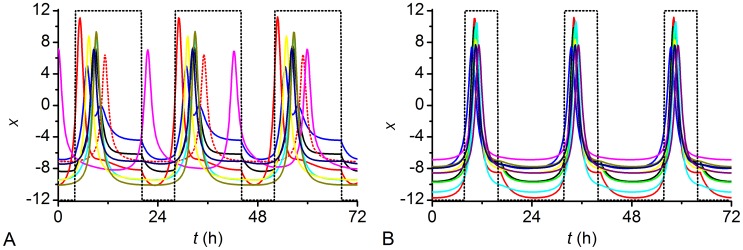
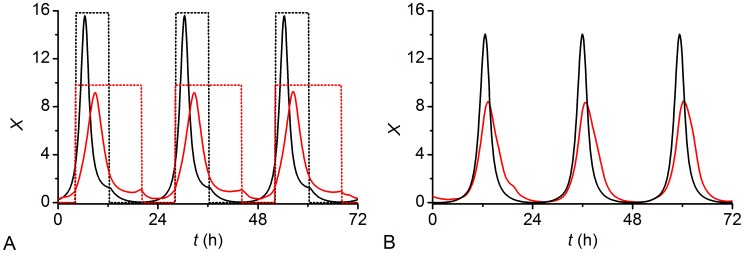
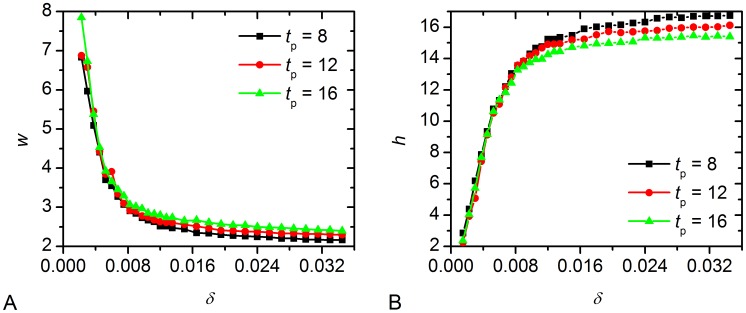
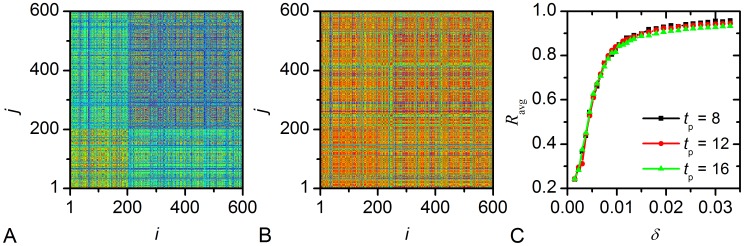
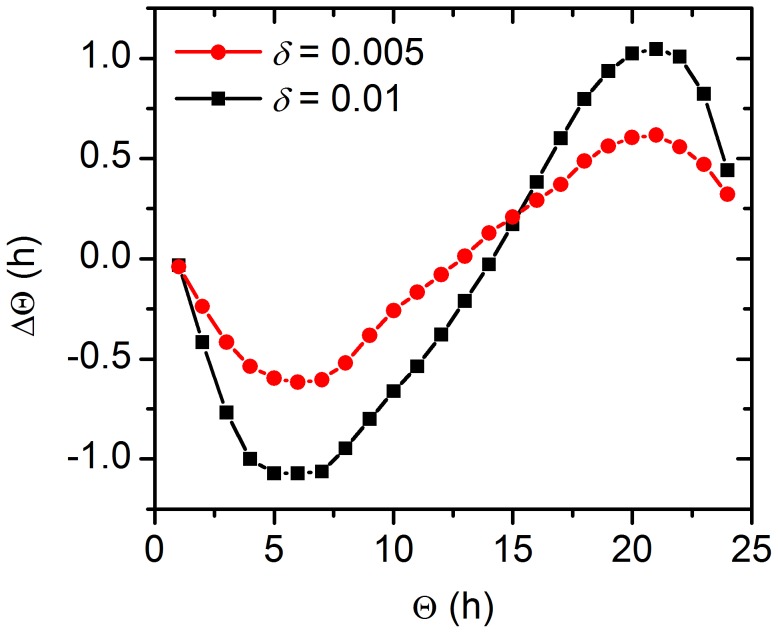
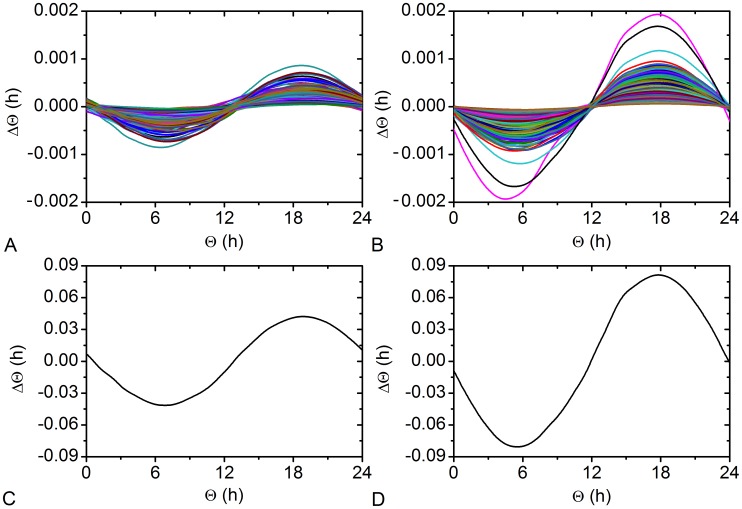
The dynamics of circadian rhythms needs to be adapted to day length changes between summer and winter. It has been observed experimentally, however, that the dynamics of individual neurons of the suprachiasmatic nucleus (SCN) does not change as the seasons change. Rather, the seasonal adaptation of the circadian clock is hypothesized to be a consequence of changes in the intercellular dynamics, which leads to a phase distribution of electrical activity of SCN neurons that is narrower in winter and broader during summer. Yet to understand this complex intercellular dynamics, a more thorough understanding of the impact of the network structure formed by the SCN neurons is needed. To that effect, we propose a mathematical model for the dynamics of the SCN neuronal architecture in which the structure of the network plays a pivotal role. Using our model we show that the fraction of long-range cell-to-cell connections and the seasonal changes in the daily rhythms may be tightly related. In particular, simulations of the proposed mathematical model indicate that the fraction of long-range connections between the cells adjusts the phase distribution and consequently the length of the behavioral activity as follows: dense long-range connections during winter lead to a narrow activity phase, while rare long-range connections during summer lead to a broad activity phase. Our model is also able to account for the experimental observations indicating a larger light-induced phase-shift of the circadian clock during winter, which we show to be a consequence of higher synchronization between neurons. Our model thus provides evidence that the variations in the seasonal dynamics of circadian clocks can in part also be understood and regulated by the plasticity of the SCN network structure.
昼夜节律的动力学需要适应夏季和冬季之间的昼长变化。然而,已经从实验中观察到,视交叉上核(SCN)的单个神经元的动力学不会随着季节的变化而改变。相反,昼夜节律的季节性适应被假设是细胞间动力学变化的结果,这导致 SCN 神经元的电活动相位分布在冬季变窄,夏季变宽。然而,为了理解这种复杂的细胞间动力学,需要更深入地了解 SCN 神经元形成的网络结构的影响。为此,我们提出了一个 SCN 神经元结构动力学的数学模型,其中网络结构起着关键作用。使用我们的模型,我们表明长程细胞间连接的分数和每日节律的季节性变化可能密切相关。特别是,所提出的数学模型的模拟表明,细胞间的长程连接分数调整了相位分布,从而调整了行为活动的长度:冬季密集的长程连接导致活动相位变窄,而夏季罕见的长程连接导致活动相位变宽。我们的模型还能够解释表明冬季光诱导的生物钟相位偏移较大的实验观察结果,我们表明这是神经元之间更高同步性的结果。因此,我们的模型提供了证据表明,昼夜节律时钟的季节性动态变化部分也可以通过 SCN 网络结构的可塑性来理解和调节。