Departamento de Fundamentos y Métodos de la Psicología, University of Deusto, Bilbao, Spain.
PLoS One. 2012;7(9):e46203. doi: 10.1371/journal.pone.0046203. Epub 2012 Sep 27.
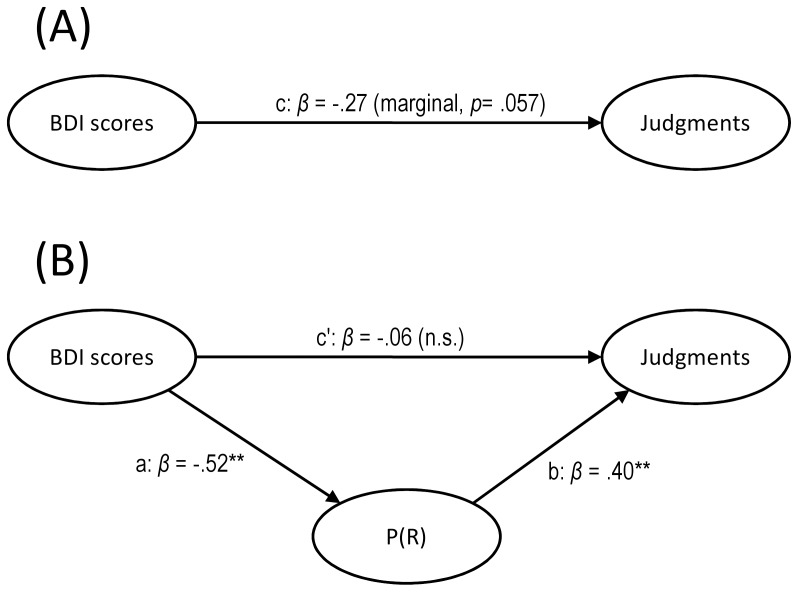
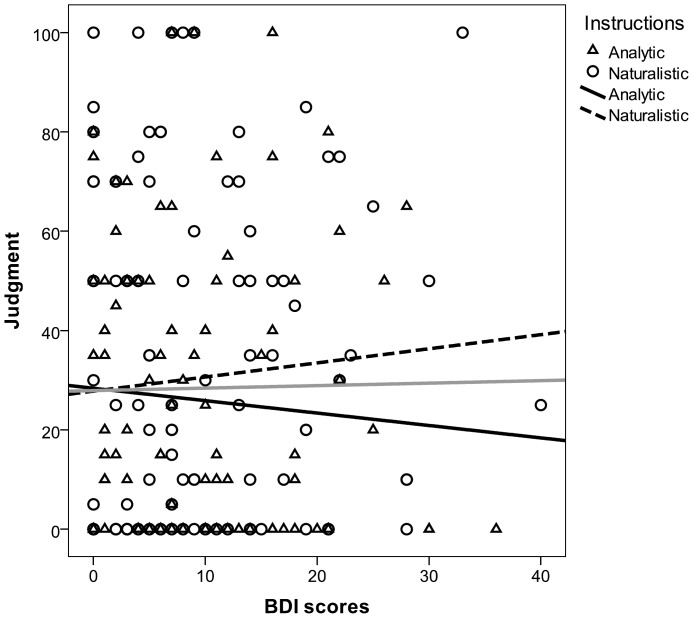
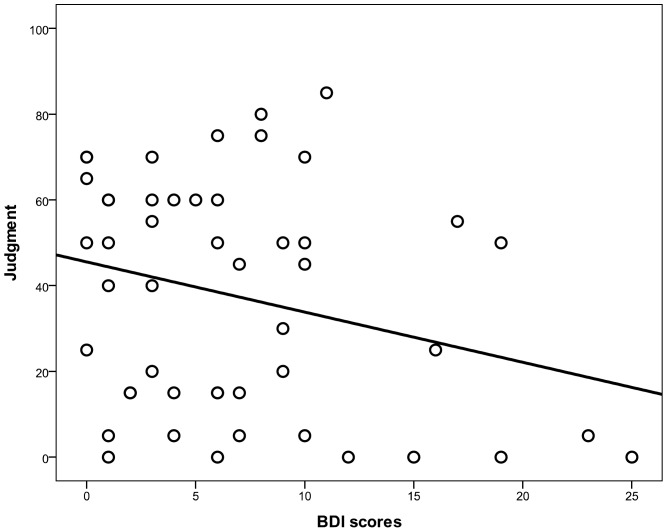
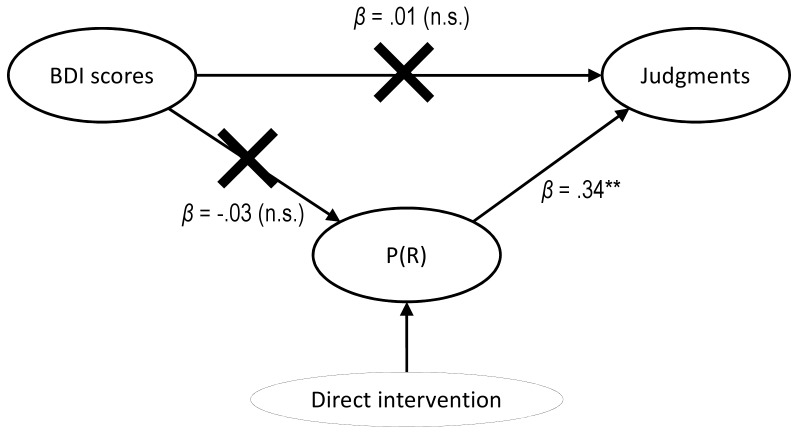
Several classic studies have concluded that the accuracy of identifying uncontrollable situations depends heavily on depressive mood. Nondepressed participants tend to exhibit an optimistic illusion of control, whereas depressed participants tend to better detect a lack of control. Recently, we suggested that the different activity levels (measured as the probability of responding during a contingency learning task) exhibited by depressed and nondepressed individuals is partly responsible for this effect. The two studies presented in this paper provide further support for this mediational hypothesis, in which mood is the distal cause of the illusion of control operating through activity level, the proximal cause. In Study 1, the probability of responding, P(R), was found to be a mediator variable between the depressive symptoms and the judgments of control. In Study 2, we intervened directly on the mediator variable: The P(R) for both depressed and nondepressed participants was manipulated through instructions. Our results confirm that P(R) manipulation produced differences in the participants' perceptions of uncontrollability. Importantly, the intervention on the mediator variable cancelled the effect of the distal cause; the participants' judgments of control were no longer mood dependent when the P(R) was manipulated. This result supports the hypothesis that the so-called depressive realism effect is actually mediated by the probability of responding.
几项经典研究得出结论,识别不可控情况的准确性在很大程度上取决于抑郁情绪。非抑郁参与者往往表现出乐观的控制错觉,而抑郁参与者往往更能发现缺乏控制。最近,我们提出,抑郁和非抑郁个体表现出的不同活动水平(以在应急学习任务中的反应概率来衡量)部分解释了这种效应。本文介绍的两项研究进一步支持了这种中介假设,即情绪是通过活动水平(近端原因)影响控制错觉的远程原因。在研究 1 中,反应概率 P(R) 被发现是抑郁症状和控制判断之间的中介变量。在研究 2 中,我们直接干预了中介变量:通过指令操纵抑郁和非抑郁参与者的 P(R)。我们的结果证实,P(R)操纵会导致参与者对不可控性的感知产生差异。重要的是,当 P(R)被操纵时,中介变量的干预消除了远程原因的影响;当 P(R)被操纵时,参与者对控制的判断不再取决于情绪。这一结果支持了这样一种假设,即所谓的抑郁现实主义效应实际上是由反应概率介导的。