Department of Molecular Genetics, University of Toronto, Toronto, Ontario, Canada.
mBio. 2012 Oct 2;3(5). doi: 10.1128/mBio.00238-12. Print 2012.
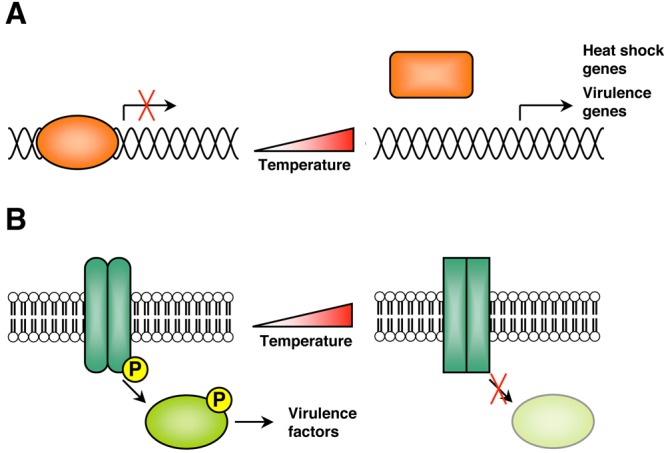
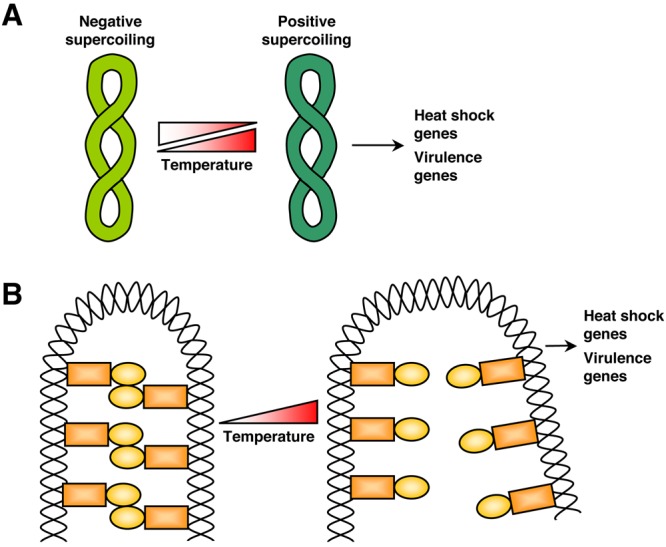
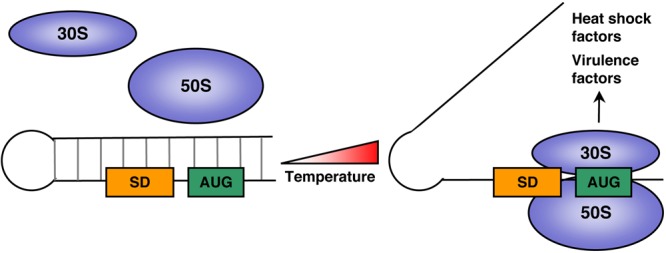
Temperature is a critical and ubiquitous environmental signal that governs the development and virulence of diverse microbial species, including viruses, archaea, bacteria, fungi, and parasites. Microbial survival is contingent upon initiating appropriate responses to the cellular stress induced by severe environmental temperature change. In the case of microbial pathogens, development and virulence are often coupled to sensing host physiological temperatures. As such, microbes have developed diverse molecular strategies to sense fluctuations in temperature, and nearly all cellular molecules, including proteins, lipids, RNA, and DNA, can act as thermosensors that detect changes in environmental temperature and initiate relevant cellular responses. The myriad of molecular mechanisms by which microbes sense and respond to temperature reveals an elegant repertoire of strategies to orchestrate cellular signaling, developmental programs, and virulence with spatial and temporal environmental cues.
温度是一种关键且普遍存在的环境信号,它控制着包括病毒、古菌、细菌、真菌和寄生虫在内的各种微生物的发育和毒力。微生物的生存取决于对严重环境温度变化引起的细胞应激做出适当的反应。对于微生物病原体,其发育和毒力通常与感知宿主生理温度有关。因此,微生物已经开发出多种分子策略来感知温度的波动,几乎所有的细胞分子,包括蛋白质、脂质、RNA 和 DNA,都可以作为温度传感器,检测环境温度的变化并启动相关的细胞反应。微生物感知和响应温度的众多分子机制揭示了一系列巧妙的策略,用于协调细胞信号转导、发育程序和毒力,以及时空环境线索。