Department of Internal Medicine, University of Utah School of Medicine, Salt Lake City, Utah 84112, USA.
Annu Rev Physiol. 2013;75:569-91. doi: 10.1146/annurev-physiol-030212-183752. Epub 2012 Oct 1.
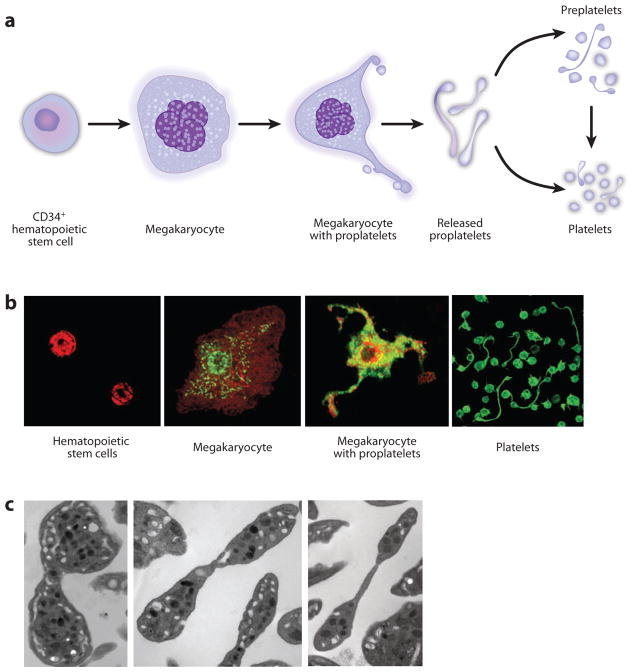
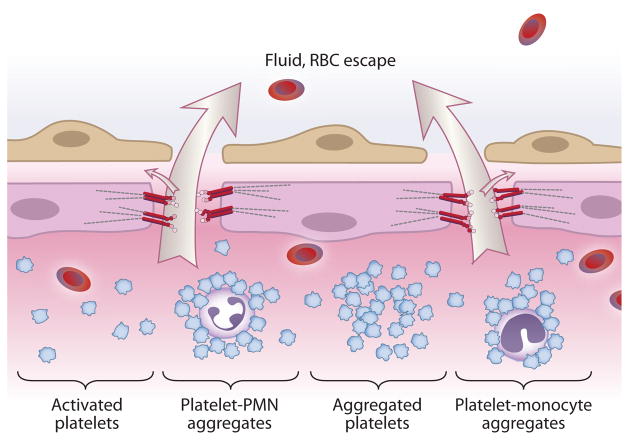
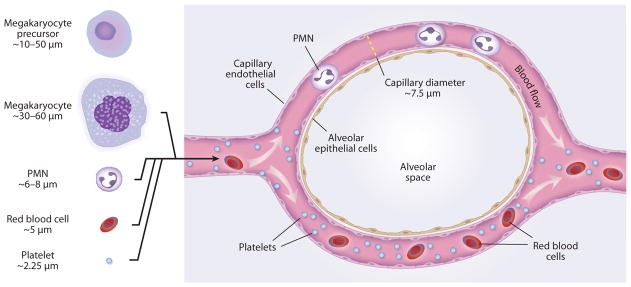
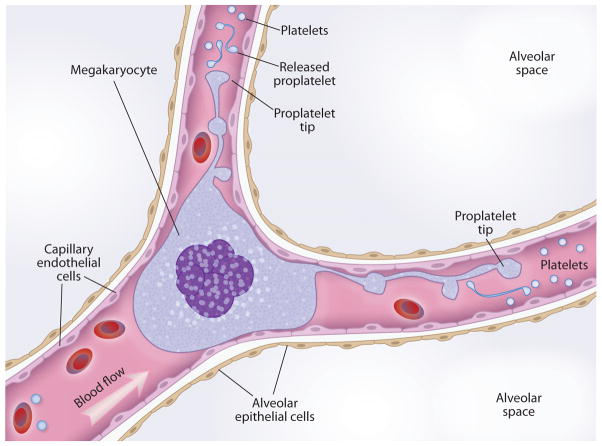
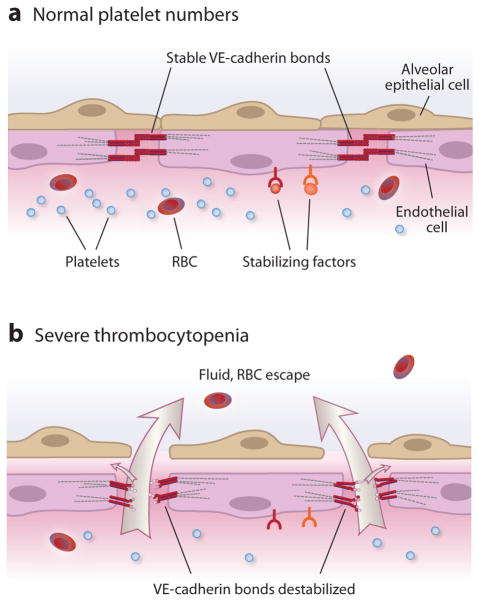
Platelets and the lungs have an intimate relationship. Platelets are anucleate mammalian blood cells that continuously circulate through pulmonary vessels and that have major effector activities in hemostasis and inflammation. The lungs are reservoirs for megakaryocytes, the requisite precursor cell in thrombopoiesis, which is the intricate process by which platelets are generated. Platelets contribute to basal barrier integrity of the alveolar capillaries, which selectively restricts the transfer of water, proteins, and red blood cells out of the vessels. Platelets also contribute to pulmonary vascular repair. Although platelets bolster hemostatic and inflammatory defense of the healthy lung, experimental evidence and clinical evidence indicate that these blood cells are effectors of injury in a variety of pulmonary disorders and syndromes. Newly discovered biological capacities of platelets are being explored in the context of lung defense, disease, and remodeling.
血小板与肺部有着密切的关系。血小板是无核的哺乳动物血细胞,它们不断循环通过肺血管,在止血和炎症中具有主要的效应活性。肺部是巨核细胞的储存库,巨核细胞是血小板生成过程中必需的前体细胞。血小板有助于肺泡毛细血管的基本屏障完整性,选择性地限制水、蛋白质和红细胞从血管中转移。血小板也有助于肺血管修复。虽然血小板增强了健康肺部的止血和炎症防御能力,但实验证据和临床证据表明,这些血细胞是多种肺部疾病和综合征中损伤的效应物。血小板的新发现的生物学功能正在肺防御、疾病和重塑的背景下进行探索。