Brain and Translational Neuroscience, University Hospital Antwerp Antwerp, Belgium.
Front Psychiatry. 2012 Sep 25;3:84. doi: 10.3389/fpsyt.2012.00084. eCollection 2012.
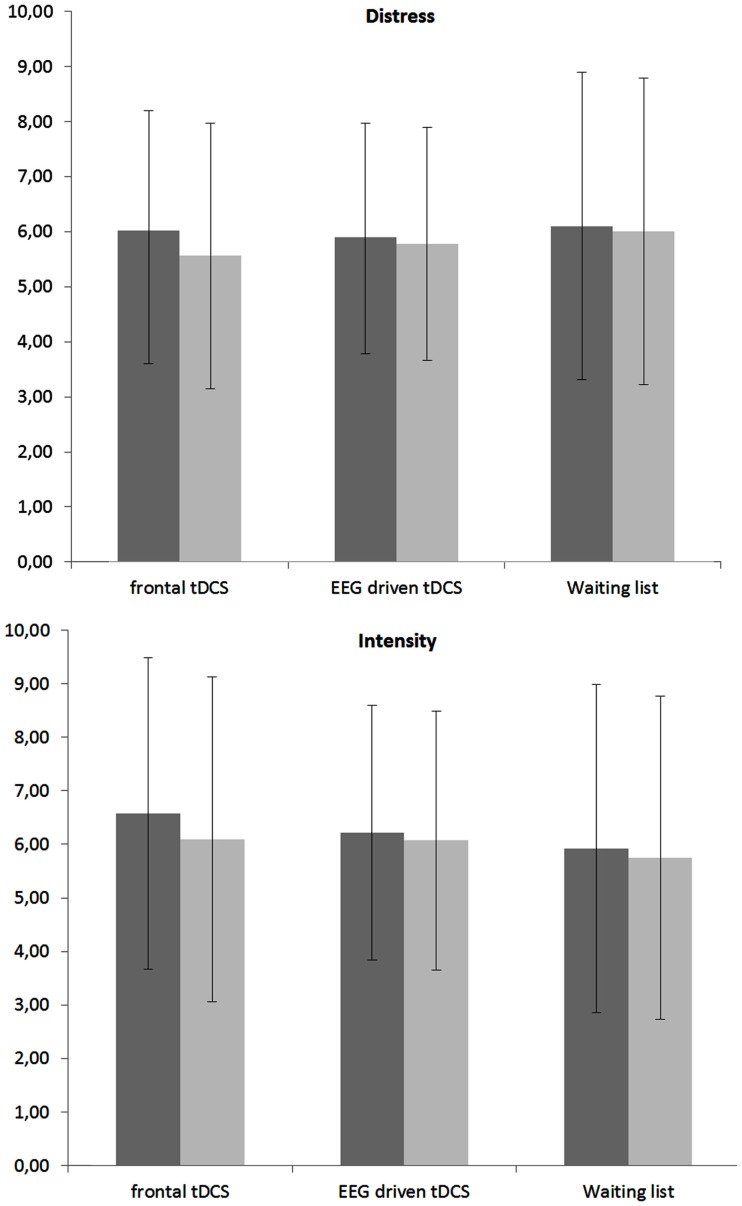
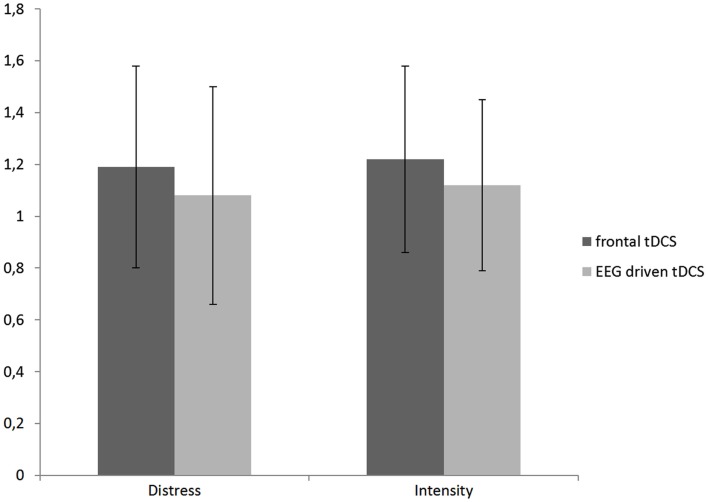
Tinnitus is the perception of a sound in the absence of any objective physical sound source. Transcranial Direct Current Stimulation (tDCS) induces shifts in membrane resting potentials depending on the polarity of the stimulation: under the anode gamma band activity increases, whereas under the cathode the opposite occurs. Both single and multiple sessions of tDCS over the dorsolateral prefrontal cortex (DLPFC; anode over right DLPFC) yield a transient improvement in tinnitus intensity and tinnitus distress. The question arises whether optimization of the tDCS protocol can be obtained by using EEG driven decisions on where to place anode and cathode. Using gamma band functional connectivity could be superior to gamma band activity as functional connectivity determines the tinnitus network in many aspects of chronic tinnitus. Six-hundred-seventy-five patients were included in the study: 265 patients received tDCS with cathodal electrode placed over the left DLPFC and the anode placed overlying the right DLPFC, 380 patients received tDCS based on EEG connectivity, and 65 received no tDCS (i.e., waiting list control group). Repeated measures ANOVA revealed a significant main effect for pre versus post measurement. Bifrontal tDCS in comparison to EEG driven tDCS had a larger reduction for both tinnitus distress and tinnitus intensity. Whereas the results of the bifrontal tDCS seem to confirm previous studies, the use of gamma band functional connectivity seems not to bring any advantage to tDCS for tinnitus suppression. Using other potential biomarkers, such as gamma band activity, or theta functional connectivity could theoretically be of use. Further studies will have to elucidate whether brain state based tDCS has any advantages over "blind" bifrontal stimulation.
耳鸣是指在没有任何客观物理声源的情况下感知到声音。经颅直流电刺激(tDCS)会根据刺激的极性引起膜静息电位的变化:阳极下伽马波段活动增加,而阴极下则相反。单次和多次经颅直流电刺激背外侧前额叶皮层(DLPFC;阳极置于右侧 DLPFC)均可短暂改善耳鸣强度和耳鸣困扰。问题是,通过使用 EEG 驱动的决策来确定放置阳极和阴极的位置,是否可以优化 tDCS 方案。使用伽马波段功能连接可能优于伽马波段活动,因为功能连接在慢性耳鸣的许多方面决定了耳鸣网络。共有 675 名患者纳入研究:265 名患者接受阴极电极置于左侧 DLPFC 且阳极置于右侧 DLPFC 的 tDCS,380 名患者接受基于 EEG 连接的 tDCS,65 名患者未接受 tDCS(即等待名单对照组)。重复测量方差分析显示,测量前与测量后的主要效应显著。与基于 EEG 的 tDCS 相比,双额叶 tDCS 对耳鸣困扰和耳鸣强度都有更大的降低。虽然双额叶 tDCS 的结果似乎证实了之前的研究,但使用伽马波段功能连接似乎并没有给 tDCS 抑制耳鸣带来任何优势。使用其他潜在的生物标志物,如伽马波段活动或θ功能连接,理论上可能会有用。进一步的研究将不得不阐明基于大脑状态的 tDCS 是否比“盲目”双额叶刺激具有任何优势。