Laboratory of Virology, Microscopy Unit, Division of Intramural Research, National Institute of Allergy and Infectious Diseases, National Institutes of Health, Hamilton, MT, USA.
Sci Rep. 2012;2:736. doi: 10.1038/srep00736. Epub 2012 Oct 15.
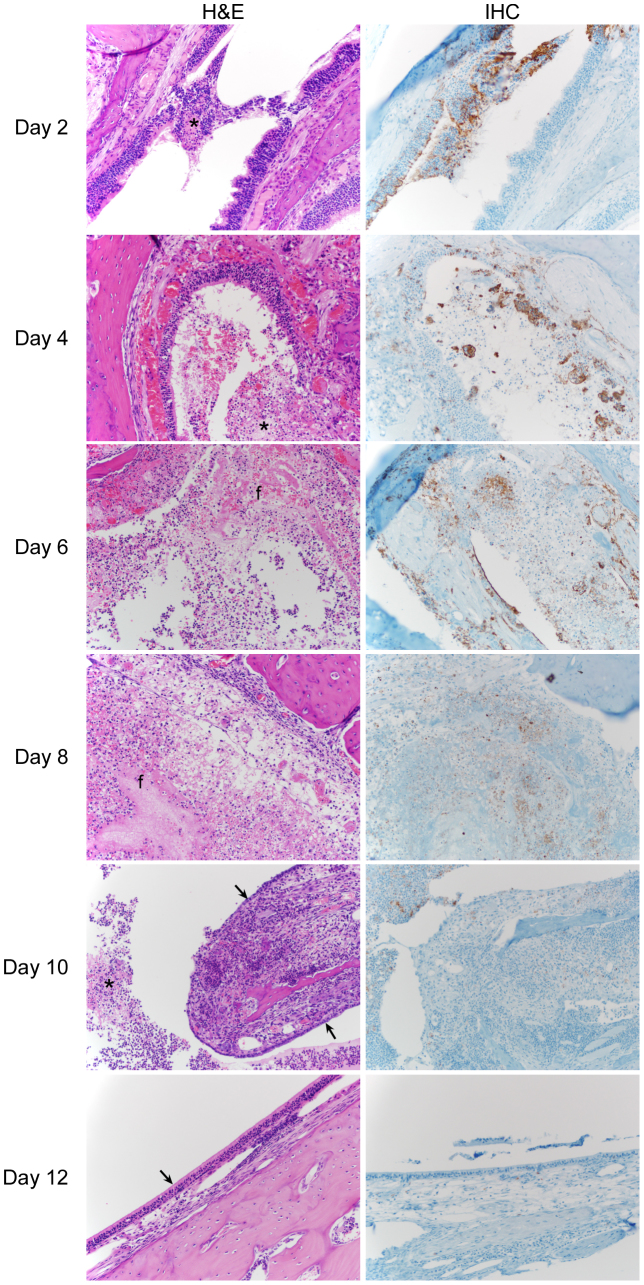
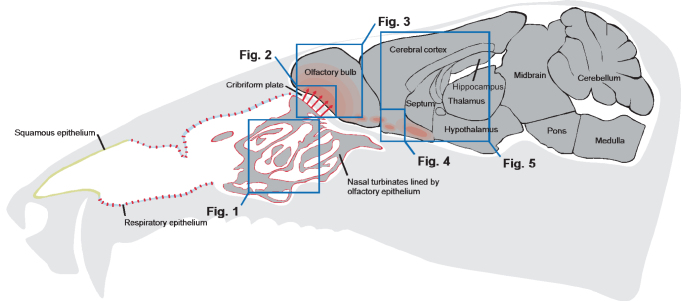
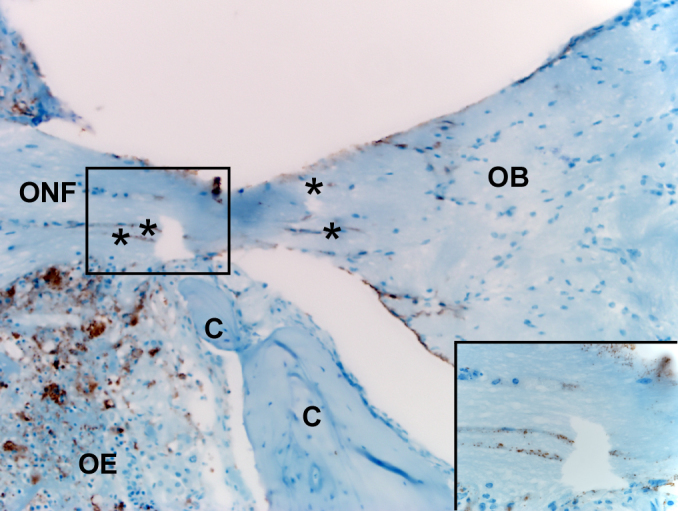
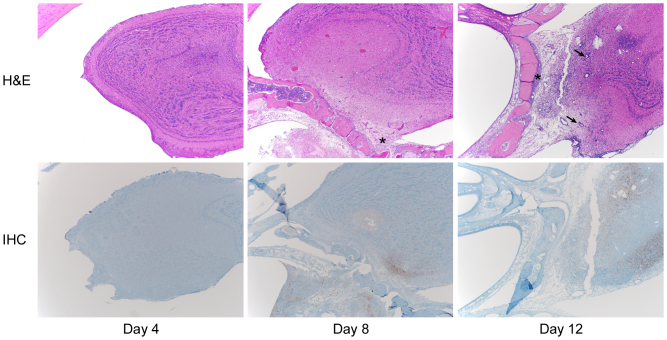
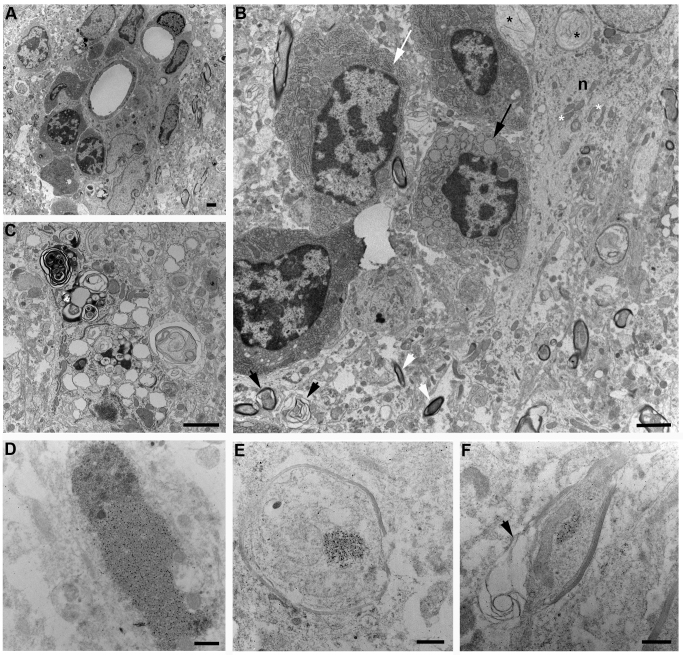
Encephalitis is a hallmark of Nipah virus (NiV) infection in humans. The exact route of entry of NiV into the central nervous system (CNS) is unknown. Here, we performed a spatio-temporal analysis of NiV entry into the CNS of hamsters. NiV initially predominantly targeted the olfactory epithelium in the nasal turbinates. From there, NiV infected neurons were visible extending through the cribriform plate into the olfactory bulb, providing direct evidence of rapid CNS entry. Subsequently, NiV disseminated to the olfactory tubercle and throughout the ventral cortex. Transmission electron microscopy on brain tissue showed extravasation of plasma cells, neuronal degeneration and nucleocapsid inclusions in affected tissue and axons, providing further evidence for axonal transport of NiV. NiV entry into the CNS coincided with the occurrence of respiratory disease, suggesting that the initial entry of NiV into the CNS occurs simultaneously with, rather than as a result of, systemic virus replication.
脑炎是尼帕病毒(NiV)感染人类的一个标志。尼帕病毒进入中枢神经系统(CNS)的确切途径尚不清楚。在这里,我们对尼帕病毒进入仓鼠中枢神经系统的时空过程进行了分析。尼帕病毒最初主要靶向鼻甲中的嗅上皮。从那里,可见到感染神经元通过筛板延伸到嗅球,这为快速进入中枢神经系统提供了直接证据。随后,尼帕病毒传播到嗅结节和整个腹侧皮质。脑组织的透射电子显微镜显示,受影响组织和轴突中的血浆细胞外渗、神经元变性和核衣壳包含物,进一步证明了尼帕病毒的轴突运输。尼帕病毒进入中枢神经系统与呼吸道疾病的发生同时发生,表明尼帕病毒最初进入中枢神经系统与全身病毒复制同时发生,而不是其结果。