1. Center for Theragnosis, Korea Institute of Science and Technology, 39-1 Hawolgok-dong, Seongbuk-gu, Seoul 136-791, Korea;
Theranostics. 2012;2(9):871-9. doi: 10.7150/thno.4133. Epub 2012 Sep 20.
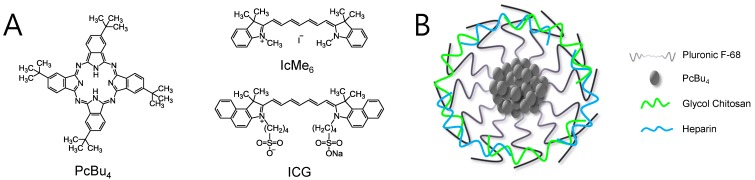
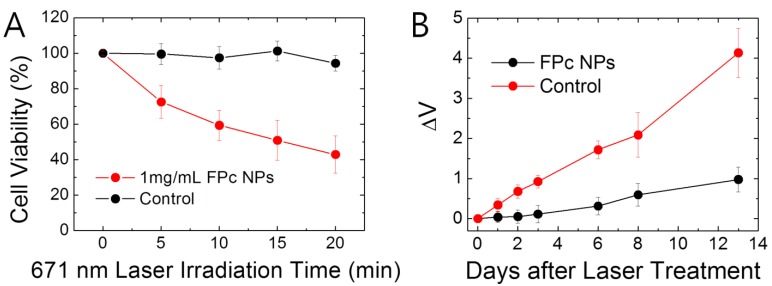
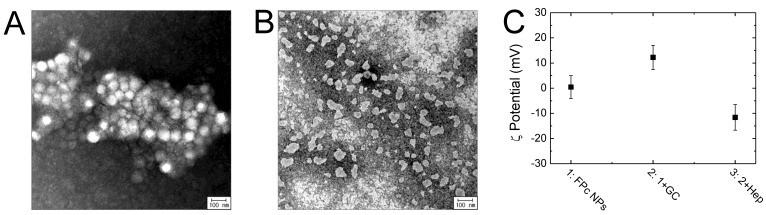
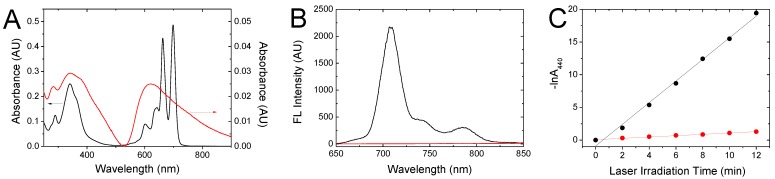
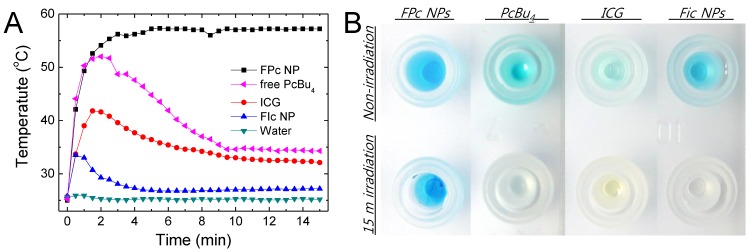
Phthalocyanine-aggregated Pluronic nanoparticles were constructed as a novel type of near-infrared (NIR) absorber for photothermal therapy. Tiny nanoparticles (~ 60 nm, FPc NPs) were prepared by aqueous dispersion of phthalocyanine-aggregated self-assembled nanodomains that were phase-separated from the melt mixture with Pluronic. Under NIR laser irradiation, FPc NPs manifested robust heat generation capability, superior to an individual cyanine dye and cyanine-aggregated nanoparticles. Micro- and macroscopic imaging experiments showed that FPc NPs are capable of internalization into live cancer cells as well as tumor accumulation when intravenously administered into living mice. It is shown here that continuous NIR irradiation of the tumor-targeted FPc NPs can cause phototherapeutic effects in vitro and in vivo through excessive local heating, demonstrating potential of phthalocyanine-aggregated nanoparticles as an all-organic NIR nanoabsorber for hyperthermia.
酞菁聚集的 Pluronic 纳米粒子被构建为一种新型的近红外 (NIR) 吸收剂,用于光热治疗。通过将酞菁聚集的自组装纳米域从与 Pluronic 的熔融混合物中相分离,制备出微小的纳米粒子 (~60nm,FPc NPs)。在近红外激光照射下,FPc NPs 表现出强大的发热能力,优于单个花菁染料和花菁聚集的纳米粒子。微观和宏观成像实验表明,FPc NPs 能够内化进入活癌细胞,并在静脉注射到活小鼠中时在肿瘤中积累。这里表明,通过连续的近红外照射,肿瘤靶向的 FPc NPs 可以通过过度的局部加热在体外和体内引起光疗效应,证明了酞菁聚集的纳米粒子作为一种全有机 NIR 纳米吸收剂用于热疗的潜力。