Department of Molecular Genetics, The Weizmann Institute of Science , Rehovot 76100 , Israel.
Biol Open. 2012 Mar 15;1(3):220-31. doi: 10.1242/bio.2012307. Epub 2012 Jan 6.
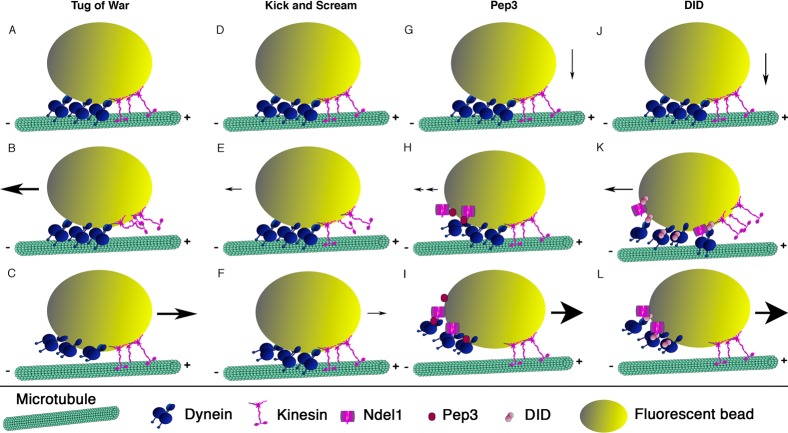
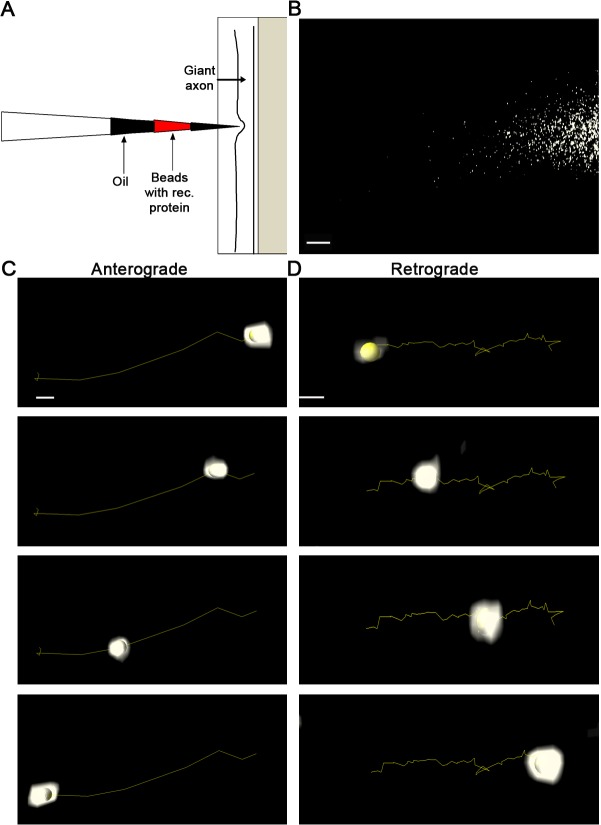
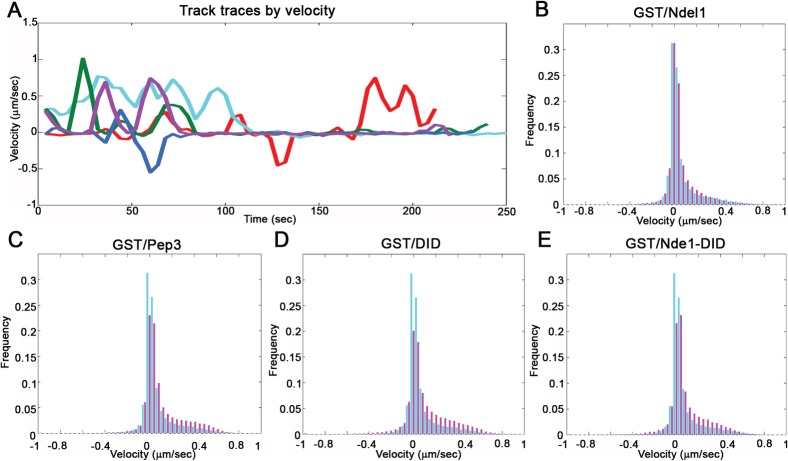
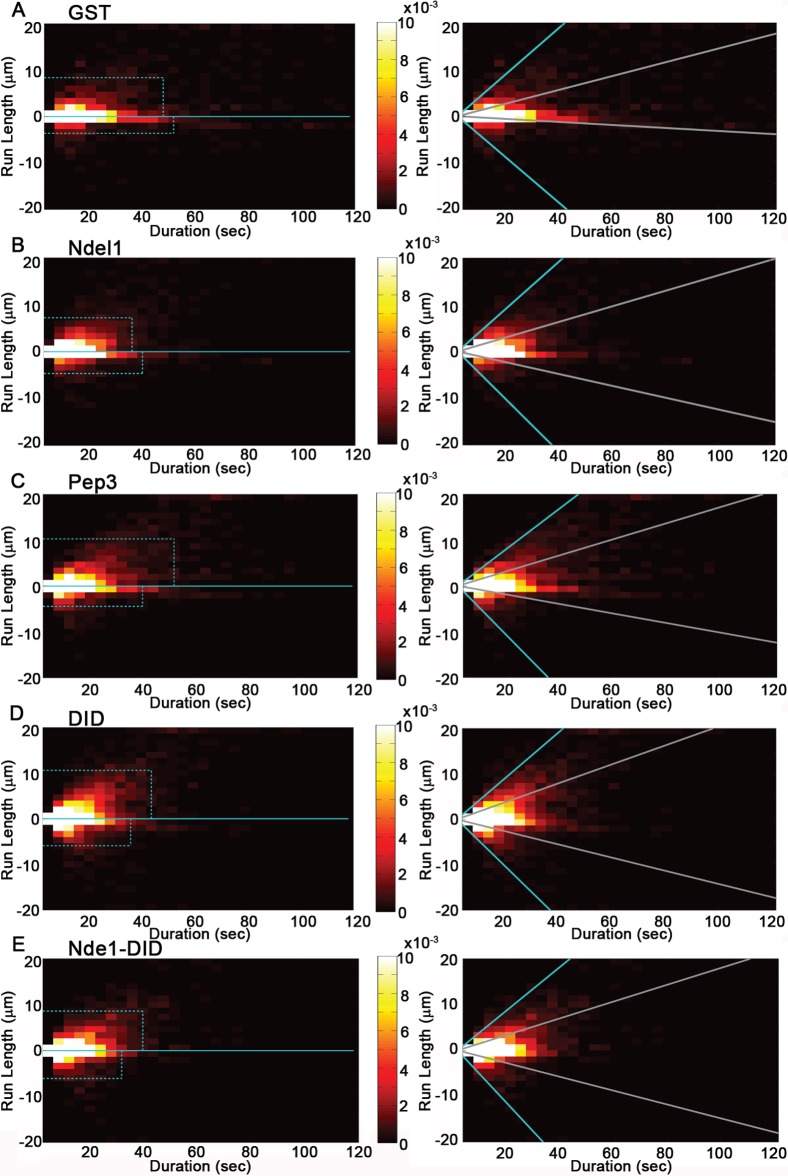
Bidirectional transport is a key issue in cellular biology. It requires coordination between microtubule-associated molecular motors that work in opposing directions. The major retrograde and anterograde motors involved in bidirectional transport are cytoplasmic dynein and conventional kinesin, respectively. It is clear that failures in molecular motor activity bear severe consequences, especially in the nervous system. Neuronal migration may be impaired during brain development, and impaired molecular motor activity in the adult is one of the hallmarks of neurodegenerative diseases leading to neuronal cell death. The mechanisms that regulate or coordinate kinesin and dynein activity to generate bidirectional transport of the same cargo are of utmost importance. We examined how Ndel1, a cytoplasmic dynein binding protein, may regulate non-vesicular bidirectional transport. Soluble Ndel1 protein, Ndel1-derived peptides or control proteins were mixed with fluorescent beads, injected into the squid giant axon, and the bead movements were recorded using time-lapse microscopy. Automated tracking allowed for extraction and unbiased analysis of a large data set. Beads moved in both directions with a clear bias to the anterograde direction. Velocities were distributed over a broad range and were typically slower than those associated with fast vesicle transport. Ironically, the main effect of Ndel1 and its derived peptides was an enhancement of anterograde motion. We propose that they may function primarily by inhibition of dynein-dependent resistance, which suggests that both dynein and kinesin motors may remain engaged with microtubules during bidirectional transport.
双向运输是细胞生物学的一个关键问题。它需要协调在相反方向工作的微管相关分子马达。参与双向运输的主要逆行和顺行马达分别是细胞质动力蛋白和传统的驱动蛋白。很明显,分子马达活性的失败会带来严重的后果,尤其是在神经系统中。在大脑发育过程中,神经元迁移可能会受损,而成年期分子马达活性的降低是导致神经元细胞死亡的神经退行性疾病的标志之一。调节或协调驱动蛋白和动力蛋白活性以产生相同货物的双向运输的机制至关重要。我们研究了细胞质动力蛋白结合蛋白 Ndel1 如何调节非囊泡双向运输。将可溶性 Ndel1 蛋白、Ndel1 衍生肽或对照蛋白与荧光珠混合,注入鱿鱼巨大轴突中,并使用延时显微镜记录珠的运动。自动跟踪允许提取和分析大量无偏数据集。珠子向两个方向移动,明显偏向顺行方向。速度分布在很宽的范围内,通常比与快速囊泡运输相关的速度慢。具有讽刺意味的是,Ndel1 及其衍生肽的主要作用是增强顺行运动。我们提出,它们可能主要通过抑制动力蛋白依赖性阻力来发挥作用,这表明在双向运输过程中,动力蛋白和驱动蛋白马达可能都与微管保持结合。