Vitamin D, Skin and Bone Research Laboratory, Section of Endocrinology, Nutrition, and Diabetes, Department of Medicine, Boston University Medical Center, 85 East Newton Street, M-1013, Boston, MA 02118, USA.
Nutrients. 2013 Jan 10;5(1):111-48. doi: 10.3390/nu5010111.
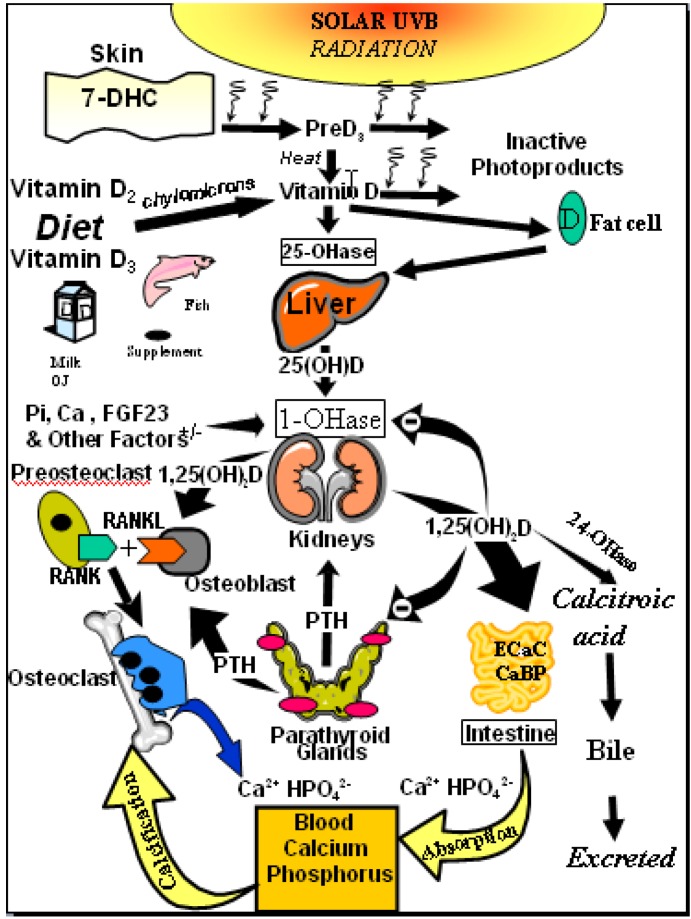
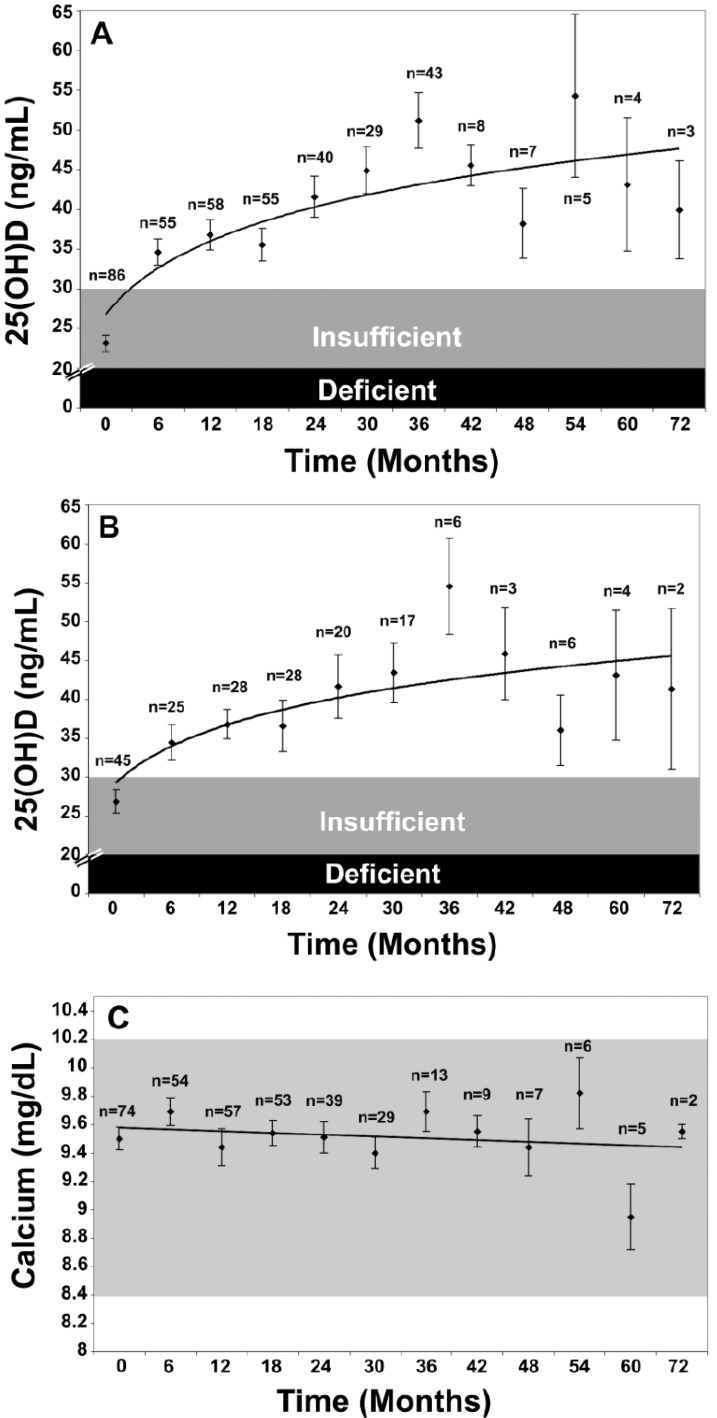
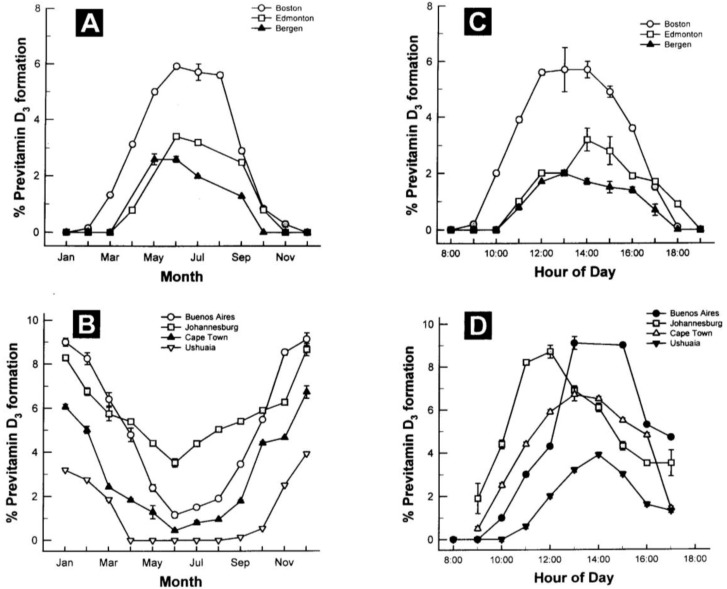
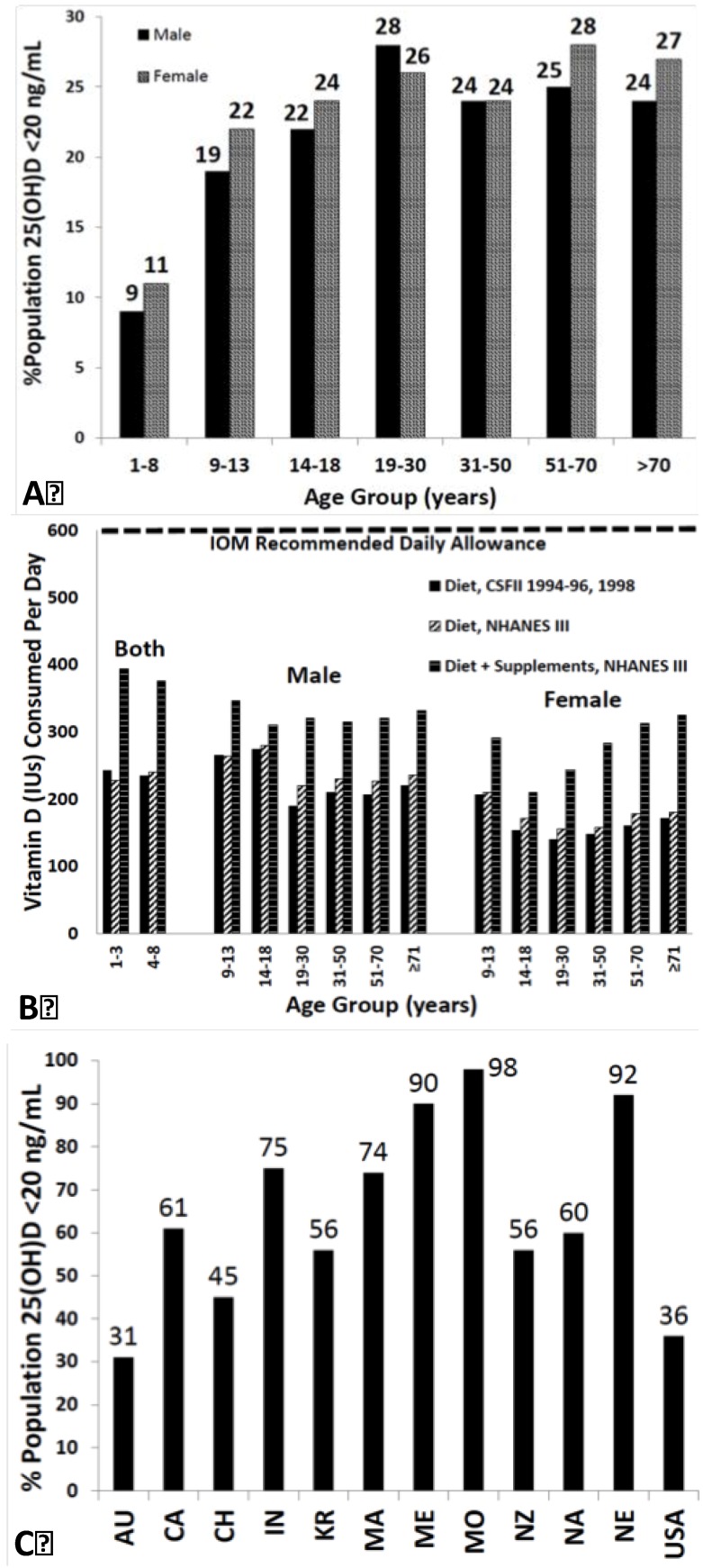
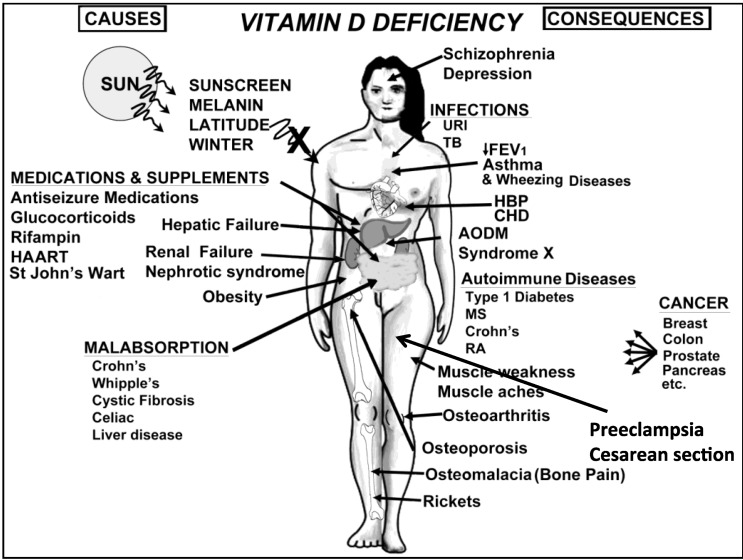
Vitamin D, the sunshine vitamin, has received a lot of attention recently as a result of a meteoric rise in the number of publications showing that vitamin D plays a crucial role in a plethora of physiological functions and associating vitamin D deficiency with many acute and chronic illnesses including disorders of calcium metabolism, autoimmune diseases, some cancers, type 2 diabetes mellitus, cardiovascular disease and infectious diseases. Vitamin D deficiency is now recognized as a global pandemic. The major cause for vitamin D deficiency is the lack of appreciation that sun exposure has been and continues to be the major source of vitamin D for children and adults of all ages. Vitamin D plays a crucial role in the development and maintenance of a healthy skeleton throughout life. There remains some controversy regarding what blood level of 25-hydroxyvitamin D should be attained for both bone health and reducing risk for vitamin D deficiency associated acute and chronic diseases and how much vitamin D should be supplemented.
维生素 D,又称阳光维生素,最近受到了广泛关注,因为大量研究表明维生素 D 在众多生理功能中起着至关重要的作用,并将维生素 D 缺乏与许多急性和慢性疾病联系起来,包括钙代谢紊乱、自身免疫性疾病、某些癌症、2 型糖尿病、心血管疾病和传染病。维生素 D 缺乏现在被认为是一种全球性的流行疾病。维生素 D 缺乏的主要原因是人们没有意识到,阳光照射一直是并且仍然是儿童和所有年龄段成年人维生素 D 的主要来源。维生素 D 在健康骨骼的发育和维持中起着至关重要的作用。对于 25-羟维生素 D 的血液水平应该达到多少才能既有益于骨骼健康,又能降低与维生素 D 缺乏相关的急性和慢性疾病的风险,以及应该补充多少维生素 D,仍存在一些争议。