Research Core for Interdisciplinary Sciences, Okayama University, 3-1-1 Tsushima-naka, Kita-ku, Okayama 700-8530, Japan.
Sensors (Basel). 2013 Feb 18;13(2):2484-93. doi: 10.3390/s130202484.
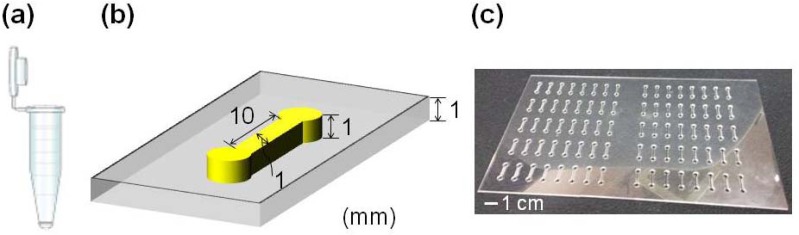
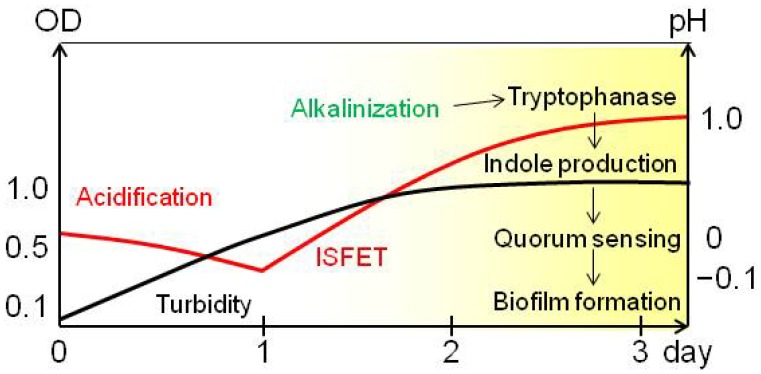
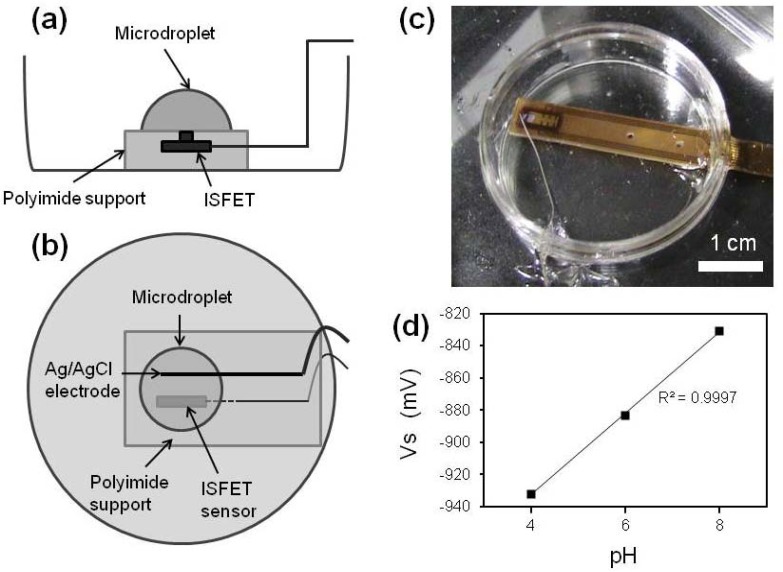
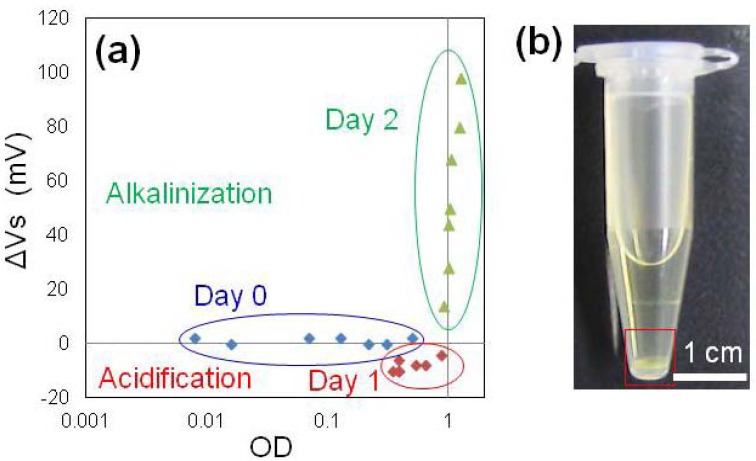
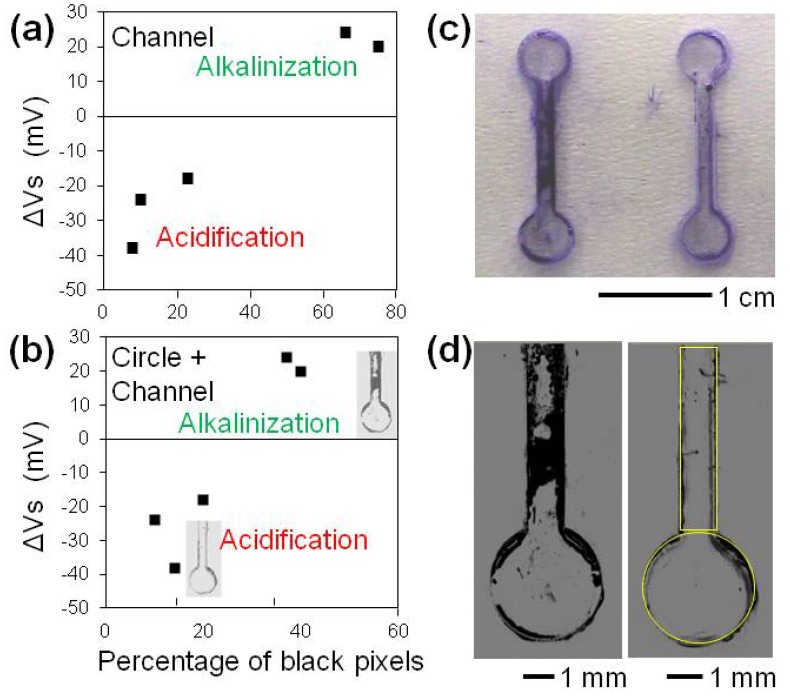
Biofilm formation in microfluidic channels is difficult to detect because sampling volumes are too small for conventional turbidity measurements. To detect biofilm formation, we used an ion-sensitive field-effect transistor (ISFET) measurement system to measure pH changes in small volumes of bacterial suspension. Cells of Micrococcus luteus (M. luteus) were cultured in polystyrene (PS) microtubes and polymethylmethacrylate (PMMA)-based microfluidic channels laminated with polyvinylidene chloride. In microtubes, concentrations of bacteria and pH in the suspension were analyzed by measuring turbidity and using an ISFET sensor, respectively. In microfluidic channels containing 20 μL of bacterial suspension, we measured pH changes using the ISFET sensor and monitored biofilm formation using a microscope. We detected acidification and alkalinization phases of M. luteus from the ISFET sensor signals in both microtubes and microfluidic channels. In the alkalinization phase, after 2 day culture, dense biofilm formation was observed at the bottom of the microfluidic channels. In this study, we used an ISFET sensor to detect biofilm formation in clinical and industrial microfluidic environments by detecting alkalinization of the culture medium.
在微流道中形成生物膜很难被检测到,因为采样体积太小,无法进行传统的浊度测量。为了检测生物膜的形成,我们使用离子敏感场效应晶体管(ISFET)测量系统来测量小体积细菌悬浮液中的 pH 值变化。微球菌(M. luteus)细胞在聚苯乙烯(PS)微管和聚甲基丙烯酸甲酯(PMMA)基微流道中培养,这些微流道用聚偏二氯乙烯层压。在微管中,通过测量浊度和使用 ISFET 传感器分别分析悬浮液中的细菌浓度和 pH 值。在含有 20 μL 细菌悬浮液的微流道中,我们使用 ISFET 传感器测量 pH 值变化,并使用显微镜监测生物膜的形成。我们从微管和微流道中的 ISFET 传感器信号中检测到微球菌的酸化和碱化阶段。在碱化阶段,经过 2 天的培养,在微流道的底部观察到密集的生物膜形成。在这项研究中,我们使用 ISFET 传感器通过检测培养基的碱化来检测临床和工业微流环境中的生物膜形成。