Biotechnological and Applied Clinical Sciences Department, University of L'Aquila, 67100 L'Aquila, Italy.
Sci Rep. 2013;3:1395. doi: 10.1038/srep01395.
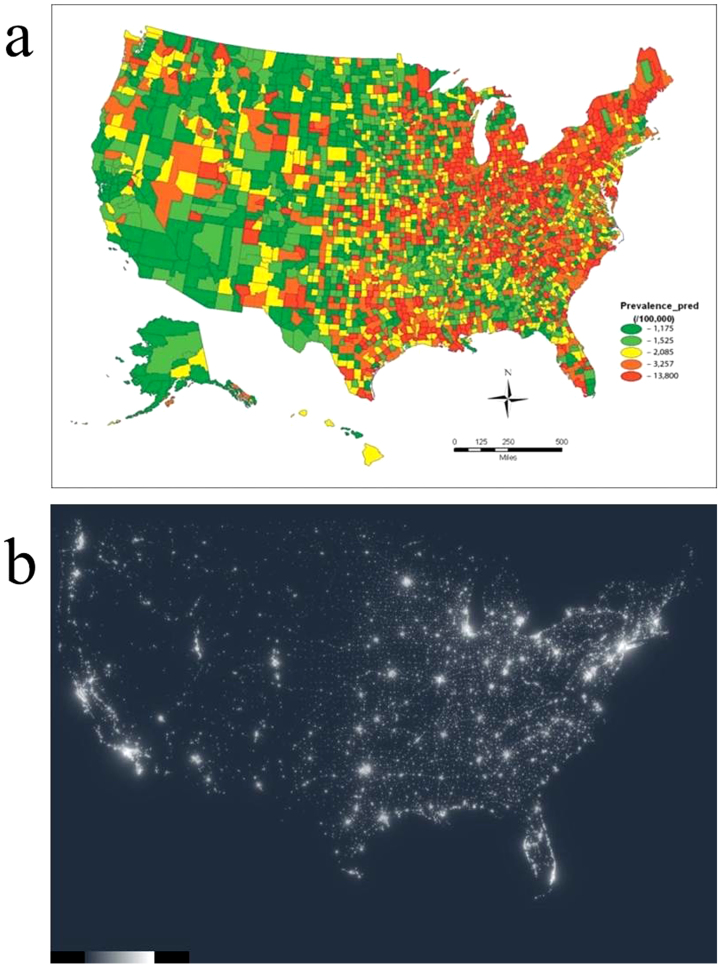
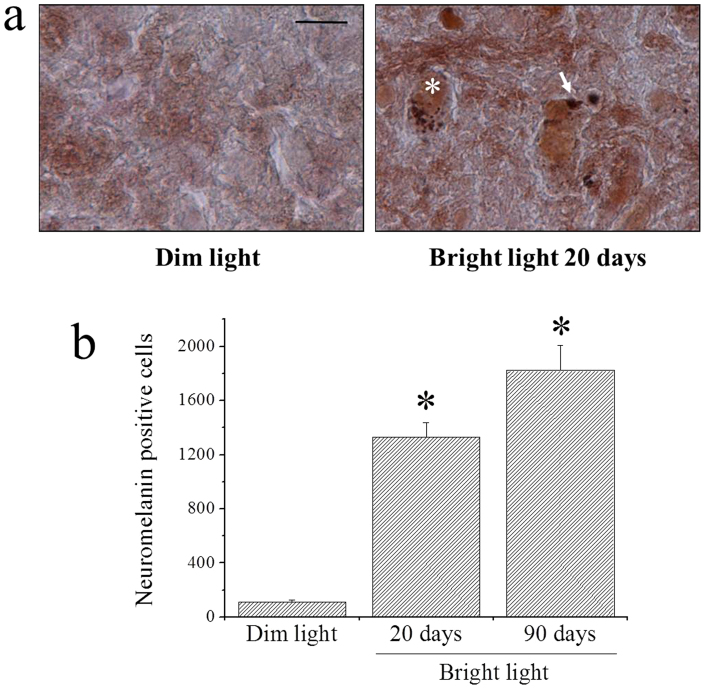
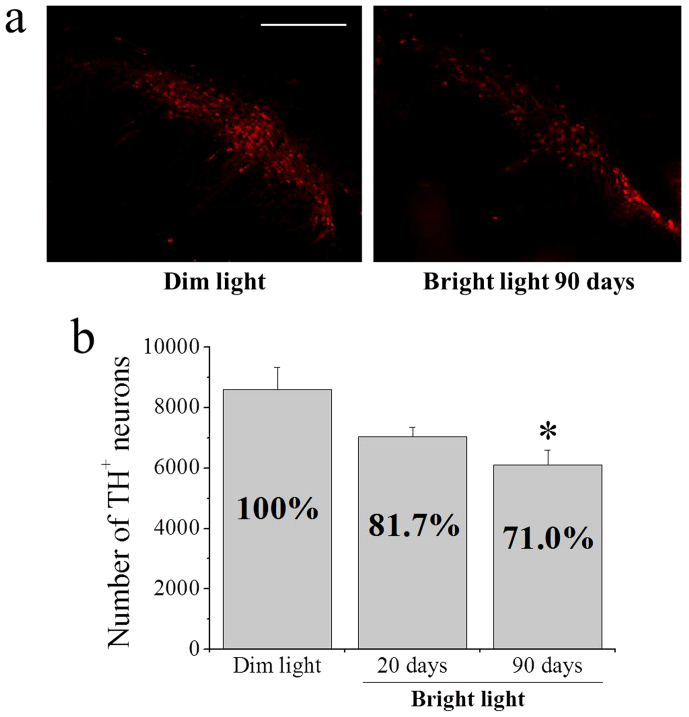
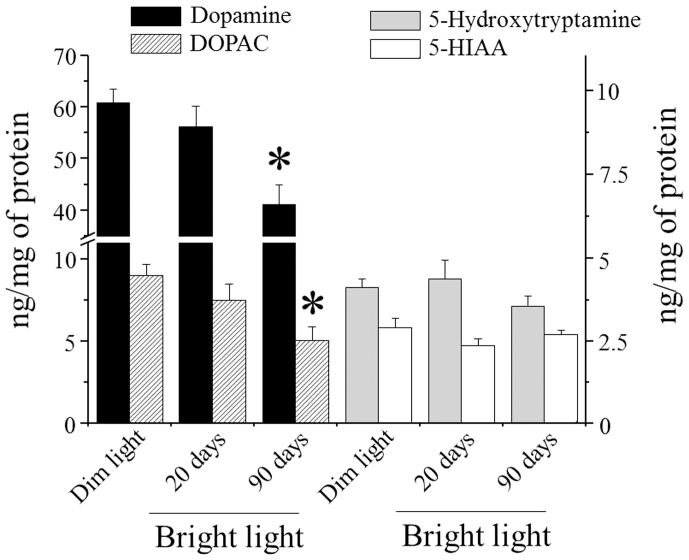
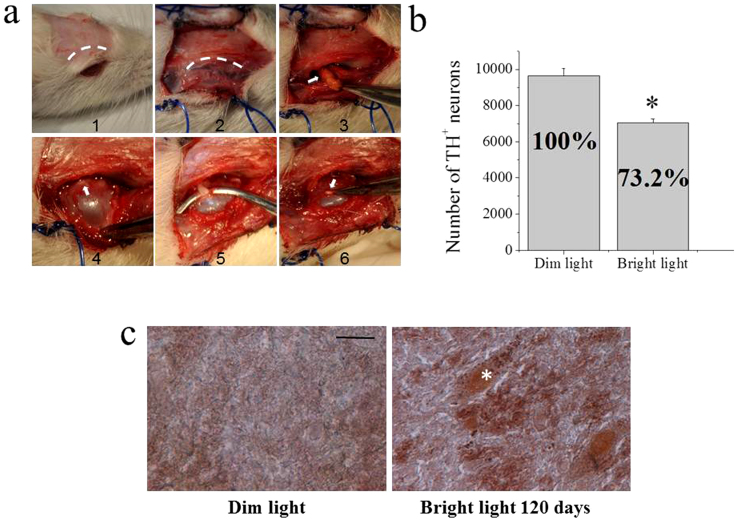
This study explores the effect of continuous exposure to bright light on neuromelanin formation and dopamine neuron survival in the substantia nigra. Twenty-one days after birth, Sprague-Dawley albino rats were divided into groups and raised under different conditions of light exposure. At the end of the irradiation period, rats were sacrificed and assayed for neuromelanin formation and number of tyrosine hydroxylase (TH)-positive neurons in the substantia nigra. The rats exposed to bright light for 20 days or 90 days showed a relatively greater number of neuromelanin-positive neurons. Surprisingly, TH-positive neurons decreased progressively in the substantia nigra reaching a significant 29% reduction after 90 days of continuous bright light exposure. This decrease was paralleled by a diminution of dopamine and its metabolite in the striatum. Remarkably, in preliminary analysis that accounted for population density, the age and race adjusted Parkinson's disease prevalence significantly correlated with average satellite-observed sky light pollution.
本研究探讨了持续暴露于明亮光线对黑质内神经黑色素形成和多巴胺神经元存活的影响。出生后 21 天,将 Sprague-Dawley 白化大鼠分为不同光照暴露条件的组进行培养。在照射期结束时,处死大鼠并检测黑质内神经黑色素形成和酪氨酸羟化酶(TH)阳性神经元的数量。暴露于明亮光线 20 天或 90 天的大鼠显示出相对较多的神经黑色素阳性神经元。令人惊讶的是,TH 阳性神经元在黑质内逐渐减少,连续 90 天暴露于明亮光线后显著减少了 29%。这种减少与纹状体中多巴胺及其代谢物的减少相平行。值得注意的是,在考虑到人口密度的初步分析中,年龄和种族调整后的帕金森病患病率与平均卫星观测到的天空光污染显著相关。