Department of Epidemiology, School of Public Health, Fudan University, 138 Yixueyuan Road, Shanghai 200032, China.
BMC Public Health. 2013 Apr 4;13:297. doi: 10.1186/1471-2458-13-297.
Schistosomiasis transmission is typically focal. Understanding spatial variations of Schistosoma infections and their associated factors is important to help to invent site-specific intervention strategies.
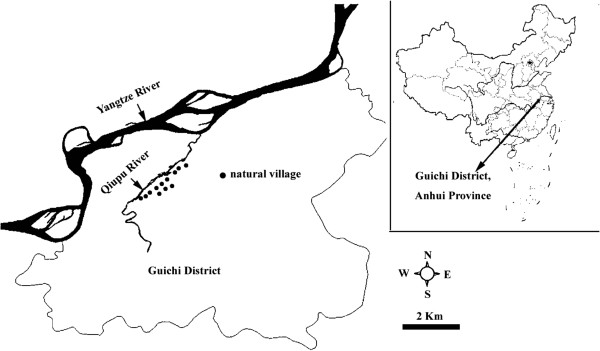
A five-year longitudinal study was carried out prospectively in 12 natural villages, Guichi district of Anhui province. A GIS-based spatial analysis was conducted to identify geographic distribution patterns of schistosomiasis infections at the household scale.
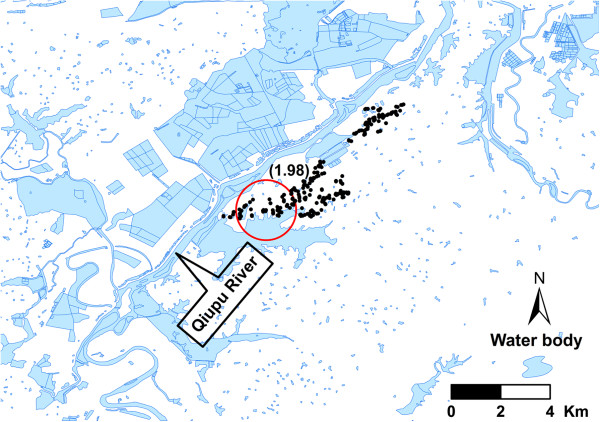
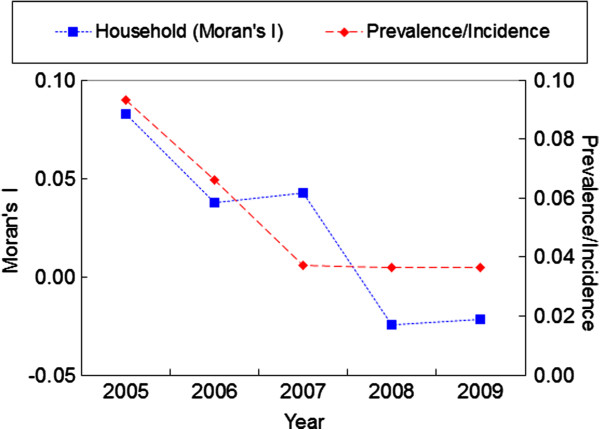
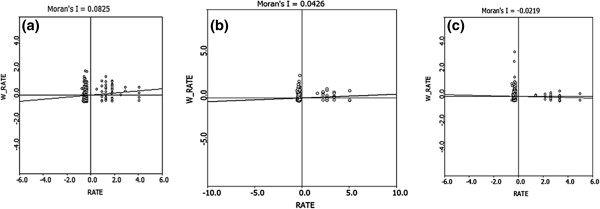
The results of the spatial autocorrelation analysis for 2005 showed that there were significant spatial clusters of human infections at the household level, and these results were in agreement with that of the spatial scan statistic. As prevalence of infections in humans decreased over the course of control, the spatial distribution of these infections became less heterogeneous.
The findings imply that it may be necessary to re-assess risk factors of S. japonicum transmission over the course of control and to adjust accordingly control measures in the communities.
血吸虫病传播通常呈点状分布。了解血吸虫感染的空间变化及其相关因素对于制定特定地点的干预策略非常重要。
在安徽省贵池区的 12 个自然村落中进行了一项为期五年的纵向研究。采用基于 GIS 的空间分析方法,在家庭层面上确定血吸虫病感染的地理分布模式。
2005 年的空间自相关分析结果表明,在家庭层面上存在显著的人群感染空间聚集,这一结果与空间扫描统计结果一致。随着控制过程中人群感染率的降低,这些感染的空间分布变得不那么异质。
这些发现表明,在控制过程中可能需要重新评估日本血吸虫传播的风险因素,并相应地调整社区的控制措施。