Department of Biomedical Engineering, Johns Hopkins University School of Medicine, Baltimore, Maryland 21231, United States.
J Am Chem Soc. 2013 May 8;135(18):6951-7. doi: 10.1021/ja4002376. Epub 2013 Apr 29.
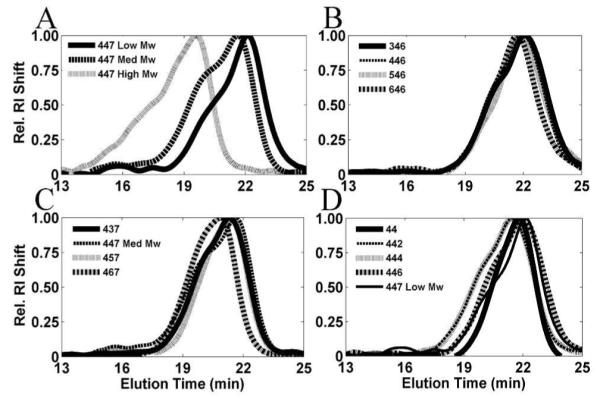
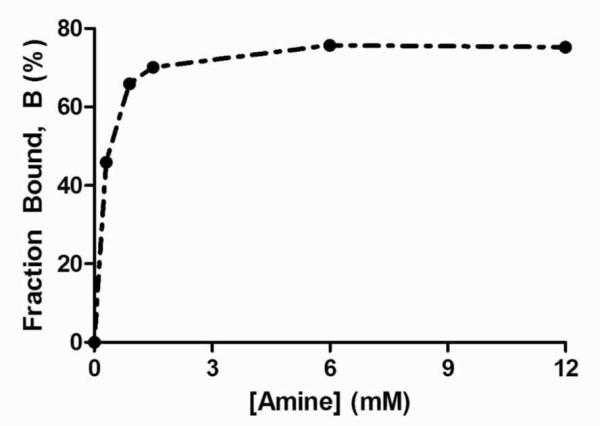
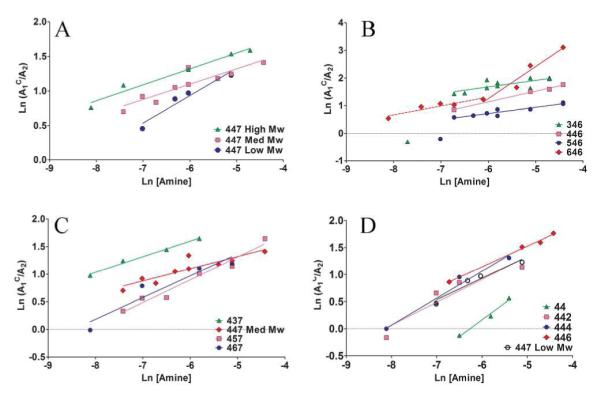
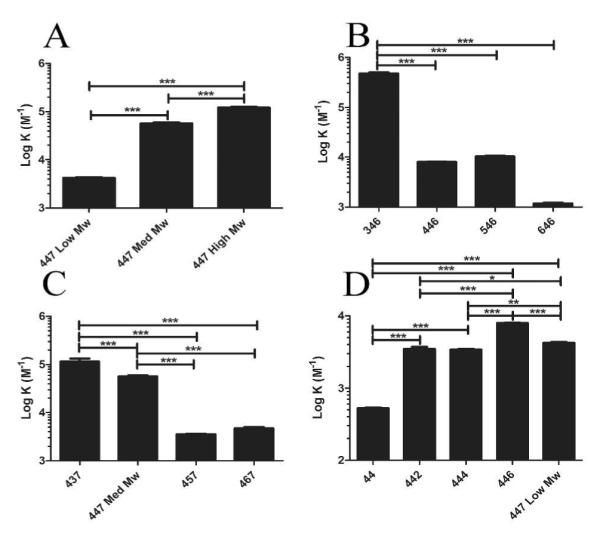
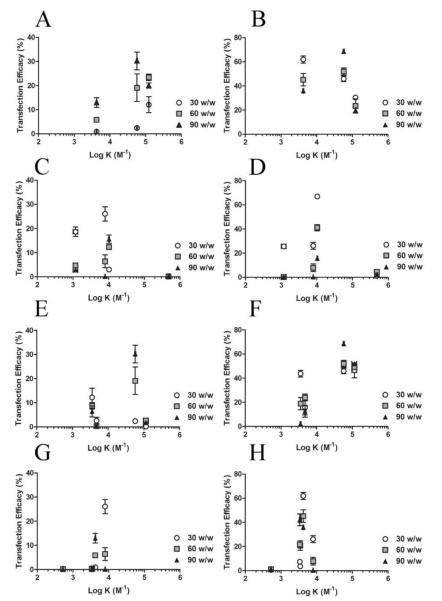
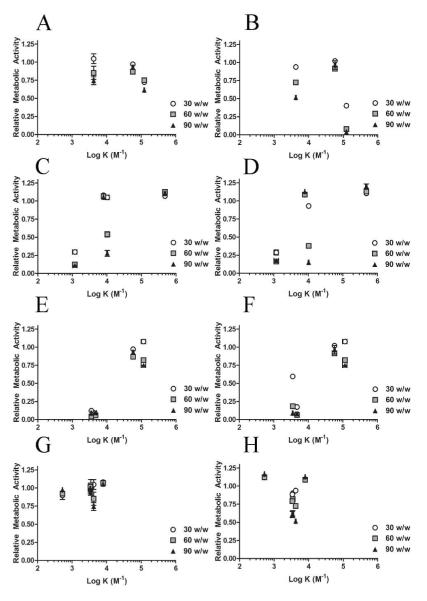
Polymeric vectors for gene delivery are a promising alternative for clinical applications, as they are generally safer than viral counterparts. Our objective was to further our mechanistic understanding of polymer structure-function relationships to allow the rational design of new biomaterials. Utilizing poly(β-amino ester)s (PBAEs), we investigated polymer-DNA binding by systematically varying the polymer molecular weight, adding single carbons to the backbone and side chain of the monomers that constitute the polymers, and varying the type of polymer end group. We then sought to correlate how PBAE binding affects the polyplex diameter and ζ potential, the transfection efficacy, and its associated cytotoxicity in human breast and brain cancer cells in vitro. Among other trends, we observed in both cell lines that the PBAE-DNA binding constant is biphasic with the transfection efficacy and that the optimal values of the binding constant with respect to the transfection efficacy are in the range (1-6) × 10(4) M(-1). A binding constant in this range is necessary but not sufficient for effective transfection.
聚合物基因载体作为临床应用的一种有前途的替代品,通常比病毒载体更安全。我们的目标是进一步深入了解聚合物结构-功能关系的机制,从而能够合理设计新型生物材料。我们利用聚(β-氨基酯)(PBAE),通过系统地改变聚合物分子量、在构成聚合物的单体主链和侧链上添加单个碳原子以及改变聚合物末端基团的类型,研究聚合物-DNA 的结合。然后,我们试图将 PBAE 结合如何影响聚集体的直径和 ζ 电位、转染效率以及其在体外人乳腺癌和脑癌细胞中的相关细胞毒性相关联。我们在两种细胞系中都观察到,PBAE-DNA 结合常数与转染效率呈双相关系,并且结合常数与转染效率的最佳值在(1-6)×10(4) M(-1)范围内。在此范围内的结合常数是有效转染所必需的,但不是充分条件。