Guerrero-Cázares Hugo, Tzeng Stephany Y, Young Noah P, Abutaleb Ameer O, Quiñones-Hinojosa Alfredo, Green Jordan J
Department of Neurosurgery, ‡Department of Biomedical Engineering, §Translational Tissue Engineering Center, ∥Institute for Nanobiotechnology, and ⊥Department of Ophthalmology, Johns Hopkins University School of Medicine , 400 North Broadway, Baltimore, Maryland 21231, United States.
ACS Nano. 2014 May 27;8(5):5141-53. doi: 10.1021/nn501197v. Epub 2014 Apr 29.
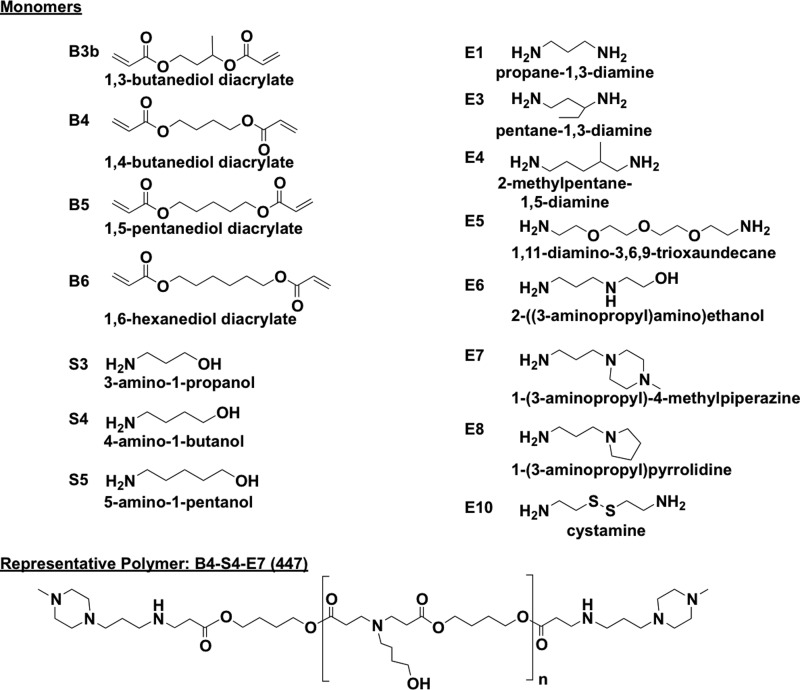
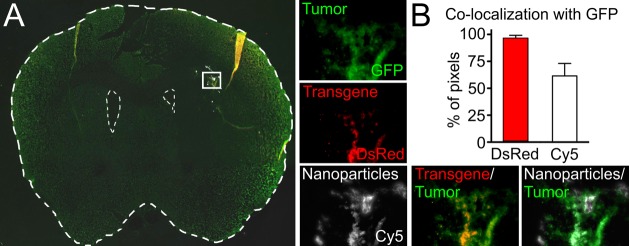
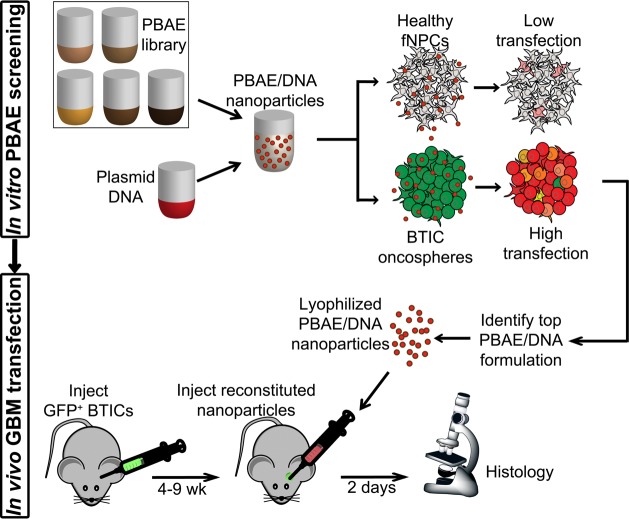
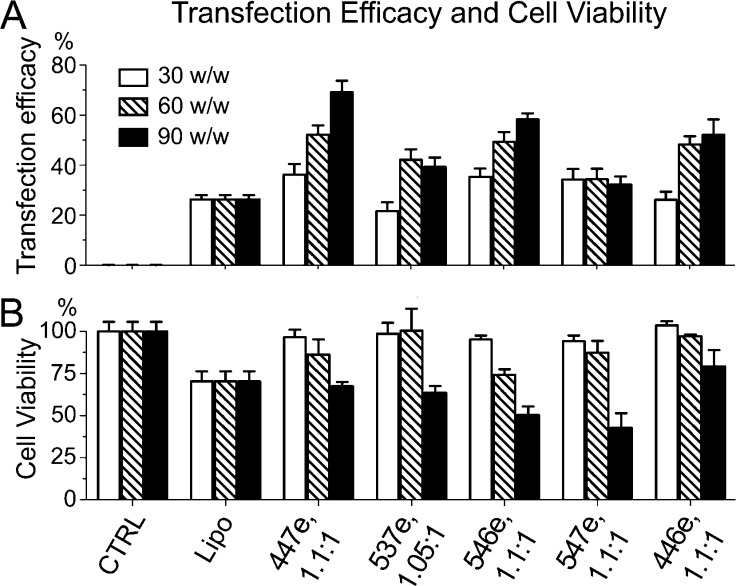
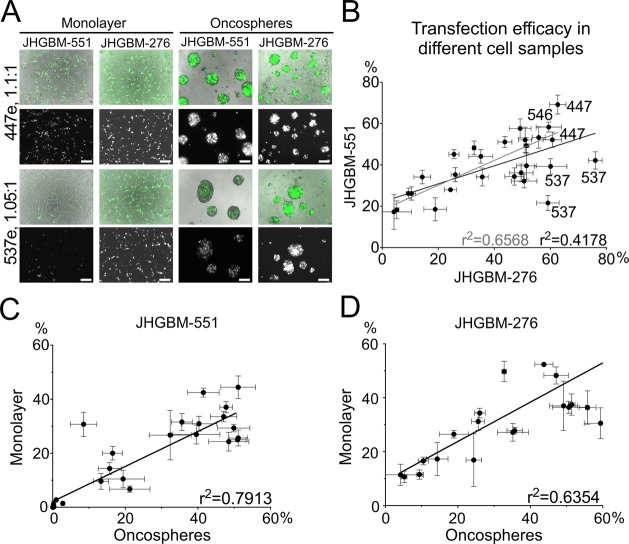
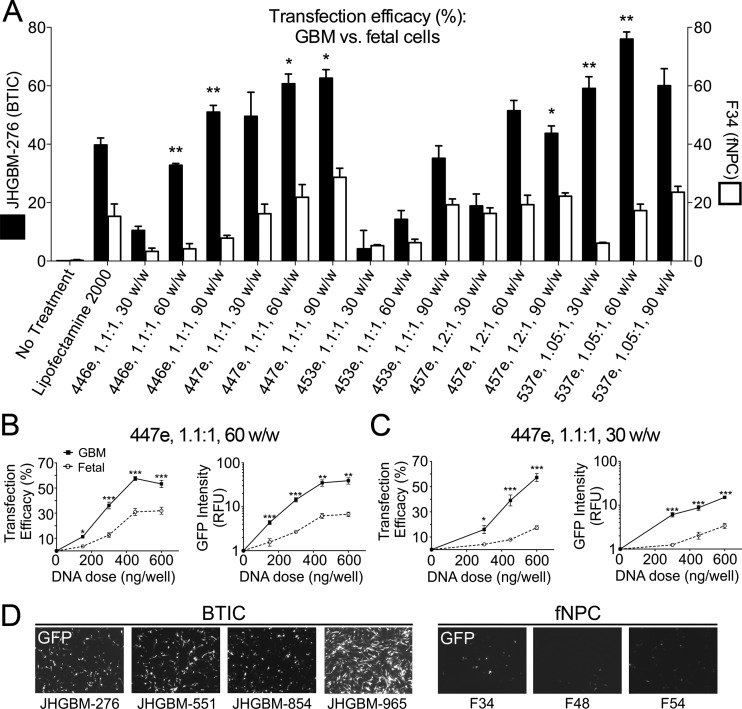
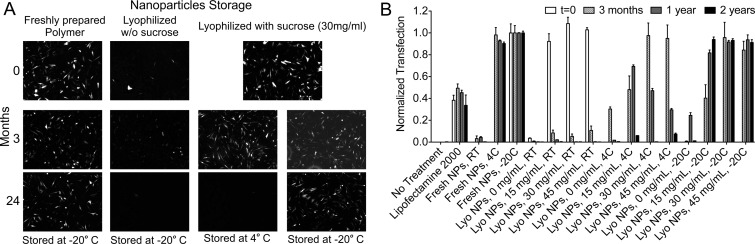
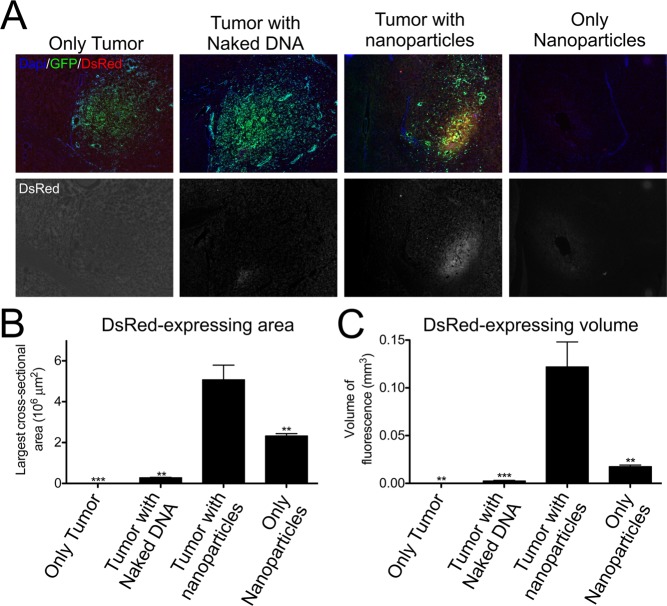
Current glioblastoma therapies are insufficient to prevent tumor recurrence and eventual death. Here, we describe a method to treat malignant glioma by nonviral DNA delivery using biodegradable poly(β-amino ester)s (PBAEs), with a focus on the brain tumor initiating cells (BTICs), the tumor cell population believed to be responsible for the formation of new tumors and resistance to many conventional therapies. We show transfection efficacy of >60% and low biomaterial-mediated cytotoxicity in primary human BTICs in vitro even when the BTICs are grown as 3-D oncospheres. Intriguingly, we find that these polymeric nanoparticles show intrinsic specificity for nonviral transfection of primary human BTICs over primary healthy human neural progenitor cells and that this specificity is not due to differences in cellular growth rate or total cellular uptake of nanoparticles. Moreover, we demonstrate that biodegradable PBAE/DNA nanoparticles can be fabricated, lyophilized, and then stored for at least 2 years without losing efficacy, increasing the translational relevance of this technology. Using lyophilized nanoparticles, we show transgene expression by tumor cells after intratumoral injection into an orthotopic murine model of human glioblastoma. PBAE/DNA nanoparticles were more effective than naked DNA at exogenous gene expression in vivo, and tumor cells were transfected more effectively than noninvaded brain parenchyma in vivo. This work shows the potential of nonviral gene delivery tools to target human brain tumors.
目前的胶质母细胞瘤治疗方法不足以预防肿瘤复发和最终导致的死亡。在此,我们描述了一种使用可生物降解的聚(β-氨基酯)(PBAE)通过非病毒DNA递送治疗恶性胶质瘤的方法,重点关注脑肿瘤起始细胞(BTIC),这是一类被认为与新肿瘤形成及对许多传统疗法耐药有关的肿瘤细胞群体。我们展示了在体外原代人BTIC中>60%的转染效率以及低生物材料介导的细胞毒性,即便BTIC以三维肿瘤球的形式生长。有趣的是,我们发现这些聚合物纳米颗粒对原代人BTIC的非病毒转染显示出相对于原代健康人神经祖细胞的内在特异性,且这种特异性并非源于细胞生长速率或纳米颗粒总细胞摄取量的差异。此外,我们证明可生物降解的PBAE/DNA纳米颗粒可以制备、冻干,然后储存至少2年而不丧失效力,这增加了该技术的转化相关性。使用冻干的纳米颗粒,我们展示了在原位注射到人类胶质母细胞瘤的原位小鼠模型的肿瘤内后肿瘤细胞的转基因表达。PBAE/DNA纳米颗粒在体内外源基因表达方面比裸DNA更有效,并且在体内肿瘤细胞比未受侵袭的脑实质转染更有效。这项工作展示了非病毒基因递送工具靶向人类脑肿瘤的潜力。