Department of Physiology and Biophysics, University of Washington, Seattle, WA 98195, USA.
J Gen Physiol. 2013 May;141(5):521-35. doi: 10.1085/jgp.201210886.
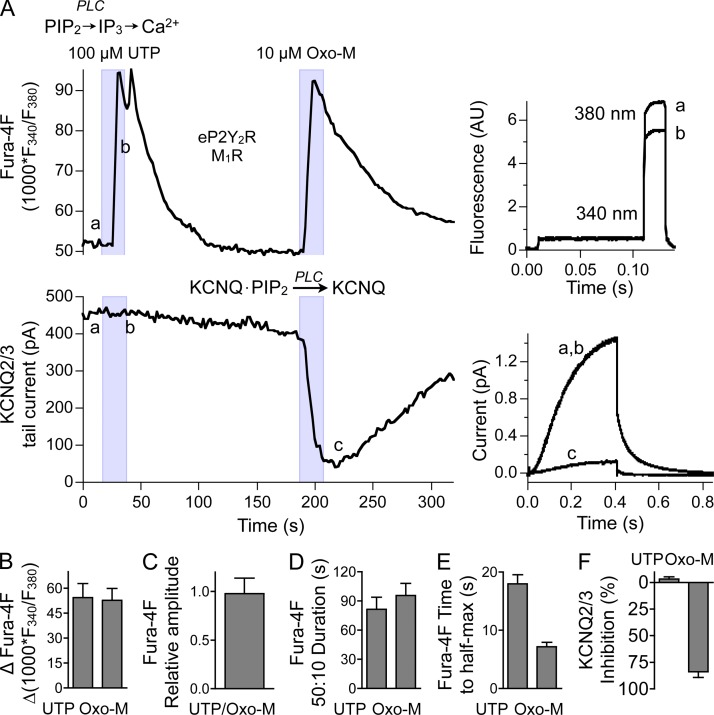
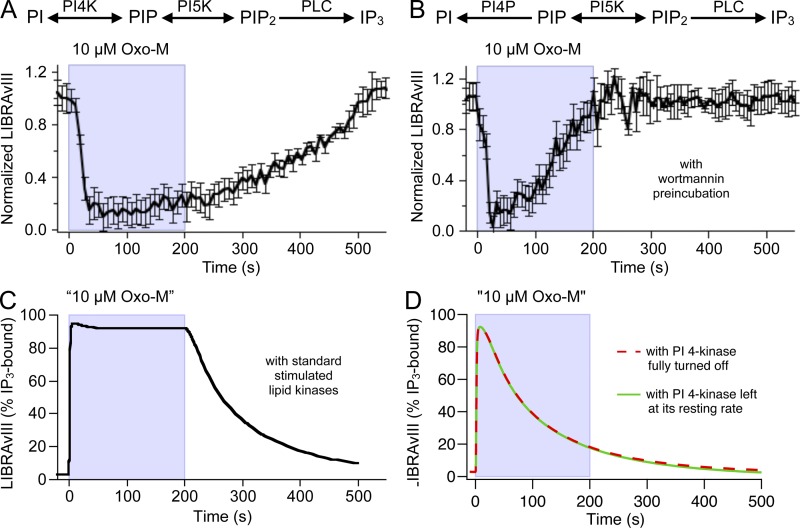
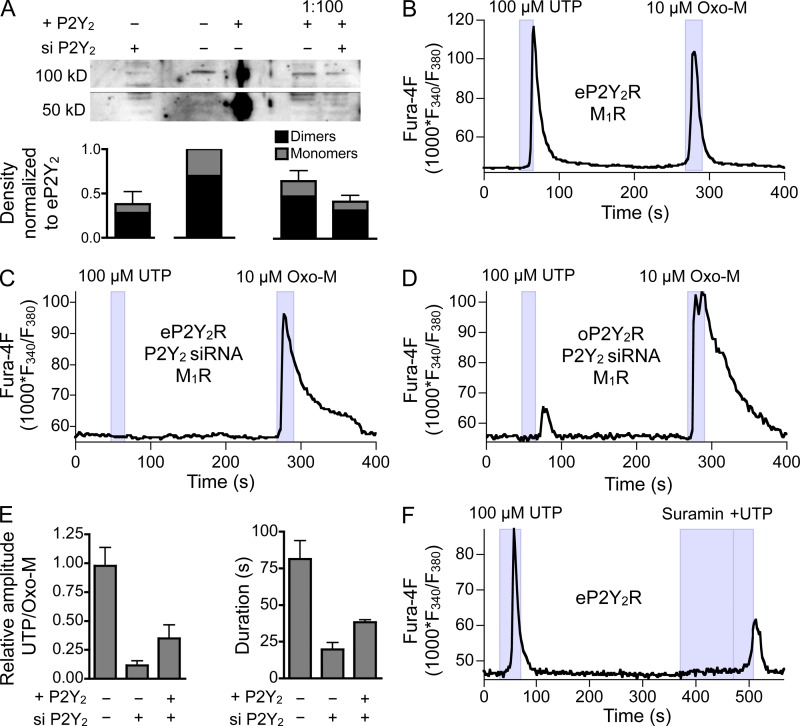
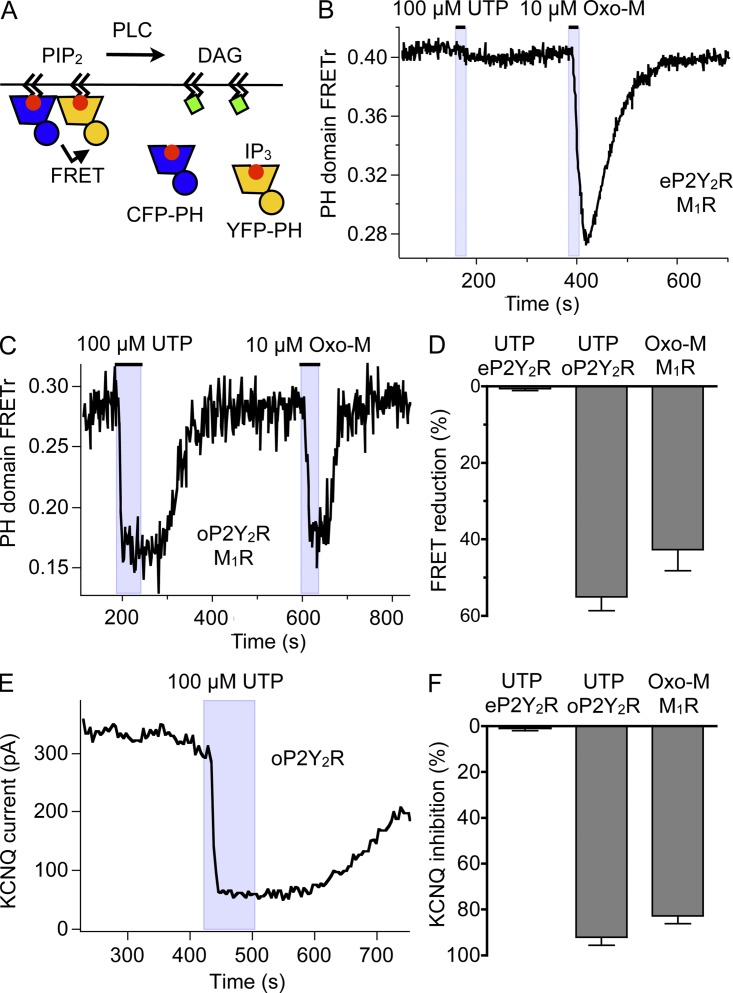
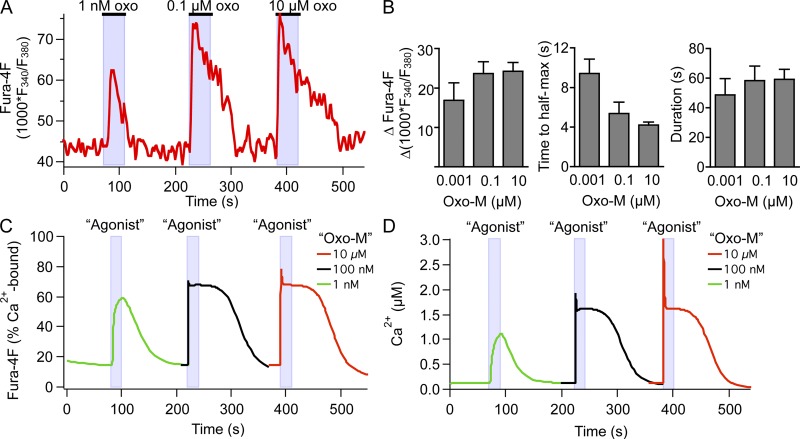
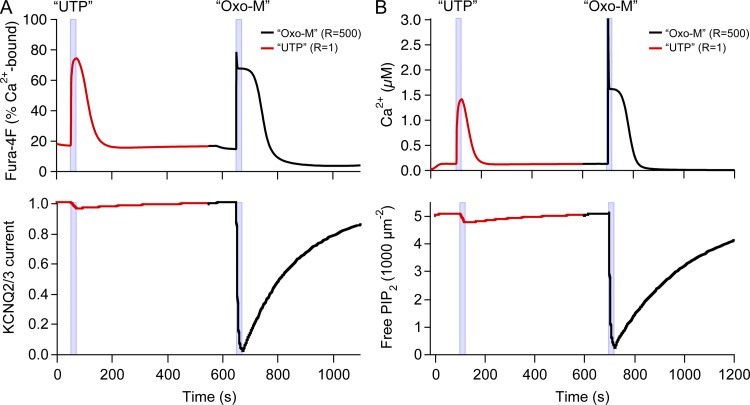
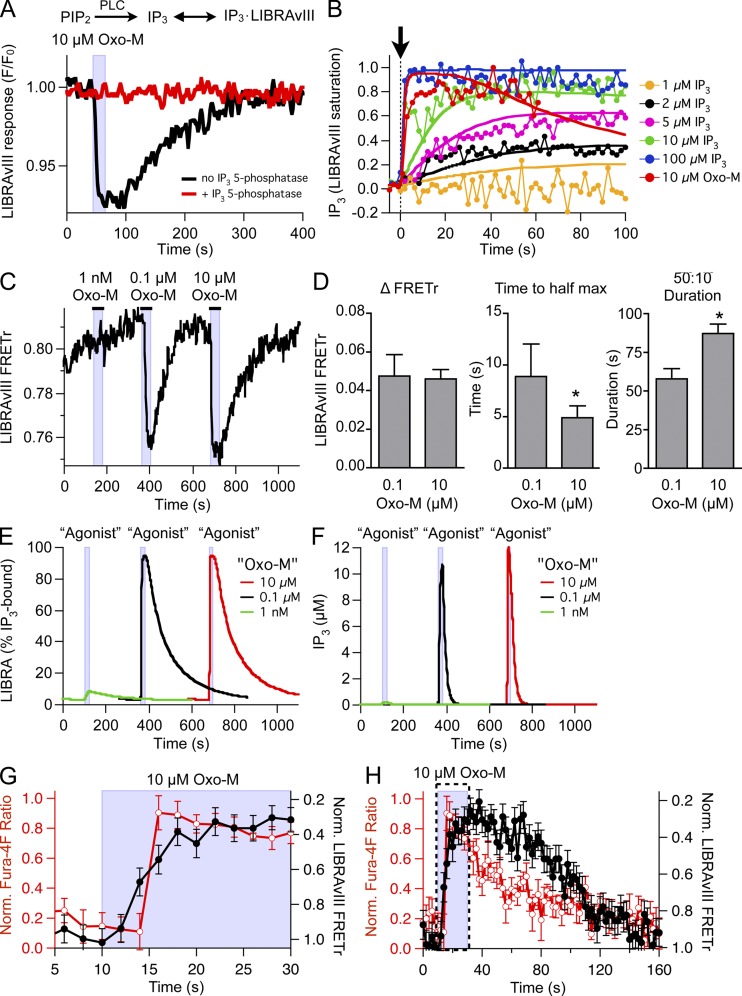
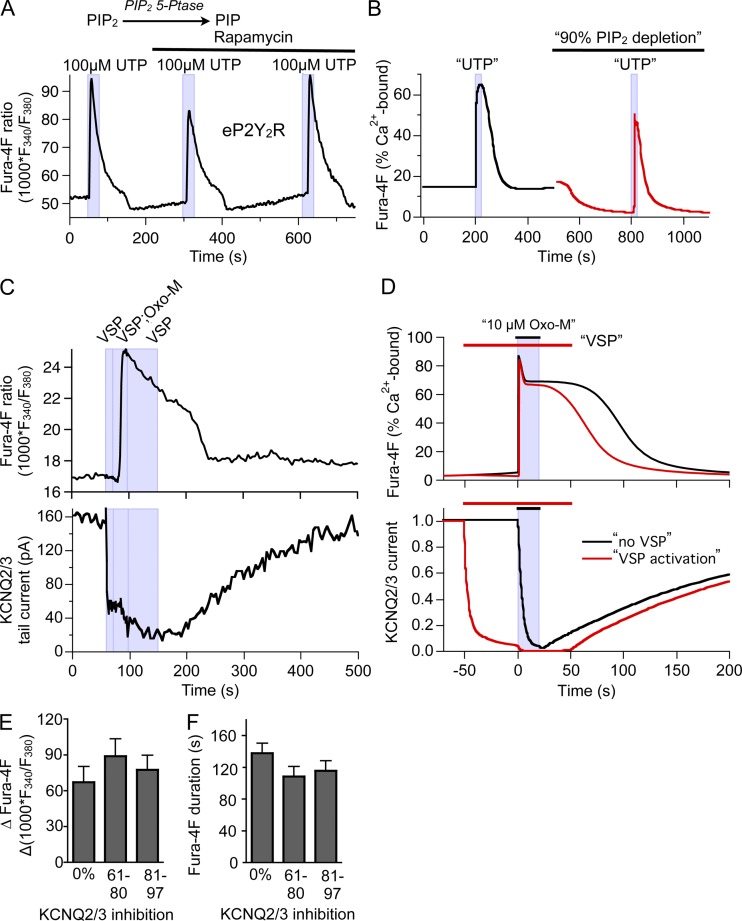
Gq-coupled plasma membrane receptors activate phospholipase C (PLC), which hydrolyzes membrane phosphatidylinositol 4,5-bisphosphate (PIP2) into the second messengers inositol 1,4,5-trisphosphate (IP3) and diacylglycerol (DAG). This leads to calcium release, protein kinase C (PKC) activation, and sometimes PIP2 depletion. To understand mechanisms governing these diverging signals and to determine which of these signals is responsible for the inhibition of KCNQ2/3 (KV7.2/7.3) potassium channels, we monitored levels of PIP2, IP3, and calcium in single living cells. DAG and PKC are monitored in our companion paper (Falkenburger et al. 2013. J. Gen. Physiol. http://dx.doi.org/10.1085/jgp.201210887). The results extend our previous kinetic model of Gq-coupled receptor signaling to IP3 and calcium. We find that activation of low-abundance endogenous P2Y2 receptors by a saturating concentration of uridine 5'-triphosphate (UTP; 100 µM) leads to calcium release but not to PIP2 depletion. Activation of overexpressed M1 muscarinic receptors by 10 µM Oxo-M leads to a similar calcium release but also depletes PIP2. KCNQ2/3 channels are inhibited by Oxo-M (by 85%), but not by UTP (<1%). These differences can be attributed purely to differences in receptor abundance. Full amplitude calcium responses can be elicited even after PIP2 was partially depleted by overexpressed inducible phosphatidylinositol 5-phosphatases, suggesting that very low amounts of IP3 suffice to elicit a full calcium release. Hence, weak PLC activation can elicit robust calcium signals without net PIP2 depletion or KCNQ2/3 channel inhibition.
Gq 偶联的质膜受体激活磷脂酶 C(PLC),后者将膜磷脂酰肌醇 4,5-二磷酸(PIP2)水解成第二信使肌醇 1,4,5-三磷酸(IP3)和二酰基甘油(DAG)。这导致钙释放、蛋白激酶 C(PKC)激活,有时还会导致 PIP2 耗竭。为了理解控制这些分歧信号的机制,并确定哪些信号负责抑制 KCNQ2/3(KV7.2/7.3)钾通道,我们在单个活细胞中监测 PIP2、IP3 和钙的水平。DAG 和 PKC 在我们的姊妹篇中进行了监测(Falkenburger 等人,2013 年。J. Gen. Physiol. http://dx.doi.org/10.1085/jgp.201210887)。结果将我们以前的 Gq 偶联受体信号转导的动力学模型扩展到了 IP3 和钙。我们发现,用饱和浓度的尿苷 5'-三磷酸(UTP;100 µM)激活低丰度内源性 P2Y2 受体导致钙释放,但不导致 PIP2 耗竭。用 10 µM Oxo-M 激活过表达的 M1 毒蕈碱受体也会导致类似的钙释放,但也会耗尽 PIP2。Oxo-M(抑制 85%)而非 UTP(抑制<1%)抑制 KCNQ2/3 通道。这些差异纯粹归因于受体丰度的差异。即使在过表达可诱导的磷酸肌醇 5-磷酸酶部分耗尽 PIP2 后,也可以引发全幅度钙反应,这表明只需极少量的 IP3 就足以引发完全的钙释放。因此,弱 PLC 激活可以引发强烈的钙信号,而不会导致净 PIP2 耗竭或 KCNQ2/3 通道抑制。