Center for Systems Integration and Sustainability, Department of Fisheries and Wildlife, Michigan State University, East Lansing, Michigan, United States of America.
PLoS One. 2013 May 22;8(5):e64582. doi: 10.1371/journal.pone.0064582. Print 2013.
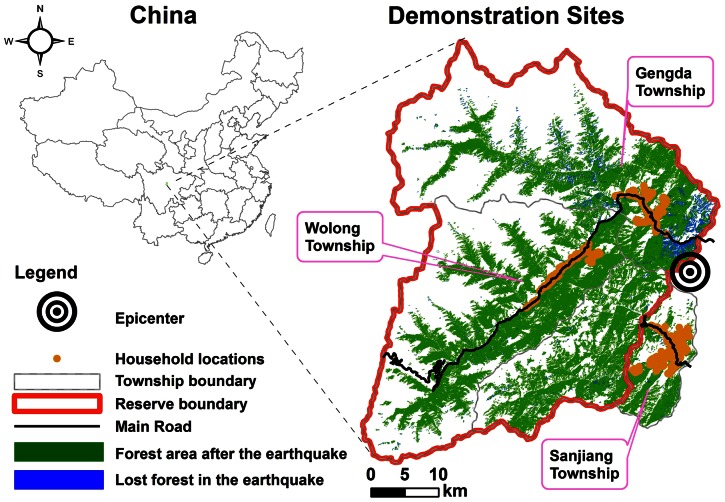
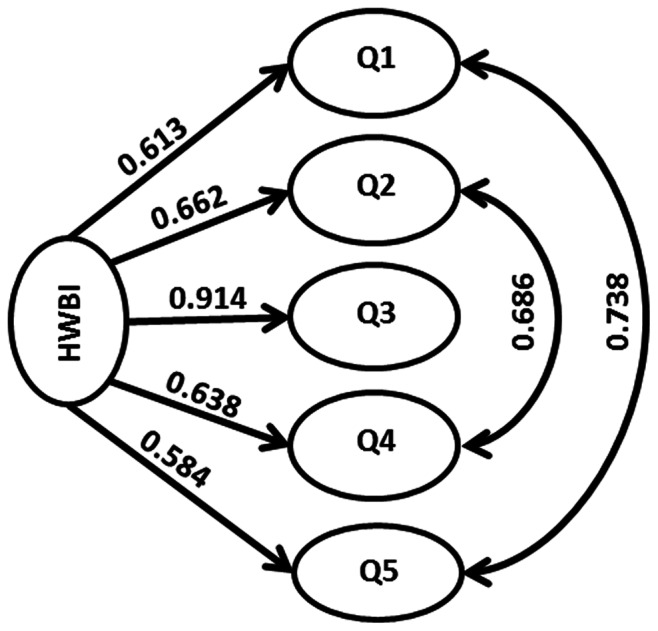
Understanding the linkages between ecosystem services (ES) and human well-being (HWB) is crucial to sustain the flow of ES for HWB. The Millennium Ecosystem Assessment (MA) provided a state-of-the-art synthesis of such knowledge. However, due to the complexity of the linkages between ES and HWB, there are still many knowledge gaps, and in particular a lack of quantitative indicators and integrated models based on the MA framework. To fill some of these research needs, we developed a quantitative index system to measure HWB, and assessed the impacts of an external driver--the 2008 Wenchuan Earthquake--on HWB. Our results suggest that our proposed index system of HWB is well-designed, valid and could be useful for better understanding the linkages between ES and HWB. The earthquake significantly affected households' well-being in our demonstration sites. Such impacts differed across space and across the five dimensions of the sub-index (i.e., the basic material for good life, security, health, good social relations, and freedom of choice and action). Since the conceptual framework is based on the generalizable MA framework, our methods should also be applicable to other study areas.
理解生态系统服务(ES)与人类福祉(HWB)之间的联系对于维持 ES 流向 HWB 至关重要。千年生态系统评估(MA)提供了该领域知识的最新综合。然而,由于 ES 和 HWB 之间联系的复杂性,仍存在许多知识空白,特别是缺乏基于 MA 框架的定量指标和综合模型。为了填补其中的一些研究需求,我们开发了一个衡量 HWB 的定量指标体系,并评估了外部驱动因素——2008 年汶川地震——对 HWB 的影响。研究结果表明,我们提出的 HWB 指标体系设计合理、有效,对于更好地理解 ES 和 HWB 之间的联系可能具有一定的参考价值。地震显著影响了我们示范区家庭的福祉。这种影响在空间上和五个子指标(即美好生活的基本物质、安全、健康、良好的社会关系以及选择和行动的自由)维度上均存在差异。由于概念框架基于可推广的 MA 框架,因此我们的方法也应适用于其他研究领域。