Setayeshgar Solmaz, Whiting Susan J, Vatanparast Hassanali
College of Pharmacy and Nutrition, Division of Nutrition and Dietetics, University of Saskatchewan, Saskatoon, SK, Canada.
Int J Hypertens. 2013;2013:276564. doi: 10.1155/2013/276564. Epub 2013 Apr 30.
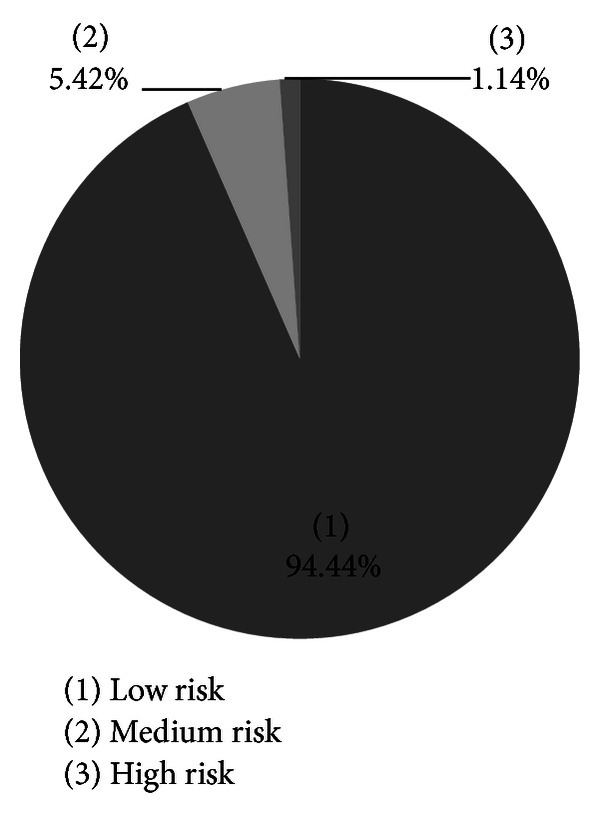
Background. Cardiovascular disease (CVD) is the leading cause of death in adult Canadians. Cardiometabolic risk (CMR) derived from 10-year risk of cardiovascular diseases and metabolic syndrome (MetS) needs to be evaluated in Canadian adults. Objective. To determine CMR among Canadian adults by sociodemographic and lifestyle characteristics. Subjects and Methods. Data from the Canadian Health Measures Survey (CHMS), Cycle 1, 2007-2009, was used. Framingham Risk Score (FRS) was implemented to predict 10-year risk of CVD, and metabolic syndrome was identified using the most recent criteria. The 10-year risk of CVD was multiplied by 1.5 in individuals with MetS to obtain CMR. Data were weighted and bootstrapped to be able to generalize the results nationally. Results and Conclusion. CMR gave more accurate estimation of 10-year risk of CVD in Canadian adults from 30 to 74 years than using only FRS. The 10-year risk of CVD in Canadian adults significantly increased when CMR was taken into account from 8.10% to 9.86%. The CVD risk increased by increase in age, decrease in education, and decrease in physical activity and in smokers. Canadians with medium risk of CVD consumed significantly less fruit and vegetable juice compared to Canadians with low risk. No other dietary differences were found.
背景。心血管疾病(CVD)是加拿大成年人的主要死因。需要对加拿大成年人中源自心血管疾病10年风险和代谢综合征(MetS)的心脏代谢风险(CMR)进行评估。目的。根据社会人口统计学和生活方式特征确定加拿大成年人的CMR。对象与方法。使用了2007 - 2009年第1周期加拿大健康测量调查(CHMS)的数据。采用弗雷明汉风险评分(FRS)来预测心血管疾病的10年风险,并使用最新标准识别代谢综合征。对于患有代谢综合征的个体,将心血管疾病的10年风险乘以1.5以获得CMR。数据进行了加权和自抽样,以便能够在全国范围内推广结果。结果与结论。与仅使用FRS相比,CMR能更准确地估计30至74岁加拿大成年人心血管疾病的10年风险。当考虑CMR时,加拿大成年人心血管疾病的10年风险从8.10%显著增加到9.86%。心血管疾病风险随着年龄增长、教育程度降低、身体活动减少以及吸烟者数量增加而上升。与低风险的加拿大人相比,中等心血管疾病风险的加拿大人饮用的果汁显著更少。未发现其他饮食差异。