Department of Microbiology, School of Medicine, Kyung Hee University, Seoul 130-701, Republic of Korea.
Oxid Med Cell Longev. 2013;2013:629028. doi: 10.1155/2013/629028. Epub 2013 May 30.
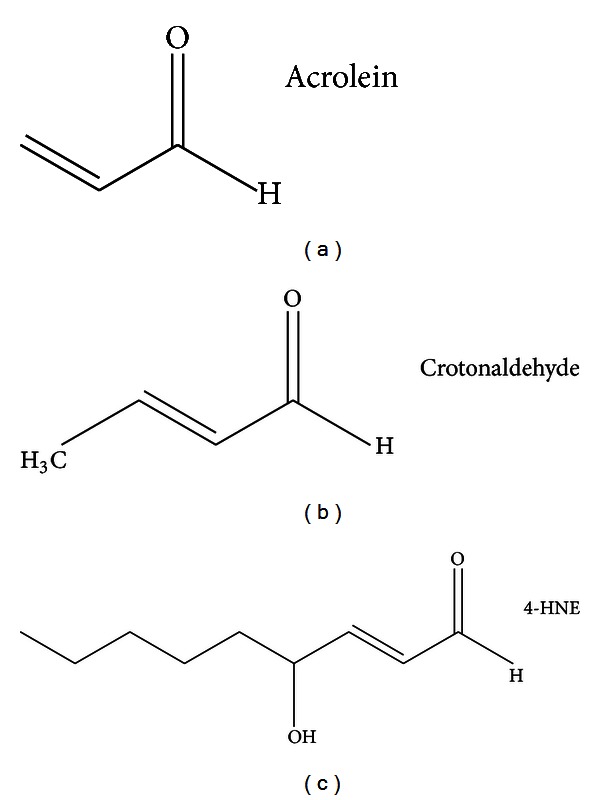
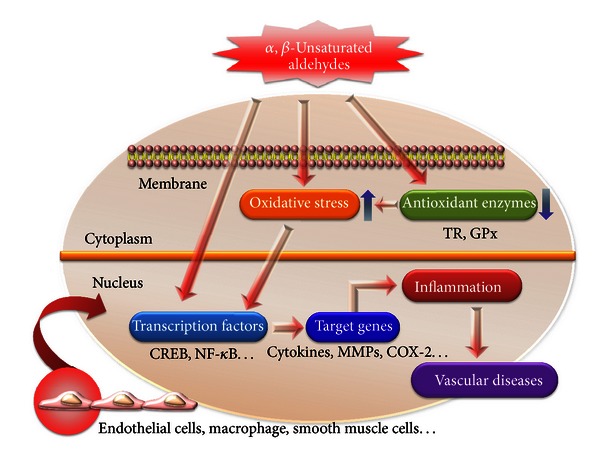
Vascular diseases are the most prominent cause of death, and inflammation and vascular dysfunction are key initiators of the pathophysiology of vascular disease. Lipid peroxidation products, such as acrolein and other α, β-unsaturated aldehydes, have been implicated as mediators of inflammation and vascular dysfunction. α, β-Unsaturated aldehydes are toxic because of their high reactivity with nucleophiles and their ability to form protein and DNA adducts without prior metabolic activation. This strong reactivity leads to electrophilic stress that disrupts normal cellular function. Furthermore, α, β-unsaturated aldehydes are reported to cause endothelial dysfunction by induction of oxidative stress, redox-sensitive mechanisms, and inflammatory changes such as induction of cyclooxygenase-2 and cytokines. This review provides an overview of the effects of lipid peroxidation products, α, β-unsaturated aldehydes, on inflammation and vascular dysfunction.
血管疾病是最主要的死亡原因,而炎症和血管功能障碍是血管疾病病理生理学的关键启动因素。脂质过氧化产物,如丙烯醛和其他α,β-不饱和醛,被认为是炎症和血管功能障碍的介质。α,β-不饱和醛因其与亲核试剂的高反应性以及在没有先前代谢激活的情况下形成蛋白质和 DNA 加合物的能力而具有毒性。这种强反应性导致亲电应激,破坏正常的细胞功能。此外,据报道,α,β-不饱和醛通过诱导氧化应激、 redox 敏感机制以及诱导环加氧酶-2 和细胞因子等炎症变化,引起内皮功能障碍。这篇综述提供了脂质过氧化产物、α,β-不饱和醛对炎症和血管功能障碍影响的概述。