Eguizabal Alma, Laughney Ashley M, García-Allende Pilar Beatriz, Krishnaswamy Venkataramanan, Wells Wendy A, Paulsen Keith D, Pogue Brian W, Lopez-Higuera Jose M, Conde Olga M
Photonics Engineering Group, Dep. TEISA, University of Cantabria, Plaza de la Ciencia sn, 39005 Santander, Spain.
Biomed Opt Express. 2013 Jun 12;4(7):1104-18. doi: 10.1364/BOE.4.001104. Print 2013 Jul 1.
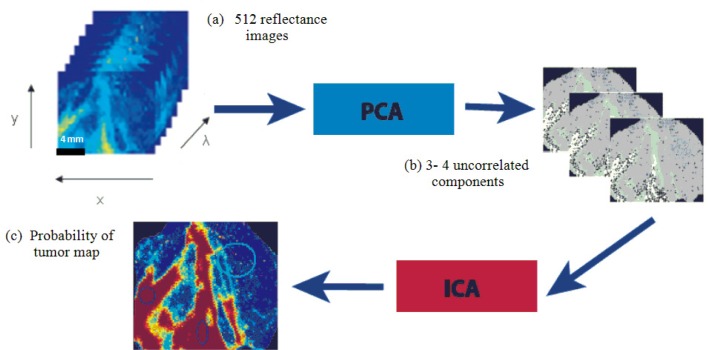
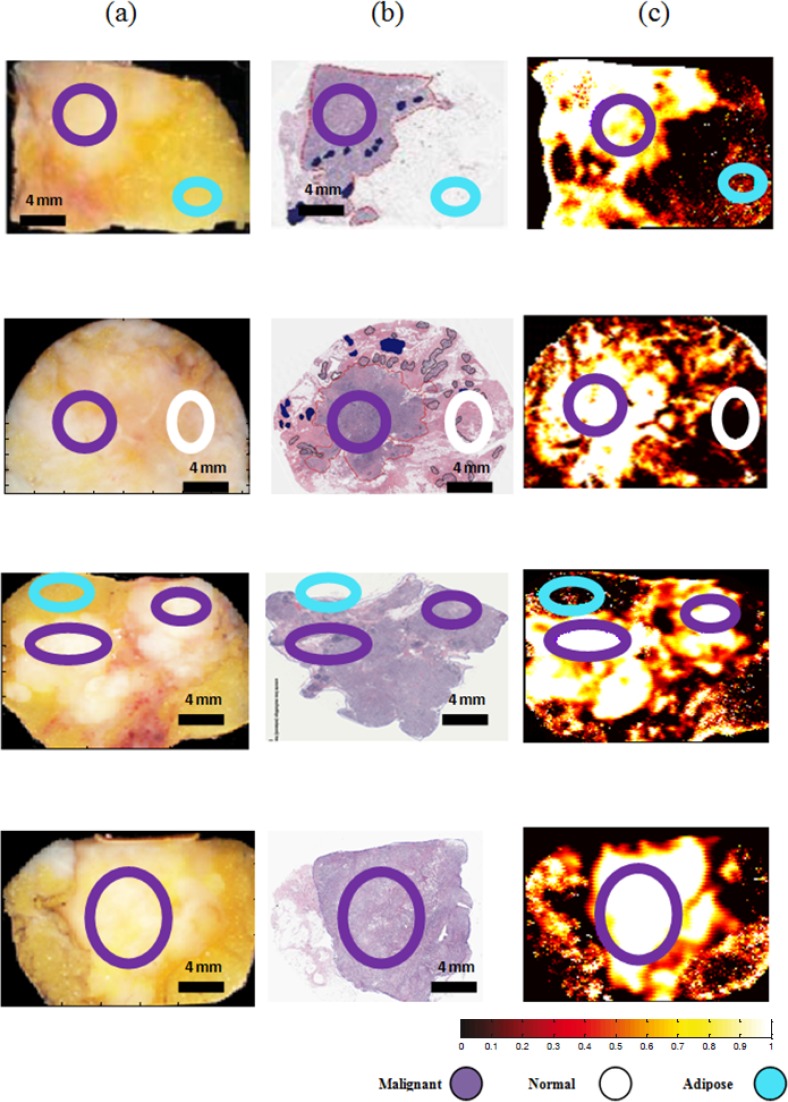
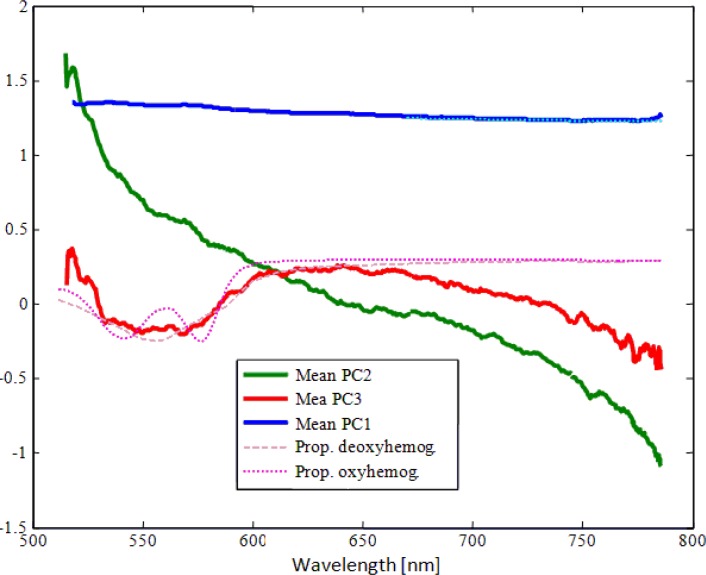
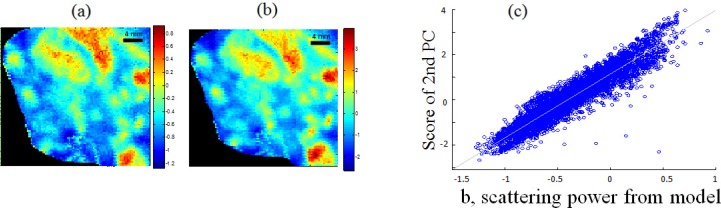
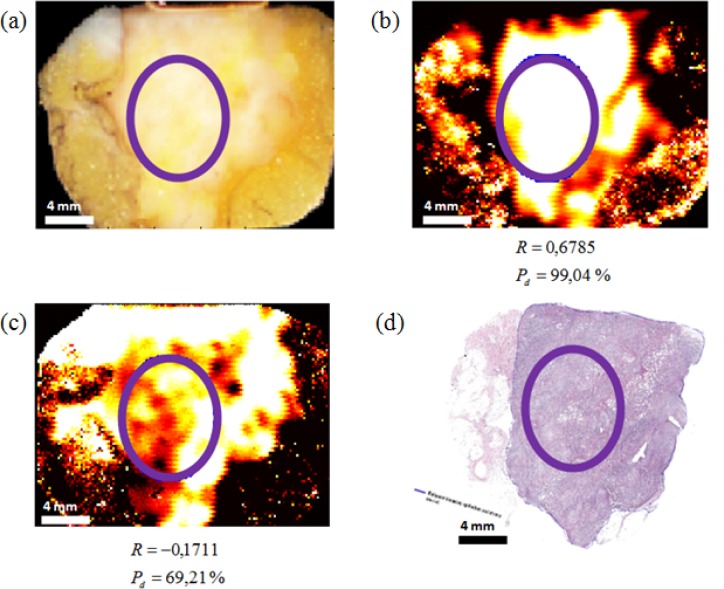
Breast tumors are blindly identified using Principal (PCA) and Independent Component Analysis (ICA) of localized reflectance measurements. No assumption of a particular theoretical model for the reflectance needs to be made, while the resulting features are proven to have discriminative power of breast pathologies. Normal, benign and malignant breast tissue types in lumpectomy specimens were imaged ex vivo and a surgeon-guided calibration of the system is proposed to overcome the limitations of the blind analysis. A simple, fast and linear classifier has been proposed where no training information is required for the diagnosis. A set of 29 breast tissue specimens have been diagnosed with a sensitivity of 96% and specificity of 95% when discriminating benign from malignant pathologies. The proposed hybrid combination PCA-ICA enhanced diagnostic discrimination, providing tumor probability maps, and intermediate PCA parameters reflected tissue optical properties.
利用局部反射率测量的主成分分析(PCA)和独立成分分析(ICA)对乳腺肿瘤进行盲识别。无需对反射率采用特定的理论模型,而所得到的特征已被证明具有区分乳腺病变的能力。对肿块切除标本中的正常、良性和恶性乳腺组织类型进行了离体成像,并提出了一种由外科医生指导的系统校准方法,以克服盲分析的局限性。提出了一种简单、快速的线性分类器,诊断时无需训练信息。在区分良性与恶性病变时,一组29个乳腺组织标本的诊断灵敏度为96%,特异性为95%。所提出的PCA-ICA混合组合增强了诊断辨别力,提供了肿瘤概率图,且中间PCA参数反映了组织光学特性。