Neurocognitive Development Unit, School of Psychology, University of Western Australia, Perth, Western Australia, Australia.
PLoS One. 2013 Jul 23;8(7):e69826. doi: 10.1371/journal.pone.0069826. Print 2013.
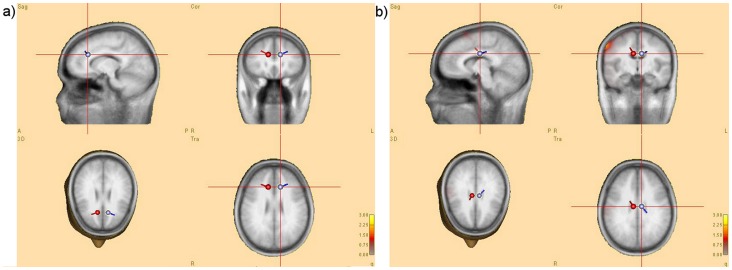
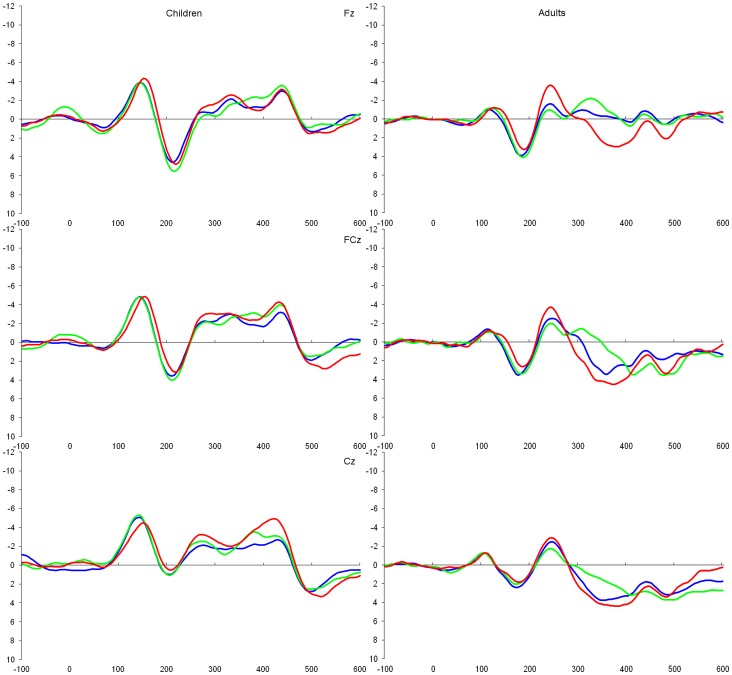
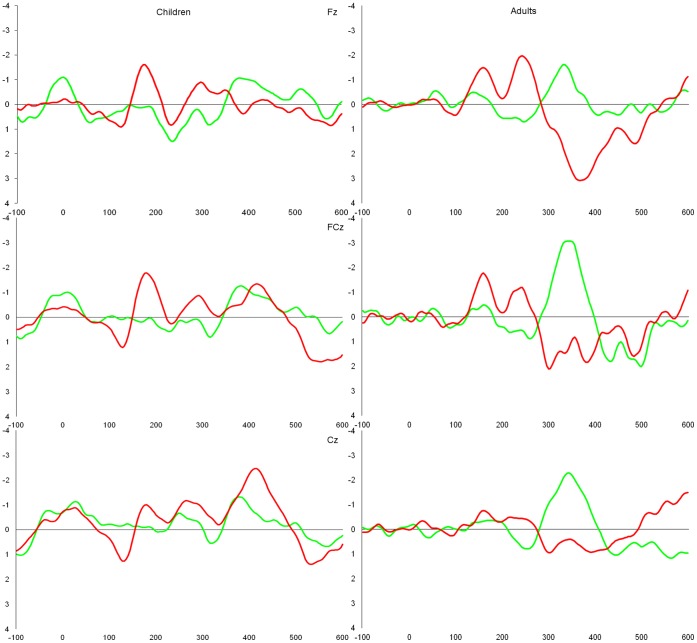
Cognitive control is integral to the ability to attend to a relevant task whilst suppressing distracting information or inhibiting prepotent responses. The current study examined the development of these two subprocesses by examining electrophysiological indices elicited during each process. Thirteen 18 year-old adults and thirteen children aged 8-11 years (mean=9.77 years) completed a hybrid Go/Nogo flanker task while continuous EEG data were recorded. The N2 topography for both response inhibition and interference suppression changed with increasing age. The neural activation associated with response inhibition became increasingly frontally distributed with age, and showed decreases of both amplitude and peak latency from childhood to adulthood, possibly due to reduced cognitive demands and myelination respectively occurring during this period. Interestingly, a significant N2 effect was apparent in adults, but not observed in children during trials requiring interference suppression. This could be due to more diffuse activation in children, which would require smaller levels of activation over a larger region of the brain than is reported in adults. Overall, these results provide evidence of distinct maturational processes occurring throughout late childhood and adolescence, highlighting the separability of response inhibition and interference suppression.
认知控制对于专注于相关任务、抑制干扰信息或抑制优势反应的能力至关重要。本研究通过检查每个过程中引发的电生理指标来检查这两个子过程的发展。13 名 18 岁成年人和 13 名 8-11 岁的儿童(平均年龄=9.77 岁)完成了混合 Go/Nogo 侧抑制任务,同时记录连续 EEG 数据。两种反应抑制和干扰抑制的 N2 地形图随年龄增长而变化。与年龄相关的反应抑制相关的神经激活变得越来越向前分布,并且幅度和峰潜伏期从儿童期到成年期都降低,这可能是由于在此期间认知需求减少和髓鞘形成分别发生。有趣的是,在需要抑制干扰的试验中,成年人表现出明显的 N2 效应,但在儿童中未观察到。这可能是由于儿童的激活更为弥散,这需要在大脑的更大区域上达到比成年人报告的更小的激活水平。总的来说,这些结果提供了整个儿童晚期和青春期发生不同成熟过程的证据,突出了反应抑制和干扰抑制的可分离性。