Key Laboratory for Magnetism and Magnetic Materials of MOE, Department of Physics, School of Physical Science and Technology, Lanzhou University, Lanzhou, China.
Sci Rep. 2013;3:2405. doi: 10.1038/srep02405.
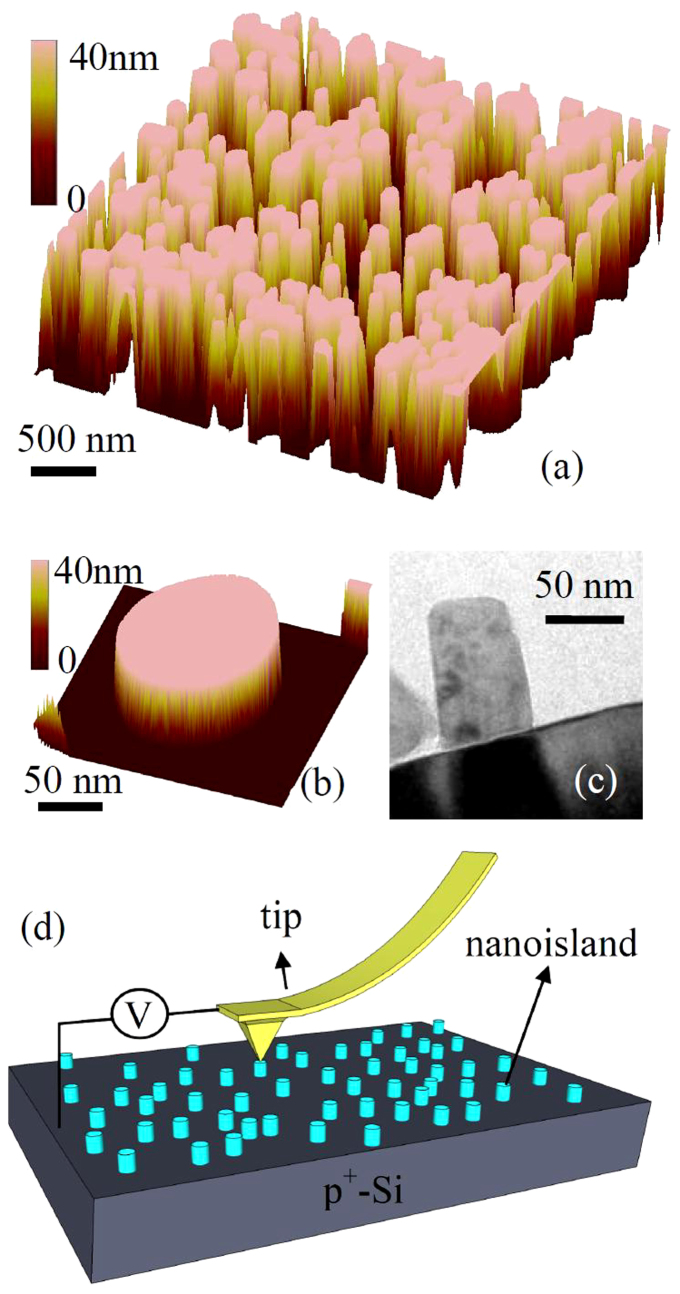
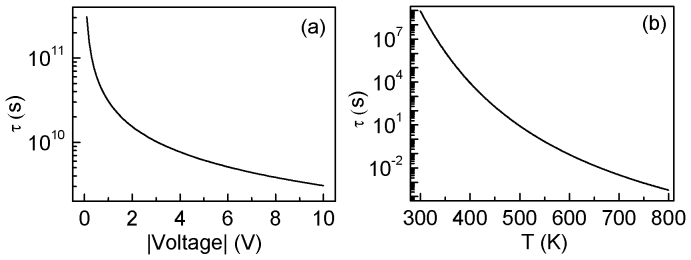
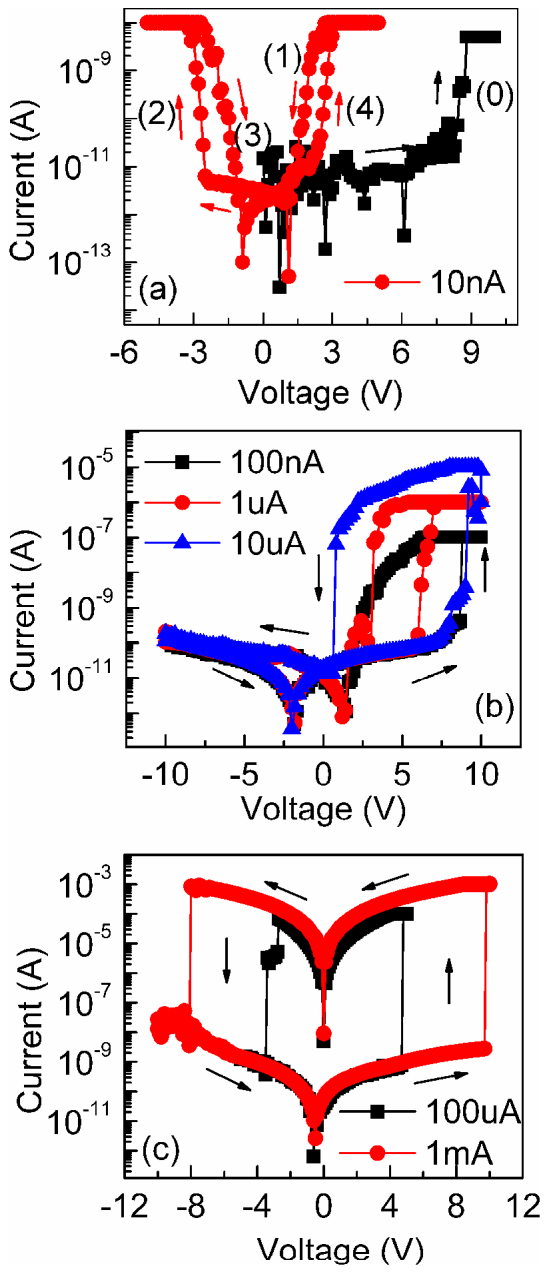
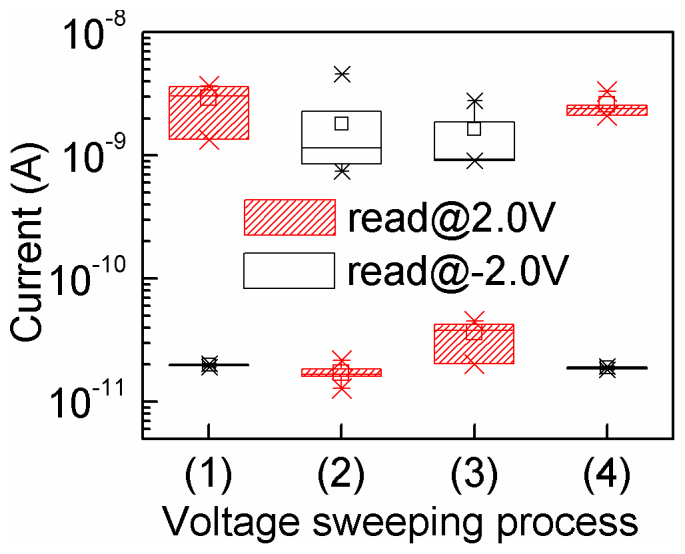
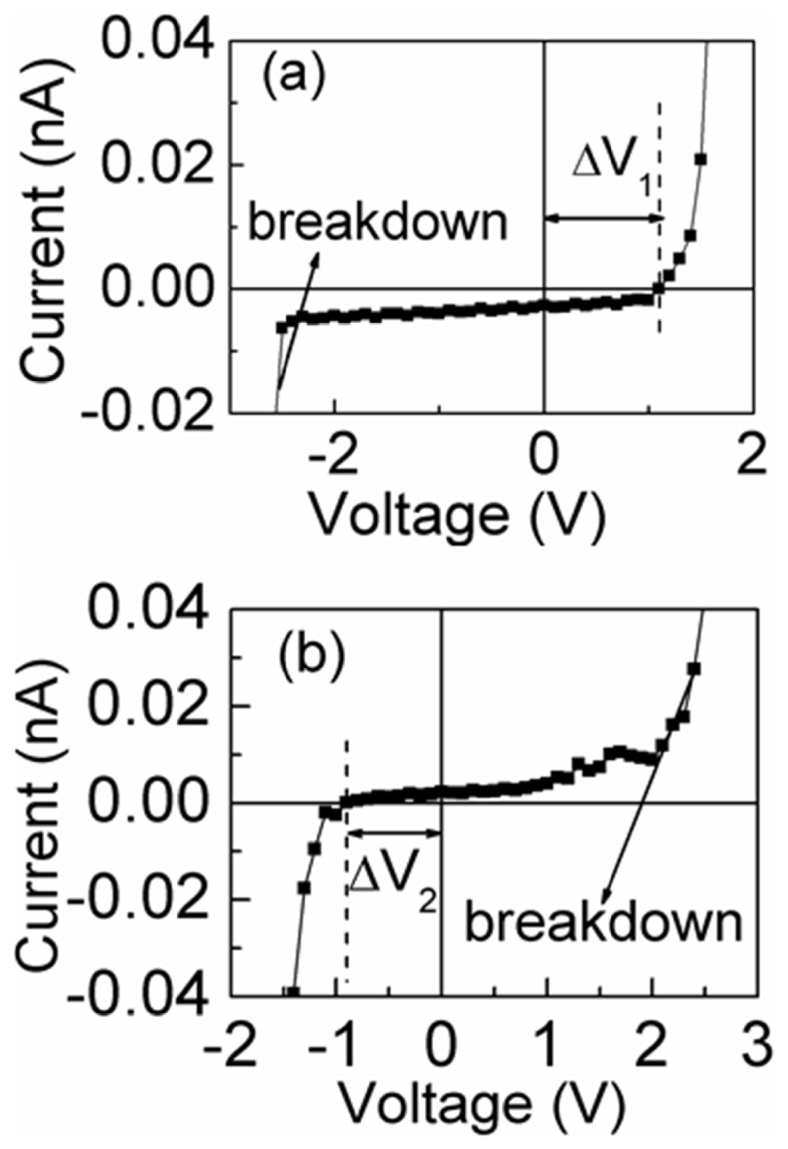
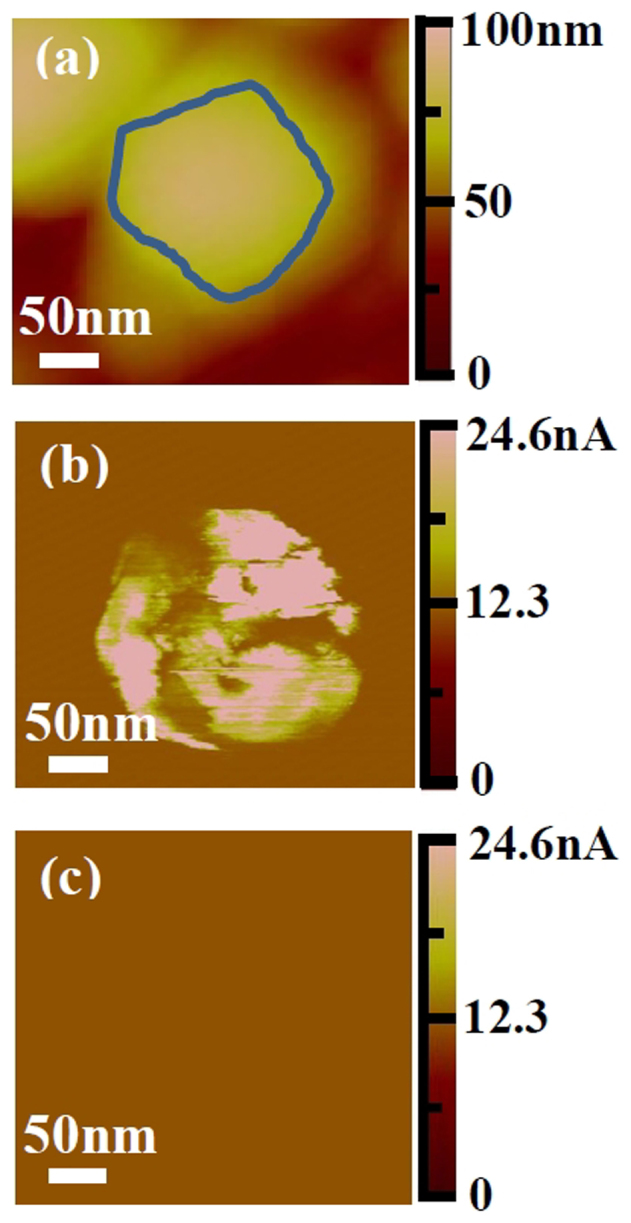
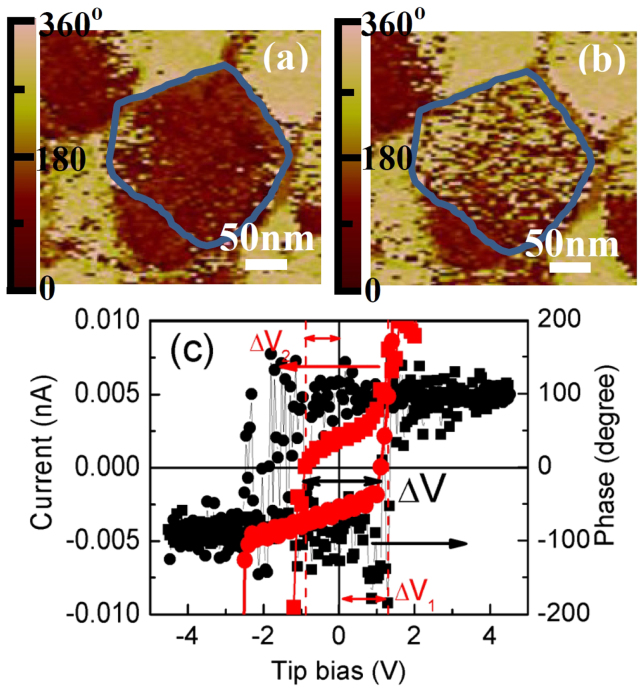
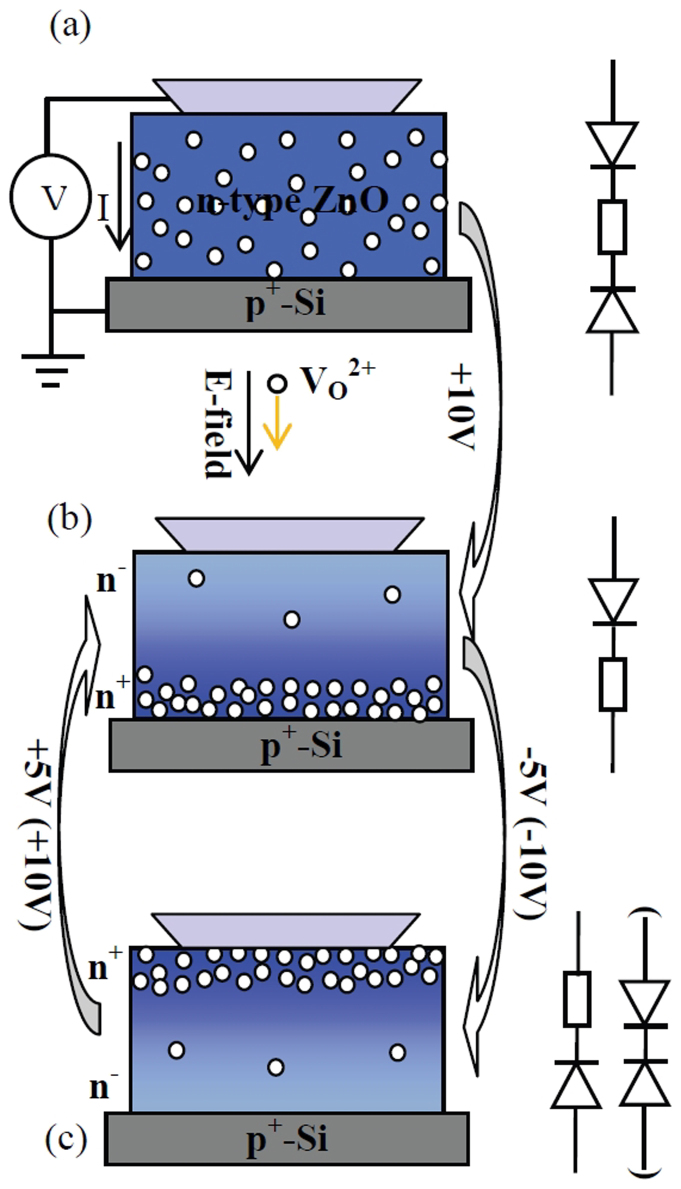
Resistive memory has attracted a great deal of attention as an alternative to contemporary flash memory. Here we demonstrate an interesting phenomenon that multimode resistive switching, i.e. threshold-like, self-rectifying and ordinary bipolar switching, can be observed in one self-assembled single-crystalline ZnO nanoisland with base diameter and height ranging around 30 and 40 nm on Si at different levels of current compliance. Current-voltage characteristics, conductive atomic force microscopy (C-AFM), and piezoresponse force microscopy results show that the threshold-like and self-rectifying types of switching are controlled by the movement of oxygen vacancies in ZnO nanoisland between the C-AFM tip and Si substrate while ordinary bipolar switching is controlled by formation and rupture of conducting nano-filaments. Threshold-like switching leads to a very small switching power density of 1 × 10(3) W/cm(2).
阻变存储器作为一种替代现代闪存的技术引起了广泛关注。在这里,我们展示了一个有趣的现象,即在不同的电流限制水平下,我们可以在一个自组装的单晶 ZnO 纳米岛上观察到多模阻变开关,即阈值型、自整流和普通双极性开关,该纳米岛的基底直径和高度约为 30 和 40nm,基底位于 Si 上。电流-电压特性、导电原子力显微镜(C-AFM)和压电力显微镜结果表明,阈值型和自整流型开关由 ZnO 纳米岛中的氧空位在 C-AFM 针尖和 Si 衬底之间的移动来控制,而普通双极性开关则由导电线的形成和断裂来控制。阈值型开关导致非常小的开关功率密度为 1×10(3)W/cm(2)。