University Medicine, Institute of Medical Microbiology, Virology and Hygiene, Rostock University, Rostock, Germany.
PLoS Pathog. 2013;9(8):e1003529. doi: 10.1371/journal.ppat.1003529. Epub 2013 Aug 1.
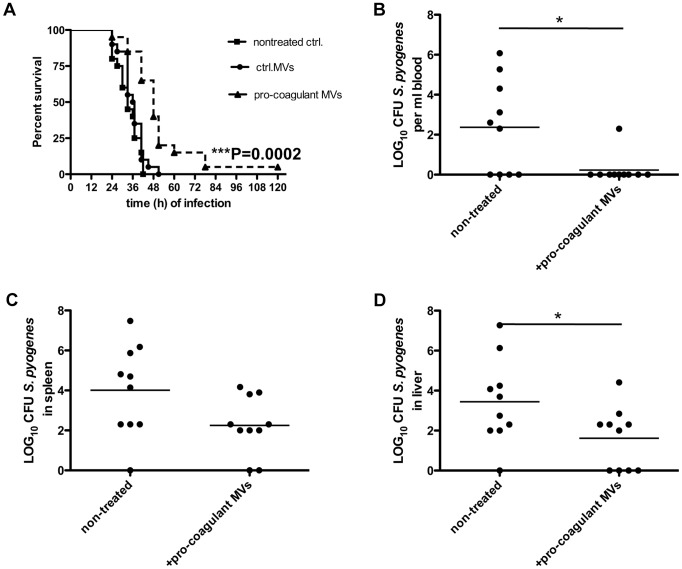
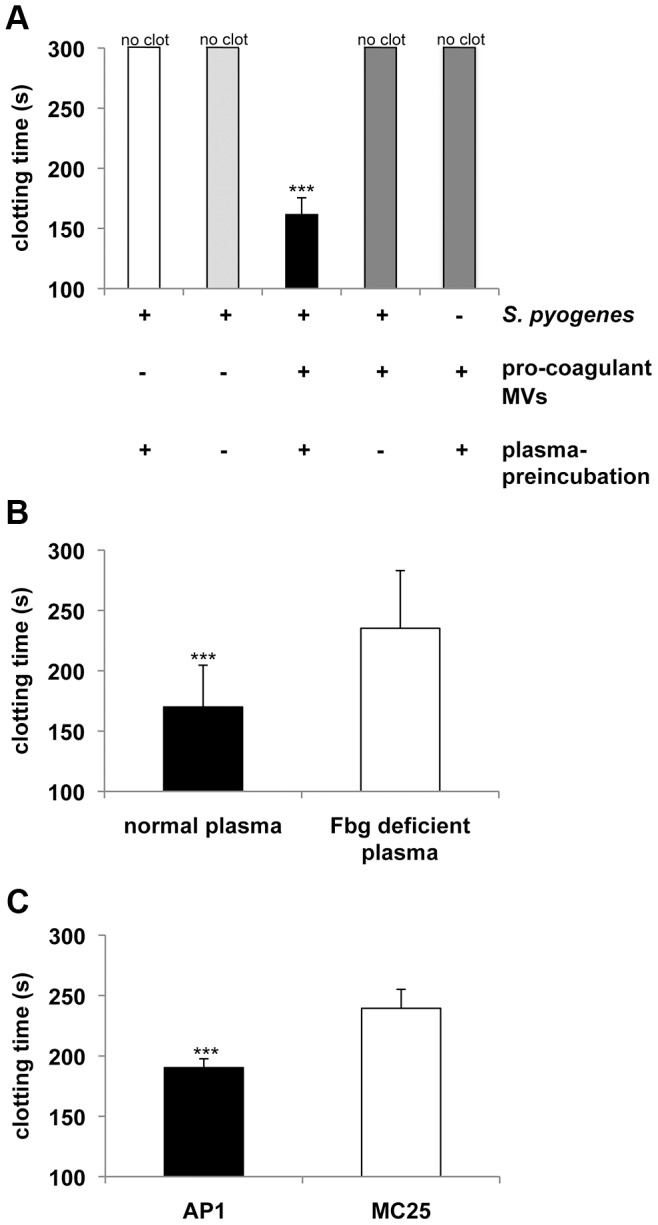
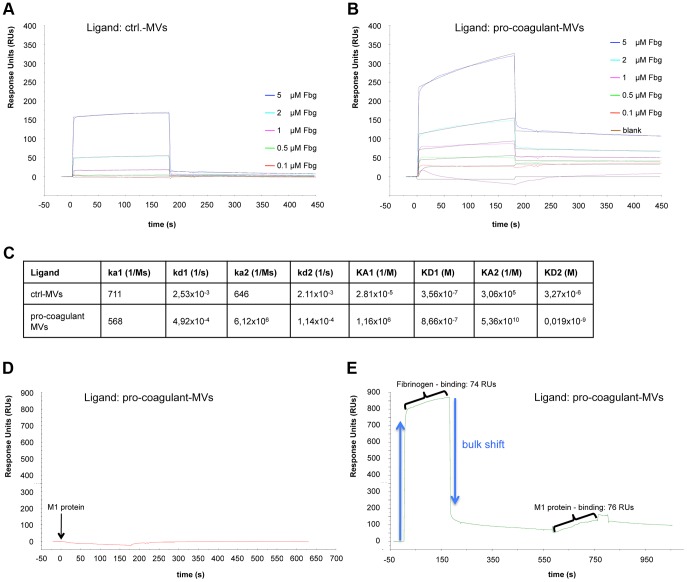
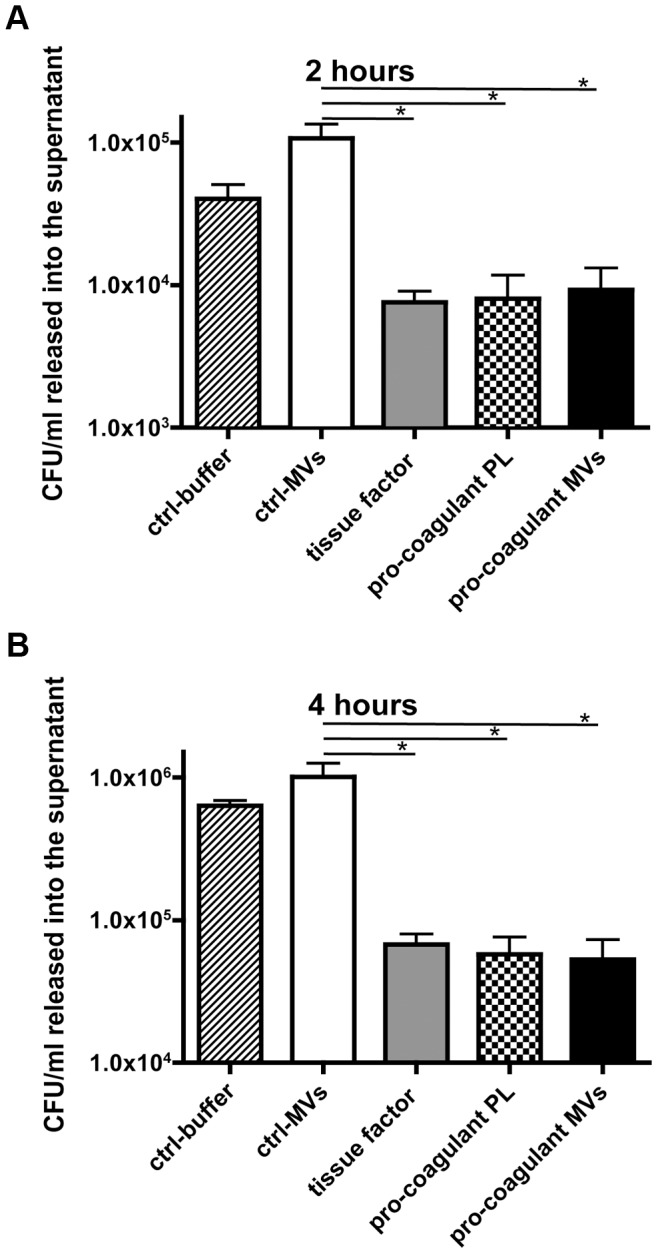
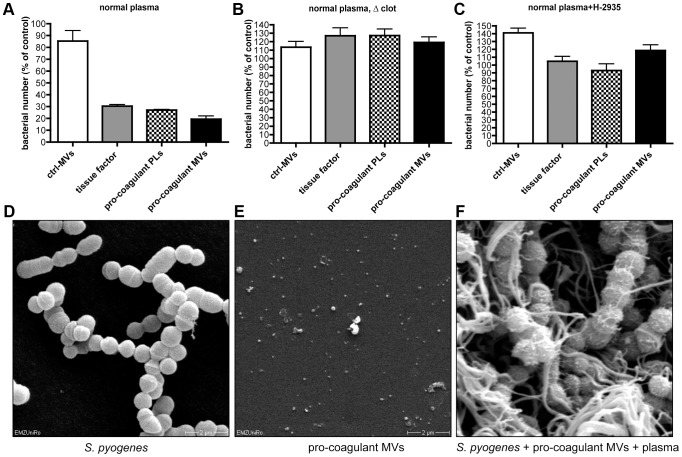
Previous studies have shown that stimulation of whole blood or peripheral blood mononuclear cells with bacterial virulence factors results in the sequestration of pro-coagulant microvesicles (MVs). These particles explore their clotting activity via the extrinsic and intrinsic pathway of coagulation; however, their pathophysiological role in infectious diseases remains enigmatic. Here we describe that the interaction of pro-coagulant MVs with bacteria of the species Streptococcus pyogenes is part of the early immune response to the invading pathogen. As shown by negative staining electron microscopy and clotting assays, pro-coagulant MVs bind in the presence of plasma to the bacterial surface. Fibrinogen was identified as a linker that, through binding to the M1 protein of S. pyogenes, allows the opsonization of the bacteria by MVs. Surface plasmon resonance analysis revealed a strong interaction between pro-coagulant MVs and fibrinogen with a KD value in the nanomolar range. When performing a mass-spectrometry-based strategy to determine the protein quantity, a significant up-regulation of the fibrinogen-binding integrins CD18 and CD11b on pro-coagulant MVs was recorded. Finally we show that plasma clots induced by pro-coagulant MVs are able to prevent bacterial dissemination and possess antimicrobial activity. These findings were confirmed by in vivo experiments, as local treatment with pro-coagulant MVs dampens bacterial spreading to other organs and improved survival in an invasive streptococcal mouse model of infection. Taken together, our data implicate that pro-coagulant MVs play an important role in the early response of the innate immune system in infectious diseases.
先前的研究表明,用细菌毒力因子刺激全血或外周血单个核细胞会导致促凝微囊泡(MVs)的隔离。这些颗粒通过凝血的外源性和内源性途径探索其凝血活性;然而,它们在感染性疾病中的病理生理作用仍然是个谜。在这里,我们描述了促凝 MV 与化脓性链球菌等细菌的相互作用是机体对入侵病原体的早期免疫反应的一部分。如负染色电子显微镜和凝血测定所示,促凝 MV 在存在血浆的情况下与细菌表面结合。纤维蛋白原被鉴定为一种连接物,通过与化脓性链球菌的 M1 蛋白结合,允许 MV 对细菌进行调理作用。表面等离子体共振分析显示促凝 MV 与纤维蛋白原之间存在强烈的相互作用,KD 值在纳摩尔范围内。当进行基于质谱的策略来确定蛋白质数量时,发现促凝 MV 上的纤维蛋白原结合整合素 CD18 和 CD11b 显著上调。最后,我们表明促凝 MV 诱导的血浆凝块能够阻止细菌的传播并具有抗菌活性。体内实验证实了这些发现,因为局部给予促凝 MV 可抑制细菌向其他器官的扩散,并改善侵袭性链球菌感染小鼠模型的存活率。总之,我们的数据表明,促凝 MV 在感染性疾病中先天免疫系统的早期反应中发挥重要作用。