Department of Molecular Cell Biology, Weizmann Institute of Science, Rehovot, Israel.
PLoS One. 2013 Aug 6;8(8):e70444. doi: 10.1371/journal.pone.0070444. Print 2013.
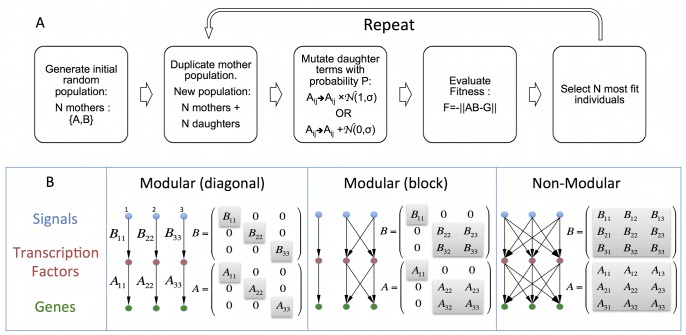
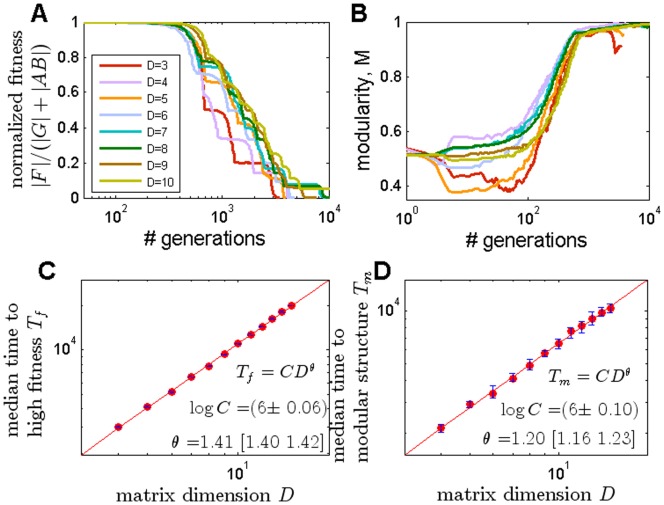
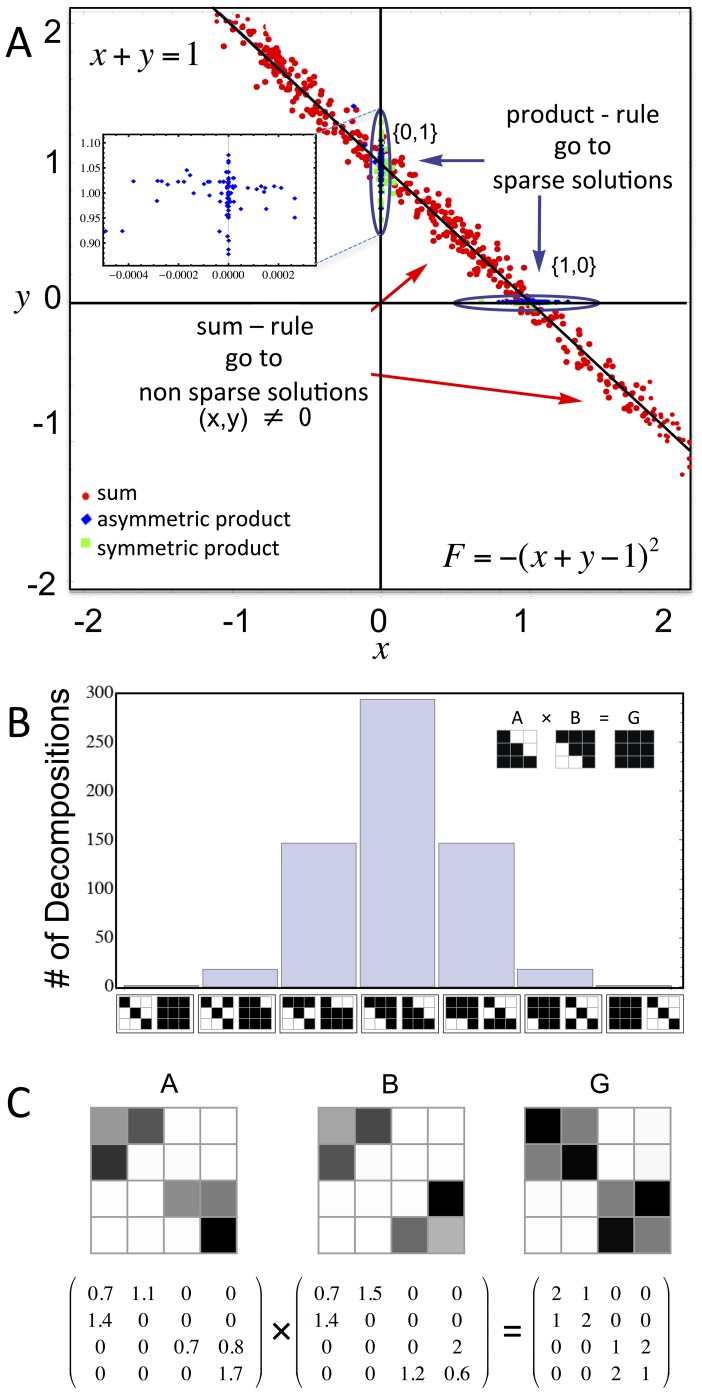
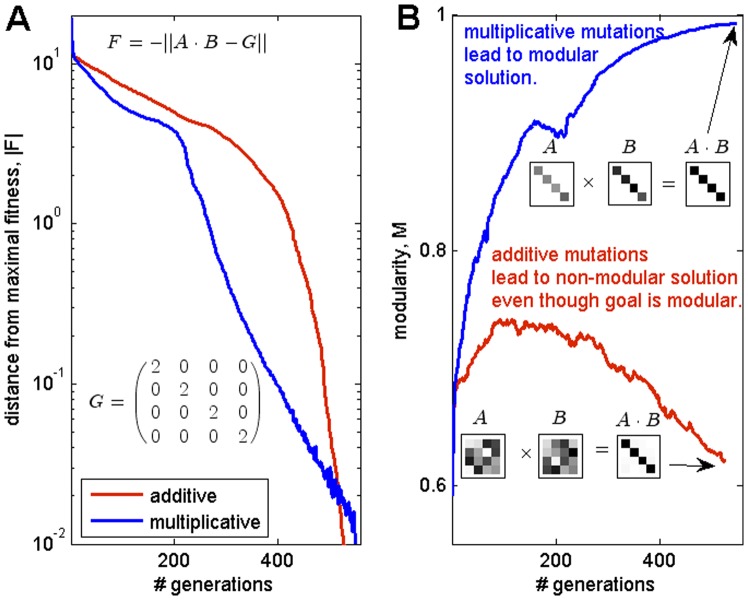
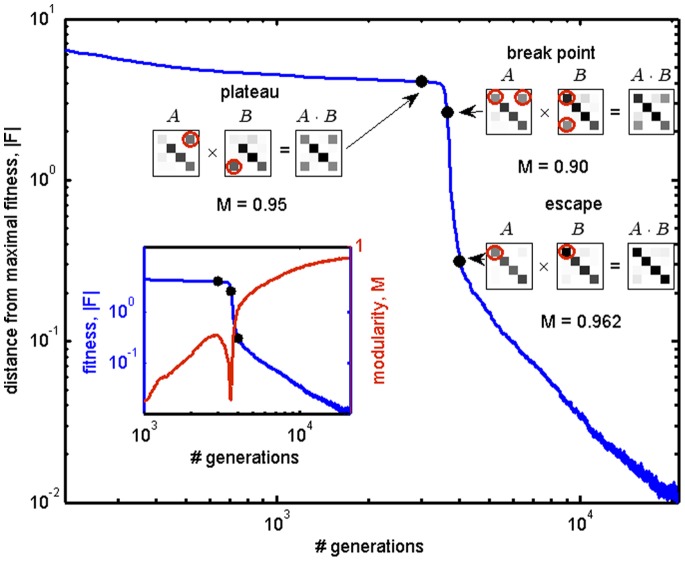
Biological systems exhibit two structural features on many levels of organization: sparseness, in which only a small fraction of possible interactions between components actually occur; and modularity--the near decomposability of the system into modules with distinct functionality. Recent work suggests that modularity can evolve in a variety of circumstances, including goals that vary in time such that they share the same subgoals (modularly varying goals), or when connections are costly. Here, we studied the origin of modularity and sparseness focusing on the nature of the mutation process, rather than on connection cost or variations in the goal. We use simulations of evolution with different mutation rules. We found that commonly used sum-rule mutations, in which interactions are mutated by adding random numbers, do not lead to modularity or sparseness except for in special situations. In contrast, product-rule mutations in which interactions are mutated by multiplying by random numbers--a better model for the effects of biological mutations--led to sparseness naturally. When the goals of evolution are modular, in the sense that specific groups of inputs affect specific groups of outputs, product-rule mutations also lead to modular structure; sum-rule mutations do not. Product-rule mutations generate sparseness and modularity because they tend to reduce interactions, and to keep small interaction terms small.
稀疏性,即组件之间只有一小部分可能的相互作用实际发生;以及模块性,即系统接近可分解为具有不同功能的模块。最近的研究表明,模块性可以在各种情况下进化,包括目标随时间变化,因此它们具有相同的子目标(模块化变化的目标),或者当连接成本较高时。在这里,我们研究了模块化和稀疏性的起源,重点关注突变过程的性质,而不是连接成本或目标的变化。我们使用具有不同突变规则的进化模拟。我们发现,通常使用的求和规则突变,其中通过添加随机数来突变相互作用,除了在特殊情况下,不会导致模块化或稀疏性。相比之下,乘积规则突变,其中通过乘以随机数来突变相互作用,这是对生物突变影响的更好模型,自然会导致稀疏性。当进化的目标是模块化的,即特定组的输入影响特定组的输出时,乘积规则突变也会导致模块化结构;求和规则突变则不会。乘积规则突变产生稀疏性和模块化,因为它们倾向于减少相互作用,并使小的相互作用项保持较小。