School of Electrical Engineering, Tel-Aviv University, Tel-Aviv, 6997801, Israel.
Biomed Microdevices. 2014 Feb;16(1):43-53. doi: 10.1007/s10544-013-9804-6.
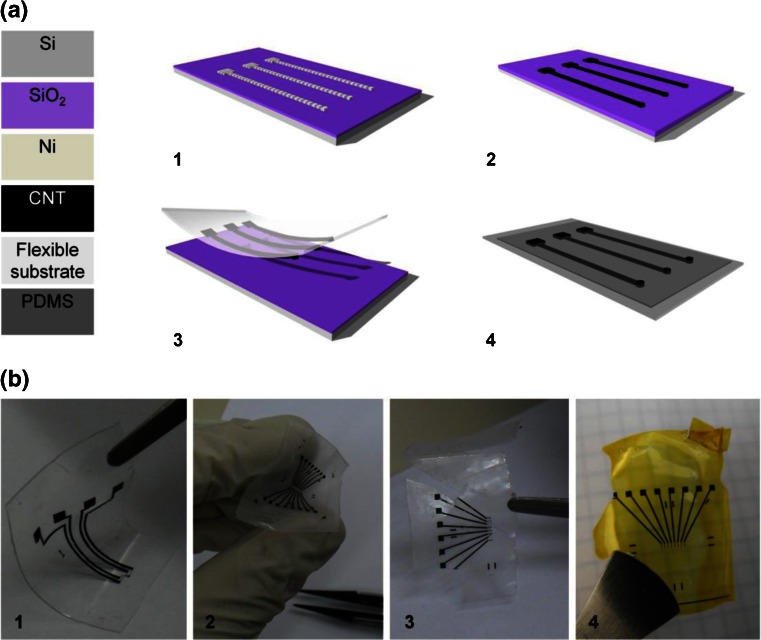
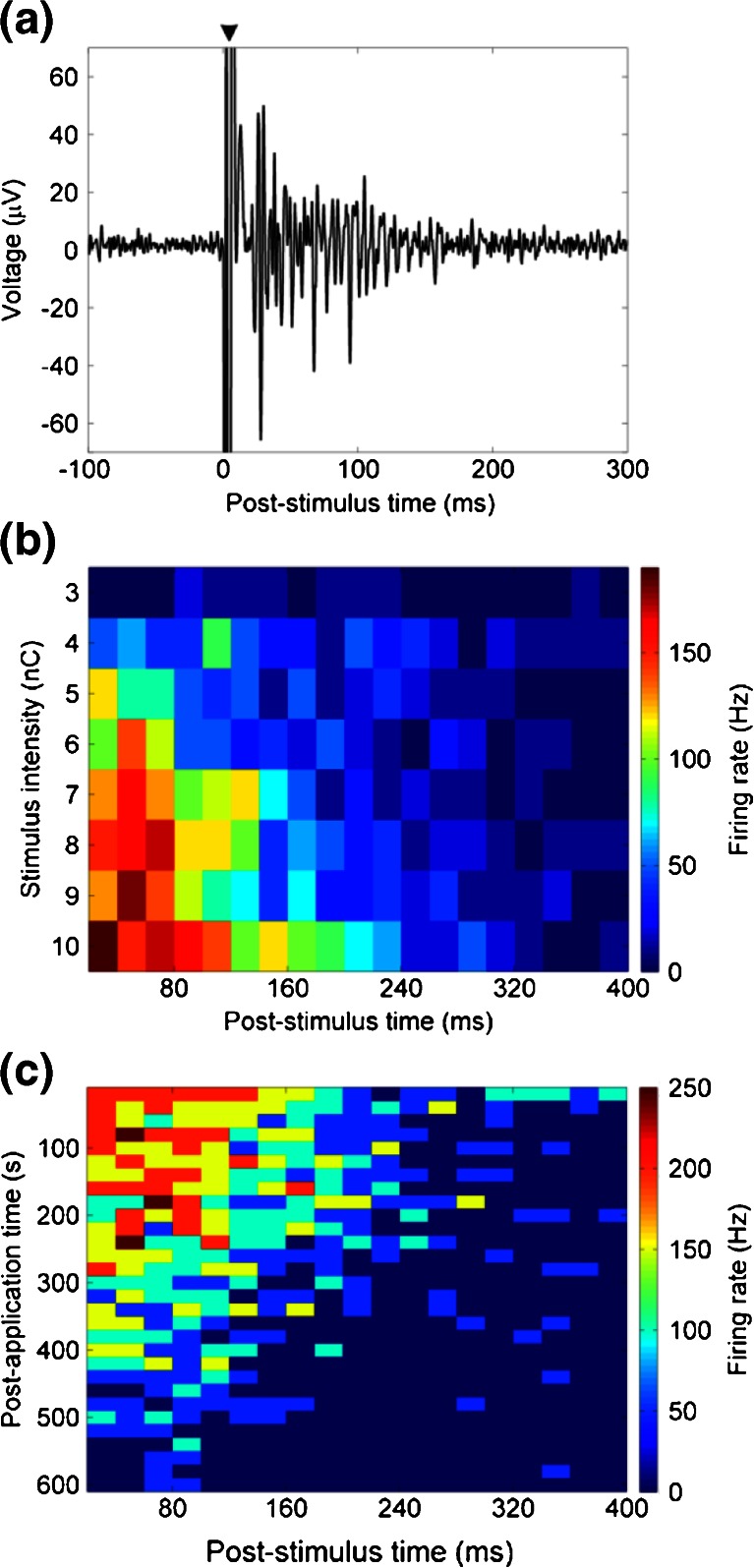
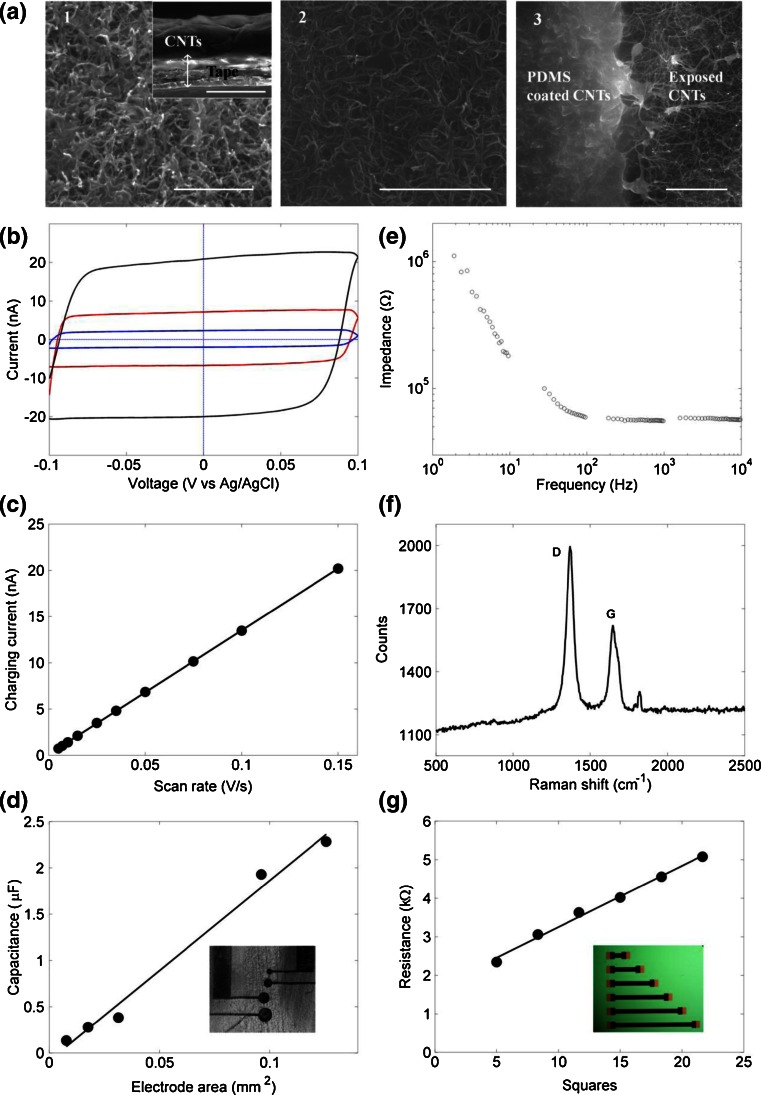
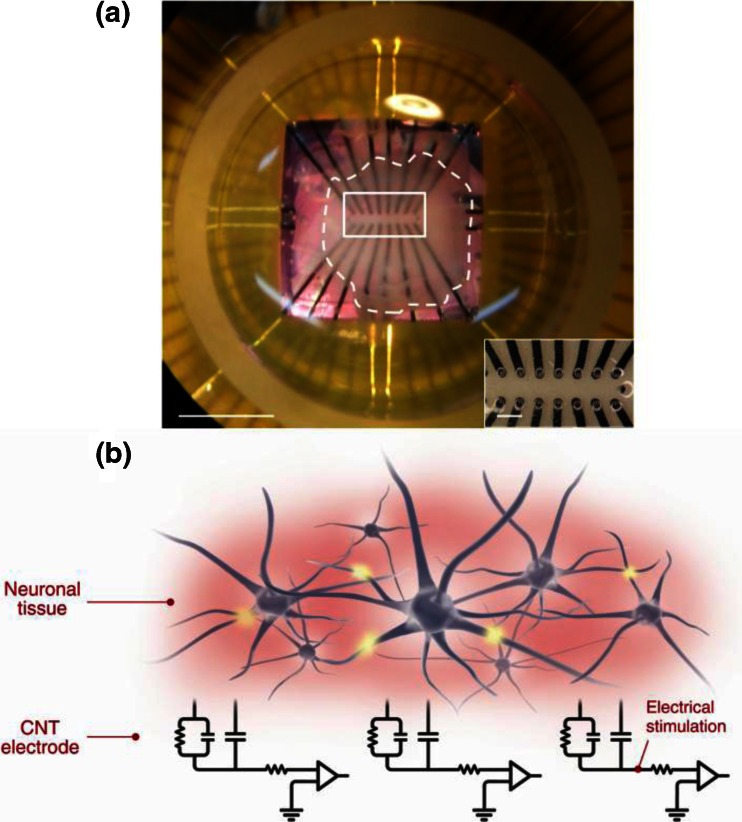
Neuro-prosthetic devices aim to restore impaired function through artificial stimulation of the nervous system. A lingering technological bottleneck in this field is the realization of soft, micron sized electrodes capable of injecting enough charge to evoke localized neuronal activity without causing neither electrode nor tissue damage. Direct stimulation with micro electrodes will offer the high efficacy needed in applications such as cochlear and retinal implants. Here we present a new flexible neuronal micro electrode device, based entirely on carbon nanotube technology, where both the conducting traces and the stimulating electrodes consist of conducting carbon nanotube films embedded in a polymeric support. The use of carbon nanotubes bestows the electrodes flexibility and excellent electrochemical properties. As opposed to contemporary flexible neuronal electrodes, the technology presented here is both robust and the resulting stimulating electrodes are nearly purely capacitive. Recording and stimulation tests with chick retinas were used to validate the advantageous properties of the electrodes and demonstrate their suitability for high-efficacy neuronal stimulation applications.
神经修复设备旨在通过对神经系统进行人工刺激来恢复受损功能。该领域中一个悬而未决的技术瓶颈是实现柔软的、微米级大小的电极,这些电极能够注入足够的电荷以引发局部神经元活动,而不会造成电极或组织损伤。微电极的直接刺激将为耳蜗和视网膜植入等应用提供所需的高效性。在这里,我们提出了一种基于完全基于碳纳米管技术的新型柔性神经元微电极设备,其中导电迹线和刺激电极都由嵌入聚合物基底中的导电碳纳米管膜组成。碳纳米管的使用赋予了电极柔韧性和优异的电化学性能。与当代柔性神经元电极不同,这里提出的技术既坚固耐用,而且产生的刺激电极几乎完全是电容性的。使用鸡视网膜进行的记录和刺激测试验证了电极的优势特性,并证明了它们适用于高效神经元刺激应用。