Scott Craig S, Nagasawa Pamela R, Abernethy Neil F, Ramsey Bonnie W, Martin Paul J, Hacker Beth M, Schwartz Havivah D, Brock Douglas M, Robins Lynn S, Wolf Fred M, Carter-Dubois Marie, Disis Mary L
Department of Biomedical Informatics and Medical Education, University of Washington, Seattle, WA, USA.
Eval Health Prof. 2014 Mar;37(1):83-97. doi: 10.1177/0163278713500984. Epub 2013 Sep 23.
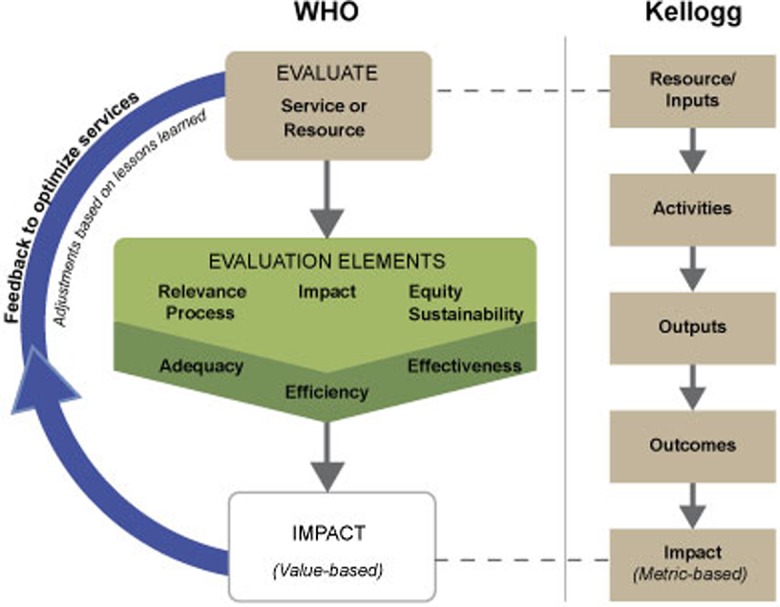
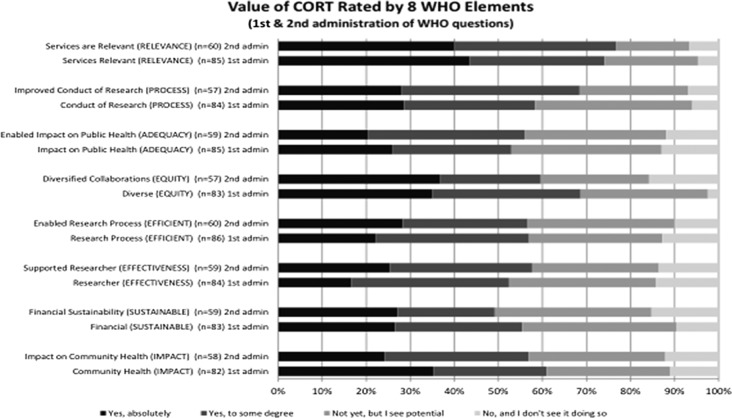
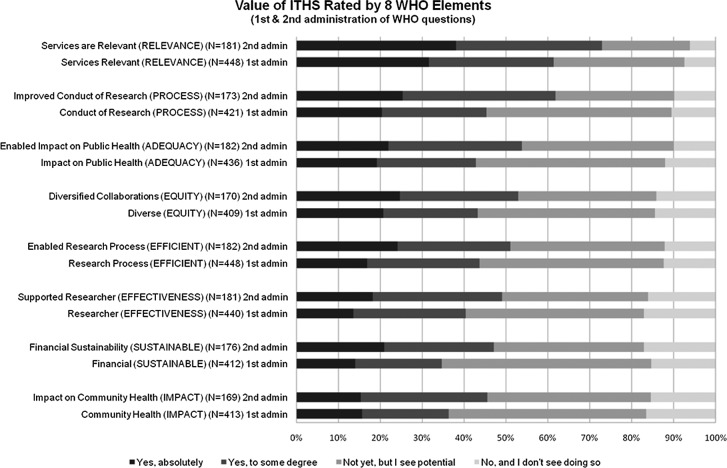
The University of Washington (UW) Institute for Translational Health Sciences (ITHS), funded by a Clinical and Translational Sciences Award program, has supplemented its initial Kellogg Logic Model-based program evaluation with the eight judgment-based evaluative elements of the World Health Organization's (WHO) Health Services Assessment Model. This article describes the relationship between the two models, the rationale for the decision to supplement the evaluation with WHO evaluative elements, the value-added results of the WHO evaluative elements, and plans for further developing the WHO assessments.
华盛顿大学(UW)转化健康科学研究所(ITHS)由临床与转化科学奖计划资助,它在世卫组织(WHO)卫生服务评估模型的八项基于判断的评估要素基础上,对其最初基于凯洛格逻辑模型的项目评估进行了补充。本文描述了这两种模型之间的关系、决定用世卫组织评估要素补充评估的理由、世卫组织评估要素带来的增值结果,以及进一步开展世卫组织评估的计划。