Karimi-Busheri Feridoun, Rasouli-Nia Aghdass, Zadorozhny Victoria, Fakhrai Habib
Stem Cell Department, NovaRx Corporation, 6828 Nancy Ridge Drive, San Diego, USA.
Multidiscip Respir Med. 2013 Oct 5;8(1):65. doi: 10.1186/2049-6958-8-65.
Lung cancer is the leading cause of death among cancers in the world. The annual death toll due to this disease exceeds the combined deaths caused by colon, breast, prostate, and pancreatic cancers. As a result, there has been a tremendous effort to identify new biomarkers for early detection and diagnosis of lung cancer.
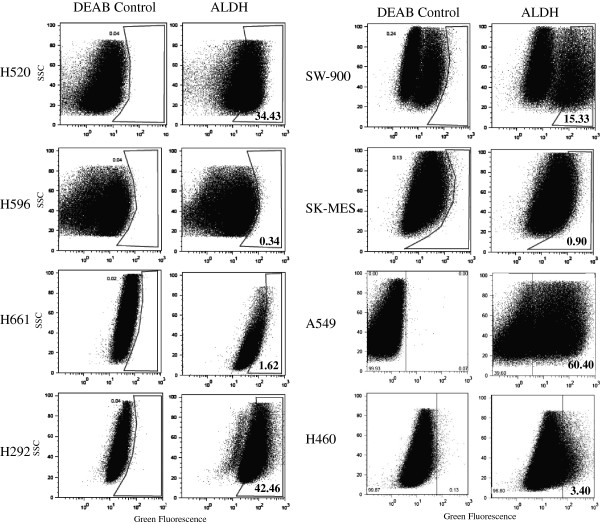
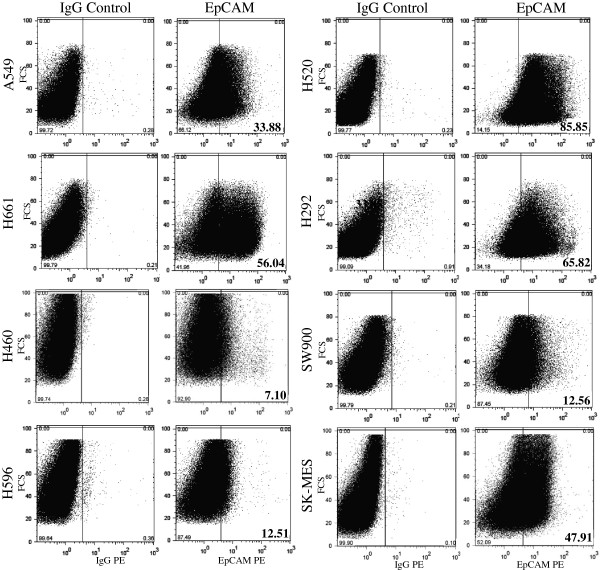
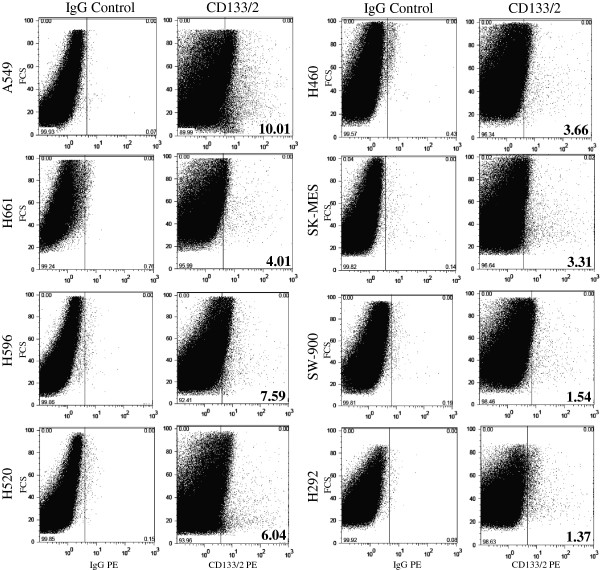
In this study we report the results of screening a panel of eight non-small cell lung cancer (NSCLC) cell lines originating from different subtypes of lung cancer in an attempt to identify potential biomarkers unique to this disease. We used real-time polymerase chain reaction and flow cytometry techniques to analyze the expression of ALDHA1, EpCAM, CD133, CD24, and CD38 in this panel.
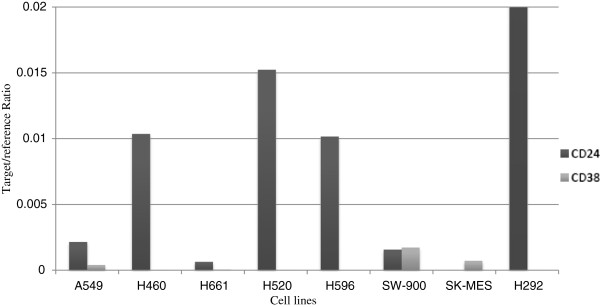
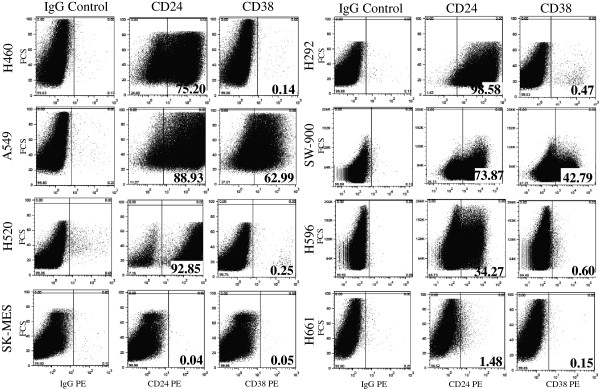
We demonstrate for the first time that the majority of NSCLC cells do not express levels of CD38 that would qualify it as a new biomarker for the disease. In contrast, we found that CD24 is over-expressed in 6 out of 8 of the cell lines. The combined CD24+/CD38-/low phenotype was detected in 50% of the cell lines that are also positive for CD133 and EpCAM.
We report that CD24+/CD38-/low signature could potentially be used as a new biomarker for the early detection of NSCLC.
肺癌是全球癌症死亡的主要原因。该疾病的年死亡人数超过了结肠癌、乳腺癌、前列腺癌和胰腺癌导致的死亡人数总和。因此,人们一直在大力寻找用于肺癌早期检测和诊断的新生物标志物。
在本研究中,我们报告了对一组源自肺癌不同亚型的8种非小细胞肺癌(NSCLC)细胞系进行筛选的结果,旨在识别该疾病特有的潜在生物标志物。我们使用实时聚合酶链反应和流式细胞术技术分析了该细胞系中ALDHA1、EpCAM、CD133、CD24和CD38的表达。
我们首次证明,大多数NSCLC细胞不表达足以使其成为该疾病新生物标志物的CD38水平。相反,我们发现8个细胞系中有6个细胞系中的CD24过表达。在50%同时对CD133和EpCAM呈阳性的细胞系中检测到CD24+/CD38-/低表型。
我们报告CD24+/CD38-/低特征可能用作NSCLC早期检测的新生物标志物。