Department of Biomedical Engineering, Duke University, Room 136 Hudson Hall, Box 90281, Durham, NC 27708, USA.
J Biomech. 2013 Nov 15;46(16):2761-8. doi: 10.1016/j.jbiomech.2013.09.008. Epub 2013 Sep 13.
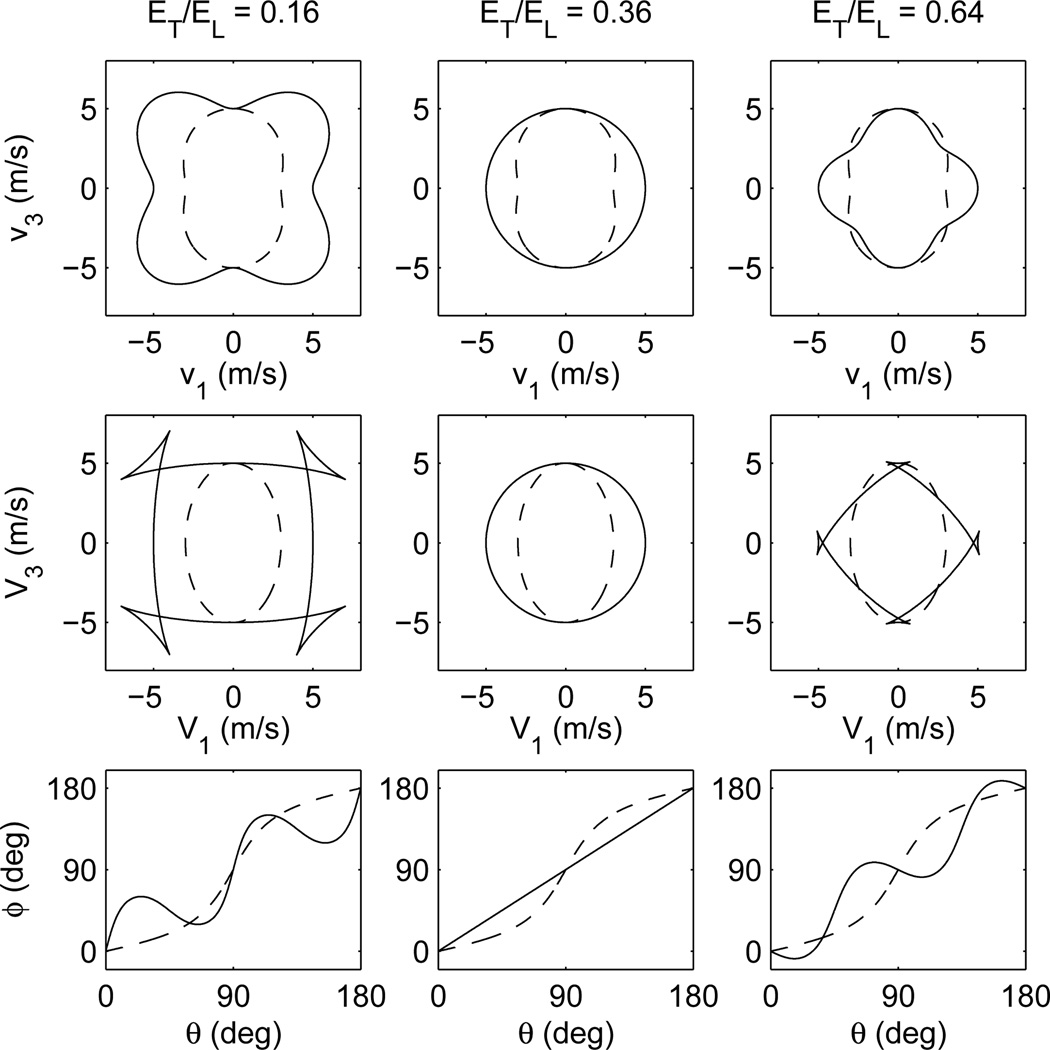
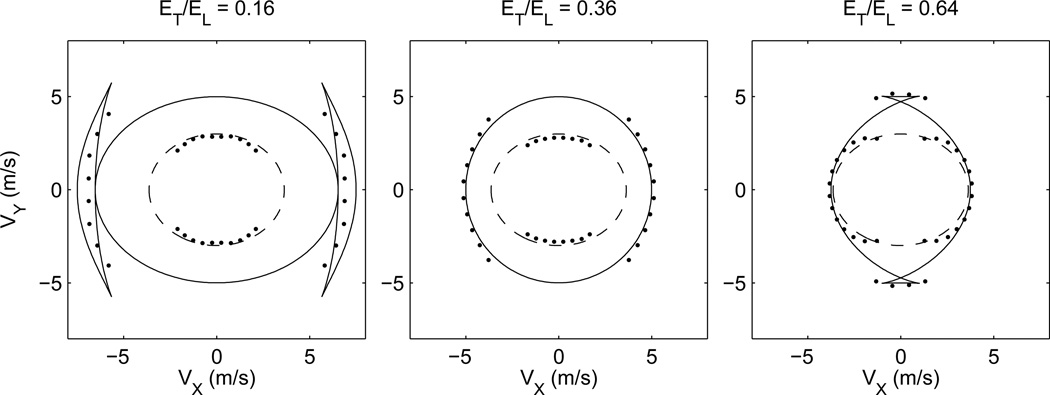
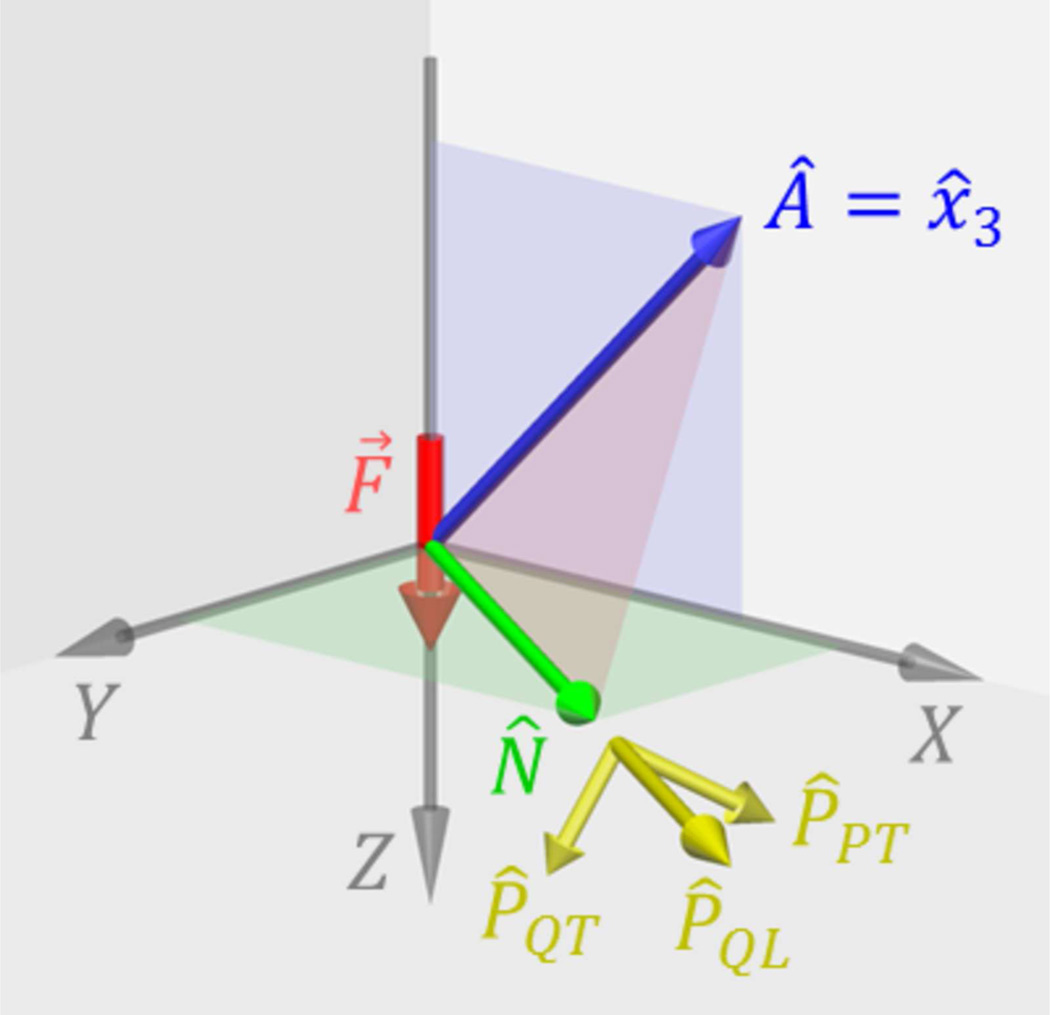
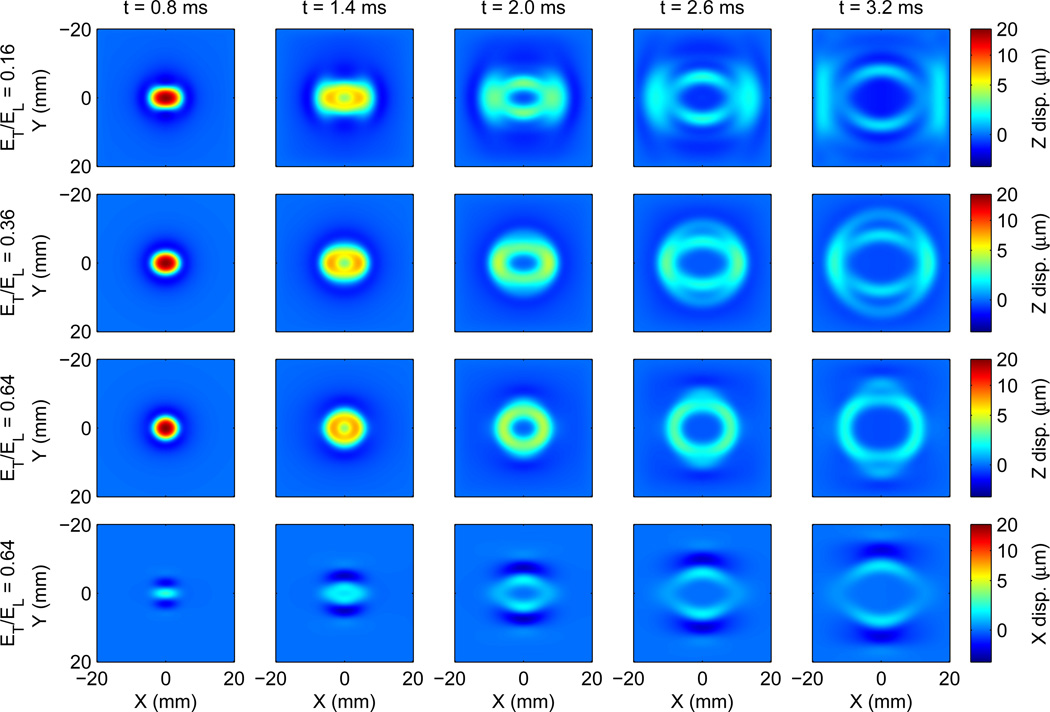
Elastic properties of materials can be measured by observing shear wave propagation following localized, impulsive excitations and relating the propagation velocity to a model of the material. However, characterization of anisotropic materials is difficult because of the number of elasticity constants in the material model and the complex dependence of propagation velocity relative to the excitation axis, material symmetries, and propagation directions. In this study, we develop a model of wave propagation following impulsive excitation in an incompressible, transversely isotropic (TI) material such as muscle. Wave motion is described in terms of three propagation modes identified by their polarization relative to the material symmetry axis and propagation direction. Phase velocities for these propagation modes are expressed in terms of five elasticity constants needed to describe a general TI material, and also in terms of three constants after the application of two constraints that hold in the limit of an incompressible material. Group propagation velocities are derived from the phase velocities to describe the propagation of wave packets away from the excitation region following localized excitation. The theoretical model is compared to the results of finite element (FE) simulations performed using a nearly incompressible material model with the five elasticity constants chosen to preserve the essential properties of the material in the incompressible limit. Propagation velocities calculated from the FE displacement data show complex structure that agrees quantitatively with the theoretical model and demonstrates the possibility of measuring all three elasticity constants needed to characterize an incompressible, TI material.
材料的弹性性质可以通过观察局部脉冲激励下剪切波的传播,并将传播速度与材料模型联系起来来测量。然而,各向异性材料的特性难以描述,这是因为材料模型中的弹性常数数量较多,并且传播速度相对于激励轴、材料对称性和传播方向的复杂依赖关系。在这项研究中,我们为不可压缩横观各向同性(TI)材料(如肌肉)中的脉冲激励后的波传播开发了一个模型。波运动通过相对于材料对称轴和传播方向的极化来描述三种传播模式。这些传播模式的相速度用描述一般 TI 材料所需的五个弹性常数来表示,在不可压缩材料的极限下应用两个约束后,也可以用三个常数来表示。群传播速度是从相速度中推导出来的,用于描述在局部激励后远离激励区域的波包传播。将理论模型与使用具有五个弹性常数的几乎不可压缩材料模型进行的有限元(FE)模拟结果进行了比较,这些常数的选择是为了在不可压缩极限下保留材料的基本特性。从 FE 位移数据计算得出的传播速度显示出复杂的结构,与理论模型定量一致,并证明了测量表征不可压缩 TI 材料所需的所有三个弹性常数的可能性。