Institute of Clinical Science, University of Bergen, N-5020 Bergen, Norway.
Lipids Health Dis. 2013 Oct 7;12:143. doi: 10.1186/1476-511X-12-143.
There is growing evidence that fish protein hydrolysate (FPH) diets affect mitochondrial fatty acid metabolism in animals. The aim of the study was to determine if FPH could influence fatty acid metabolism and inflammation in transgene mice expressing human tumor necrosis factor alpha (hTNFα).
hTNFα mice (C57BL/6 hTNFα) were given a high-fat (23%, w/w) diet containing 20% casein (control group) or 15% FPH and 5% casein (FPH group) for two weeks. After an overnight fast, blood, adipose tissue, and liver samples were collected. Gene expression and enzyme activity was analysed in liver, fatty acid composition was analyzed in liver and ovarian white adipose tissue, and inflammatory parameters, carnitine, and acylcarnitines were analyzed in plasma.
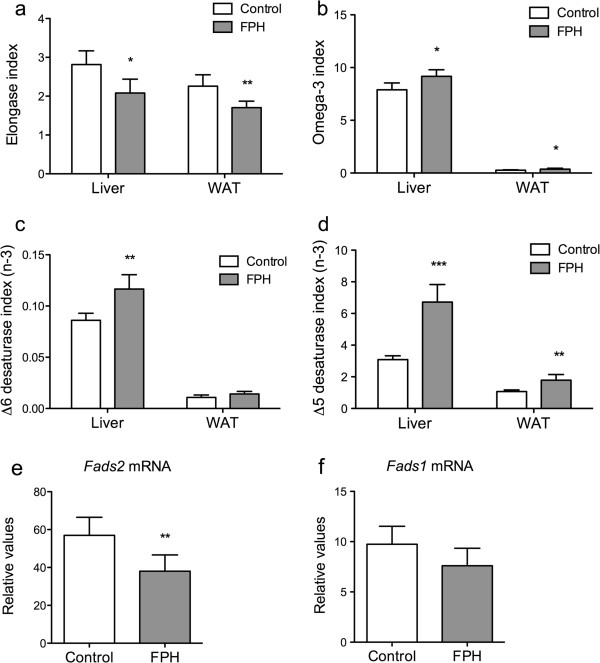
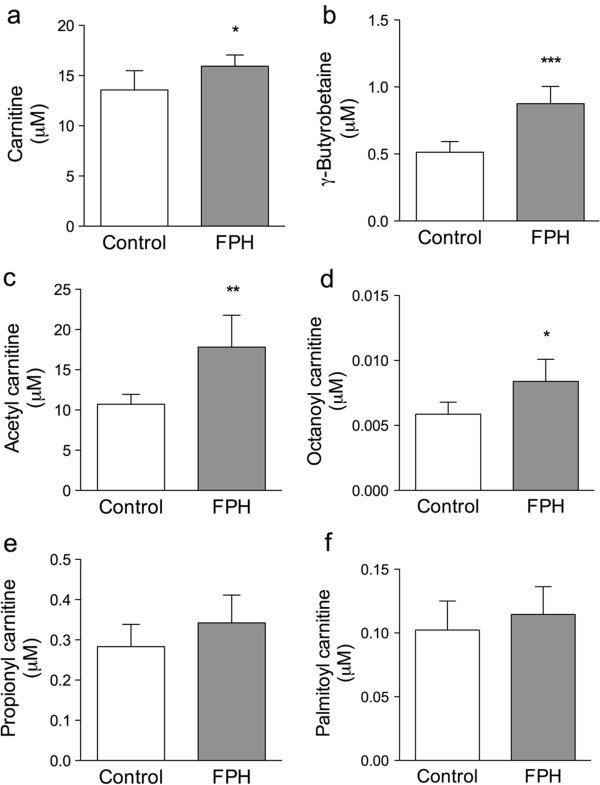
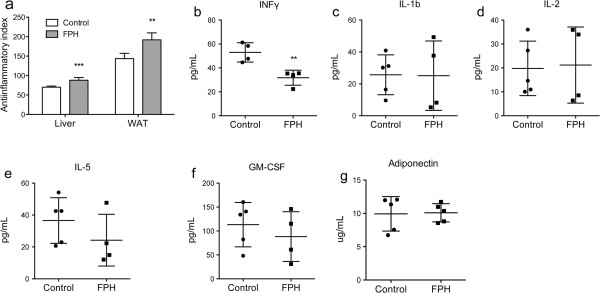
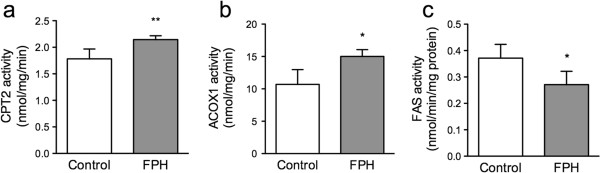
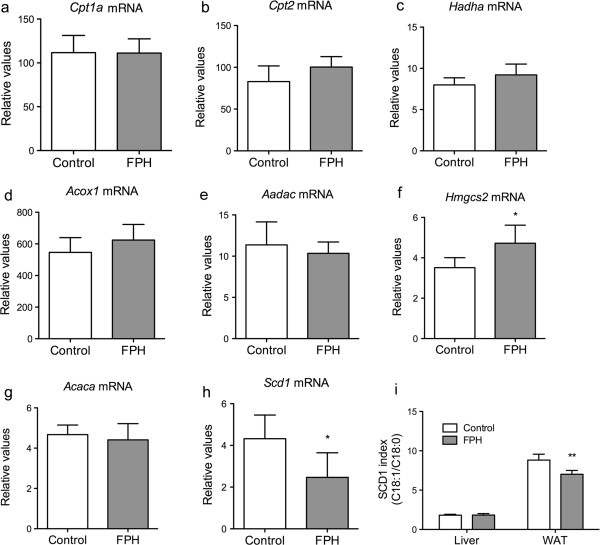
The n-3/n-6 fatty acid ratio was higher in mice fed the FPH diet than in mice fed the control diet in both adipose tissue and liver, and the FPH diet affected the gene expression of ∆6 and ∆9 desaturases. Mice fed this diet also demonstrated lower hepatic activity of fatty acid synthase. Concomitantly, a lower plasma INF-γ level was observed. Plasma carnitine and the carnitine precursor γ-butyrobetaine was higher in the FPH-group compared to control, as was plasma short-chained and medium-chained acylcarnitine esters. The higher level of plasma acetylcarnitine may reflect a stimulated mitochondrial and peroxisomal β-oxidation of fatty acids, as the hepatic activities of peroxisomal acyl-CoA oxidase 1 and mitochondrial carnitine palmitoyltransferase-II were higher in the FPH-fed mice.
The FPH diet was shown to influence hepatic fatty acid metabolism and fatty acid composition. This indicates that effects on fatty acid metabolism are important for the bioactivity of protein hydrolysates of marine origin.
越来越多的证据表明,鱼蛋白水解物(FPH)饮食会影响动物的线粒体脂肪酸代谢。本研究旨在确定 FPH 是否可以影响表达人肿瘤坏死因子α(hTNFα)的转基因小鼠的脂肪酸代谢和炎症。
给予 hTNFα 小鼠(C57BL/6 hTNFα)高脂肪(23%,w/w)饮食,其中含有 20%乳清蛋白(对照组)或 15% FPH 和 5%乳清蛋白(FPH 组)两周。禁食过夜后,采集血液、脂肪组织和肝脏样本。分析肝脏中的基因表达和酶活性、肝和卵巢白色脂肪组织中的脂肪酸组成以及血浆中的炎症参数、肉碱和酰基肉碱。
与对照组相比,FPH 饮食组的 n-3/n-6 脂肪酸比例在脂肪组织和肝脏中均较高,且 FPH 饮食影响了 ∆6 和 ∆9 去饱和酶的基因表达。该饮食还导致肝脂肪酸合酶活性降低。同时,观察到血浆 INF-γ 水平降低。与对照组相比,FPH 组的血浆肉碱和肉碱前体 γ-丁羟丁酸水平较高,血浆短链和中链酰基肉碱酯水平也较高。血浆乙酰肉碱水平升高可能反映了脂肪酸的线粒体和过氧化物酶体β-氧化受到刺激,因为 FPH 喂养的小鼠肝过氧化物酶体酰基辅酶 A 氧化酶 1 和线粒体肉碱棕榈酰基转移酶 II 的活性较高。
FPH 饮食可影响肝脏脂肪酸代谢和脂肪酸组成。这表明对脂肪酸代谢的影响对于海洋源蛋白质水解物的生物活性很重要。