The Center of Infectious Diseases, Beijing Ditan Hospital, Capital Medical University, No. 8 East Jingshun Street, Chaoyang District, Beijing, 100015, China,
Infection. 2014 Feb;42(1):127-33. doi: 10.1007/s15010-013-0533-9. Epub 2013 Oct 16.
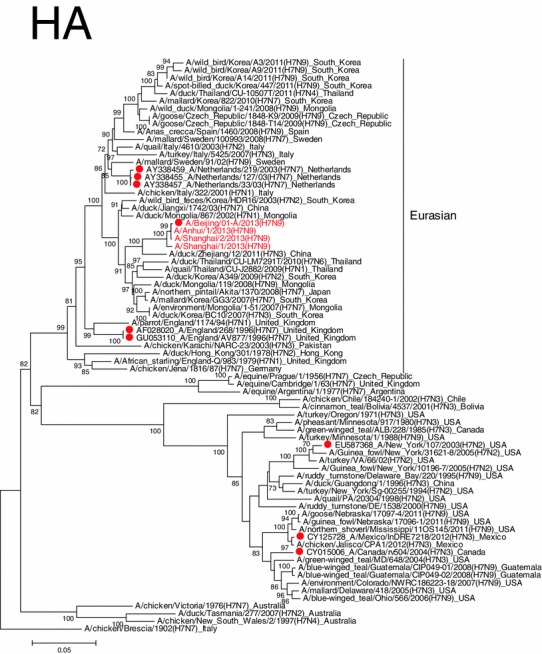
Human infections with avian influenza A (H7N9) virus manifested in China in March 2013. The first case infected with H7N9 virus in Beijing involved a family member of a chicken dealer and was reported in April 2013. The clinical and epidemiological characteristics of this case and her parents were examined to illustrate some key traits regarding this novel H7N9 virus.
The index case was subjected to intensive clinical examination in order to observed the clinical process. Real-time PCR was used to confirm cases infected with H7N9 virus. The index case was administered oseltamivir (45 mg, twice daily) at the early stage of the infection. Sera were collected from the index case and her parents from the onset of illness onwards. The subjects were followed for 4 weeks.
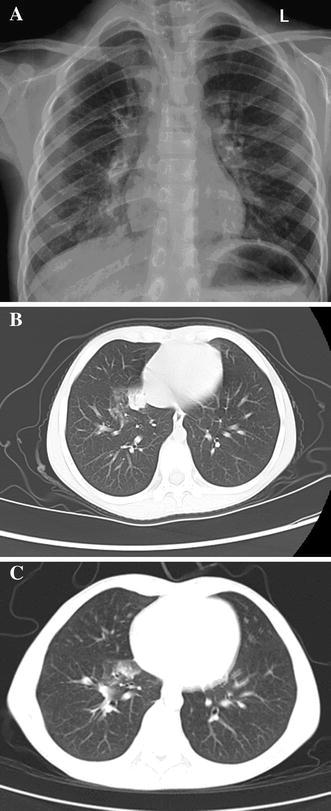
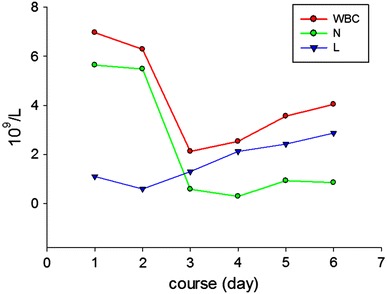
The sera were confirmed by neutralizing antibody tests. The index case's clinical manifestation progressed quickly. The pharyngeal swab tested positive for influenza A based on the detection of influenza A antigen (rapid influenza diagnostic test) 15 h after the onset of fever and was positive for H7N9 virus. The patient's temperature dropped to 36.2 °C 18 h after treatment by oseltamivir (32 h after fever). Cough and other symptoms alleviated rapidly. A number of specimens from the environment of this cluster and from the feces specimens tested positive for viral RNA of the H7N9 virus on the fourth day following onset of the index case's illness. Pharyngeal swabs of the mother tested positive for H7N9 virus twice, but she showed no clinical symptoms. Four weeks after disease onset, the family did not present any clinical symptoms, and the results of the physical examination and blood tests were normal. The mother and the case's sera had a fourfold increased neutralizing antibody titer.
Early diagnosis and early initiation of the treatment of confirmed infections is the most effective strategy for managing H7N9 virus infection. Human beings exposed to H7N9 virus may develop asymptomatic infection.
2013 年 3 月在中国出现了人感染甲型禽流感(H7N9)病毒病例。2013 年 4 月,北京首例感染 H7N9 病毒的病例涉及一名家禽经销商的家庭成员。对该病例及其父母的临床和流行病学特征进行了检查,以说明有关这种新型 H7N9 病毒的一些关键特征。
对该指数病例进行了强化临床检查,以观察其临床过程。使用实时 PCR 来确认感染 H7N9 病毒的病例。在感染的早期,对该指数病例给予奥司他韦(45 mg,每日 2 次)治疗。从发病开始,从该指数病例及其父母采集血清。对患者进行了 4 周的随访。
通过中和抗体检测确认了血清。该指数病例的临床表现迅速进展。咽拭子在发热后 15 小时根据流感 A 抗原(快速流感诊断试验)检测呈甲型流感阳性,并且 H7N9 病毒阳性。奥司他韦治疗 18 小时后(发热后 32 小时),患者体温降至 36.2°C。咳嗽等症状迅速缓解。在该聚集病例的环境标本和粪便标本中,有许多标本在发病后第 4 天检测到 H7N9 病毒的病毒 RNA 呈阳性。母亲的咽拭子两次检测到 H7N9 病毒阳性,但她没有出现临床症状。发病 4 周后,该家庭没有出现任何临床症状,体格检查和血液检查结果正常。母亲和病例的血清具有四倍增加的中和抗体滴度。
早期诊断和早期启动确诊感染的治疗是管理 H7N9 病毒感染的最有效策略。接触 H7N9 病毒的人类可能会发生无症状感染。