Department of Otolaryngology, Head & Neck Surgery, Hadassah-Hebrew University Medical Center, Jerusalem, Israel.
J Cell Mol Med. 2014 Jan;18(1):181-6. doi: 10.1111/jcmm.12179. Epub 2013 Nov 28.
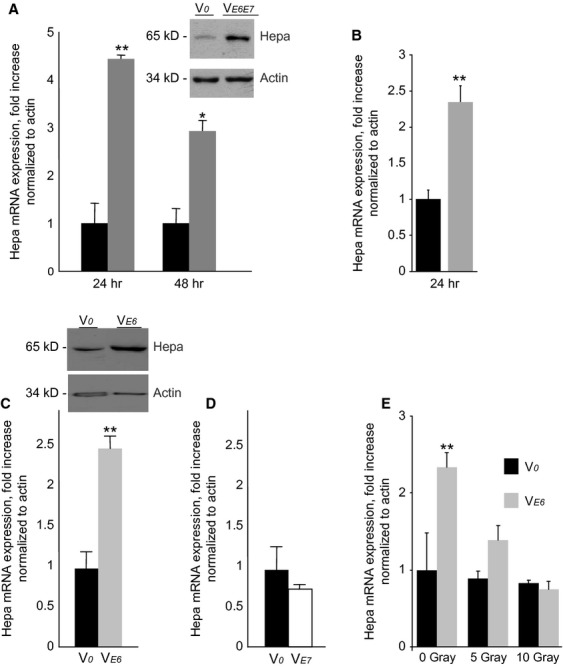
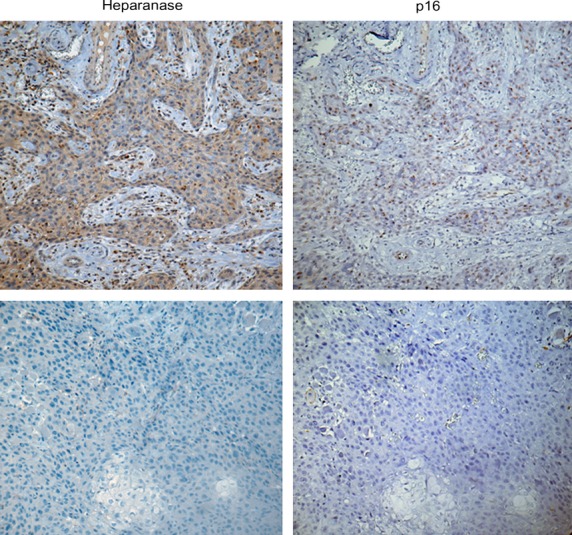
High-risk human papillomavirus (HPV)-positive head and neck squamous cell carcinomas (HNSCCs) are highly invasive; however the identity of downstream effectors responsible for their aggressive phenotype remains underinvestigated. Here, we report that HPV-mediated up-regulation of heparanase enzyme can provide mechanistic explanation for augmented invasiveness of HPV-positive HNSCCs. Heparanase is the sole mammalian enzyme (endo-β-d-glucuronidase) degrading heparan sulphate glycosaminoglycan, key polysaccharide of the extracellular matrix. Cleavage of heparan sulphate by heparanase leads to disassembly of extracellular barriers, enabling local invasion and metastatic spread of the tumour, and releases heparan sulphate-bound growth factors from the extracellular depots. Heparanase is tightly implicated in head and neck cancer progression; yet, molecular mechanisms underlying transcriptional activation of the heparanase gene in HNSCC are largely unknown. We found that HPV16 oncogene E6 is capable of inducing overexpression of heparanase in HNSCC. Notably, radiation treatment dose-dependently suppresses E6-induced heparanase expression in vitro. Our results provide the first evidence for a functional involvement of HPV in heparanase induction in head and neck tumourigenesis and, given ongoing clinical testing of several heparanase-inhibiting compounds, offer important avenue for future therapeutic exploration in HNSCC, as well as other HPV-associated malignancies (i.e. cervical carcinoma).
高危型人乳头瘤病毒(HPV)阳性头颈部鳞状细胞癌(HNSCC)具有高度侵袭性;然而,负责其侵袭表型的下游效应物的身份仍未得到充分研究。在这里,我们报告 HPV 介导的肝素酶酶的上调可以为 HPV 阳性 HNSCC 的侵袭性增强提供机制解释。肝素酶是唯一的哺乳动物酶(内-β-D-葡糖醛酸酶),可降解细胞外基质中关键多糖肝素硫酸糖胺聚糖。肝素酶对肝素硫酸的裂解导致细胞外屏障的解体,从而使肿瘤局部浸润和转移扩散,并从细胞外储存库中释放肝素硫酸结合的生长因子。肝素酶与头颈部癌症的进展密切相关;然而,HNSCC 中肝素酶基因转录激活的分子机制在很大程度上尚不清楚。我们发现 HPV16 致癌基因 E6 能够诱导 HNSCC 中肝素酶的过表达。值得注意的是,体外放射治疗剂量依赖性地抑制 E6 诱导的肝素酶表达。我们的研究结果首次为 HPV 在头颈部肿瘤发生中诱导肝素酶方面的功能参与提供了证据,并且鉴于正在对几种肝素酶抑制化合物进行临床测试,为 HNSCC 以及其他 HPV 相关恶性肿瘤(即宫颈癌)的未来治疗探索提供了重要途径。