Universita degli Studi dell'Insubria, Facolta di Medicina e Chirurgia, Dipartimento di Biotecnologie e Scienze della Vita, Viale Dunant, n.3 Varese, Italy, 21100.
Curr Med Chem. 2014;21(9):1129-45. doi: 10.2174/09298673113206660291.
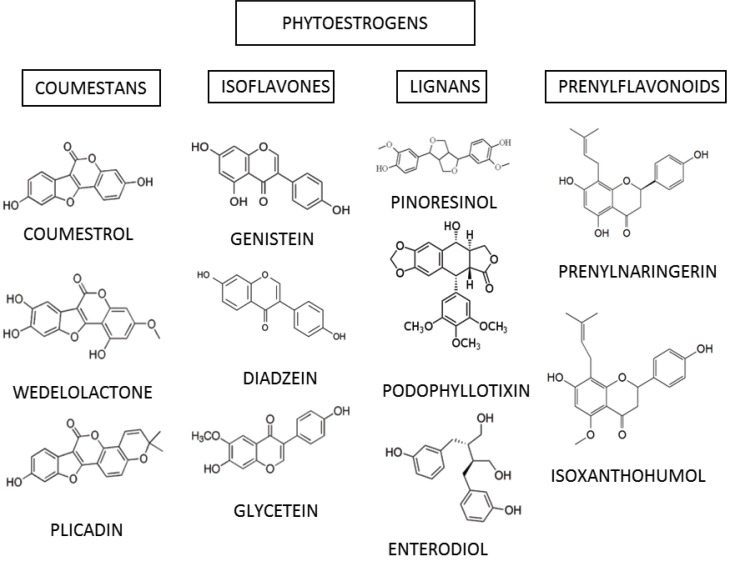
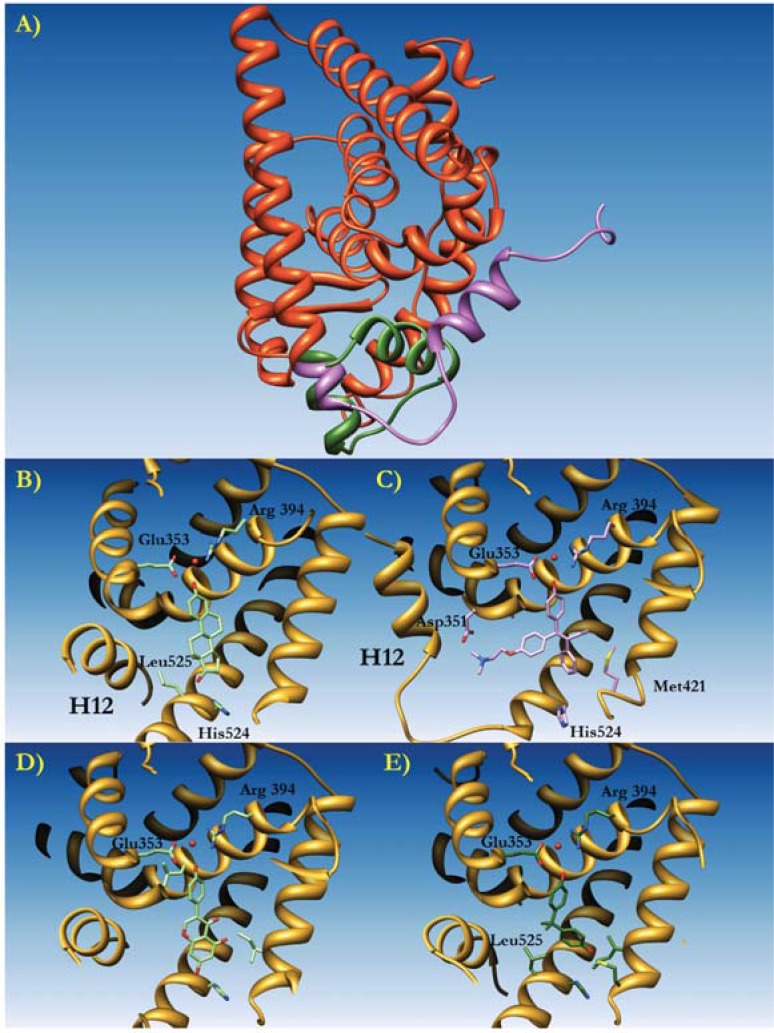
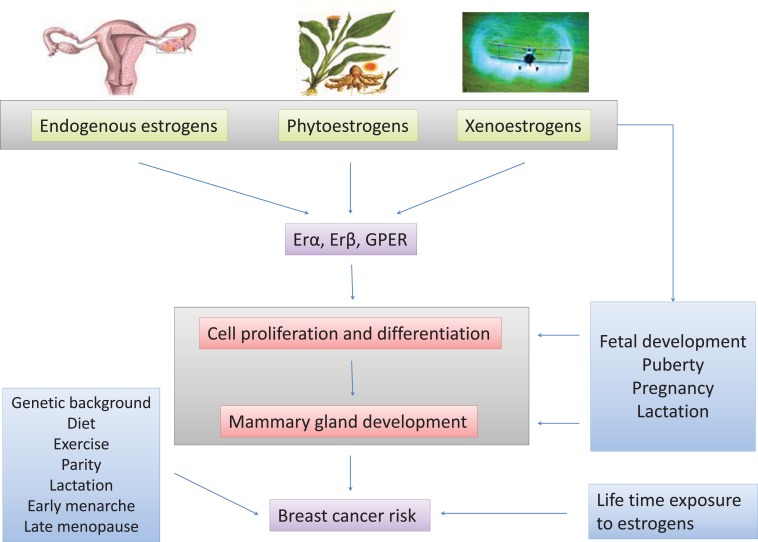
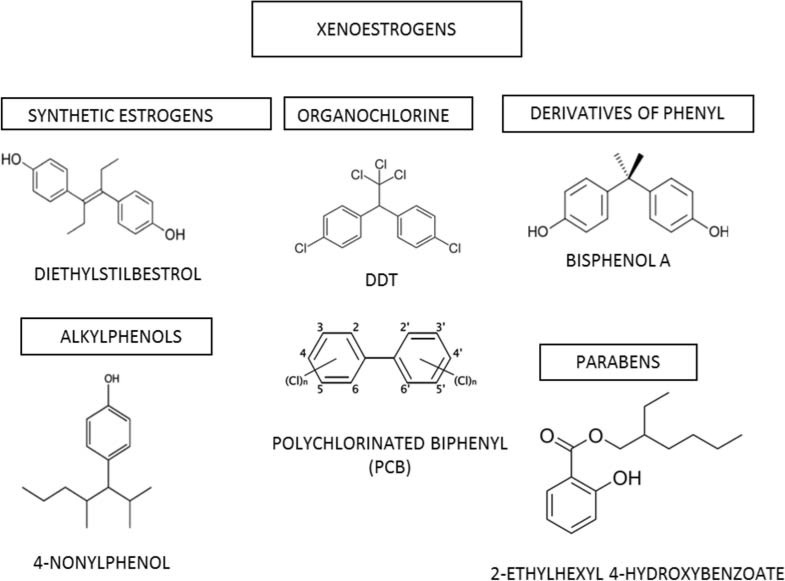
Observations on the role of ovarian hormones in breast cancer growth, as well as interest in contraception, stimulated research into the biology of estrogens. The identification of the classical receptors ERα and ERβ and the transmembrane receptor GPER and the resolution of the structure of the ligand bound to its receptor established the principal molecular mechanisms of estrogen action. The presence of estrogen-like compounds in many plants used in traditional medicine or ingested as food ingredients, phytoestrogens, as well as the estrogenic activities of many industrial pollutants and pesticides, xenoestrogens, have prompted investigations into their role in human health. Phyto- and xenoestrogens bind to the estrogen receptors with a lower affinity than the endogenous estrogens and can compete or substitute the hormone. Xenoestrogens, which accumulate in the body throughout life, are believed to increase breast cancer risk, especially in cases of prenatal and prepuberal exposure whereas the role of phytoestrogens is still a matter of debate. At present, the application of phytoestrogens appears to be limited to the treatment of post-menopausal symptoms in women where the production of endogenous estrogens has ceased. In this review we discuss chemistry, structure and classification, estrogen signaling and the consequences of the interactions of estrogens, phytoestrogens and xenoestrogens with their receptors, the complex interactions of endogenous and exogenous ligands, the evaluation of the health risks related to xenoestrogens, and the perspectives toward the synthesis of potent third generation selective estrogen receptor modulators (SERMs).
对卵巢激素在乳腺癌生长中的作用的观察,以及对避孕的关注,激发了对雌激素生物学的研究。经典受体 ERα 和 ERβ 以及跨膜受体 GPER 的鉴定,以及配体与其受体结合的结构的解析,确立了雌激素作用的主要分子机制。许多传统医学中使用的植物或作为食物成分摄入的植物中存在类雌激素化合物,植物雌激素,以及许多工业污染物和农药的雌激素活性,异雌激素,促使人们研究它们在人类健康中的作用。植物雌激素和异雌激素与雌激素受体的结合亲和力低于内源性雌激素,并且可以竞争或替代激素。异雌激素在整个生命过程中在体内积累,被认为会增加乳腺癌的风险,特别是在产前和青春期暴露的情况下,而植物雌激素的作用仍然存在争议。目前,植物雌激素的应用似乎仅限于治疗已经停止产生内源性雌激素的绝经后妇女的症状。在这篇综述中,我们讨论了化学、结构和分类、雌激素信号转导以及雌激素、植物雌激素和异雌激素与其受体相互作用的后果,内源性和外源性配体的复杂相互作用,与异雌激素相关的健康风险的评估,以及对合成有效第三代选择性雌激素受体调节剂 (SERM) 的展望。