Department of Computing Science, University of Alberta, Edmonton, AB, Canada T6G 2E8.
Biomed Res Int. 2013;2013:303982. doi: 10.1155/2013/303982. Epub 2013 Nov 7.
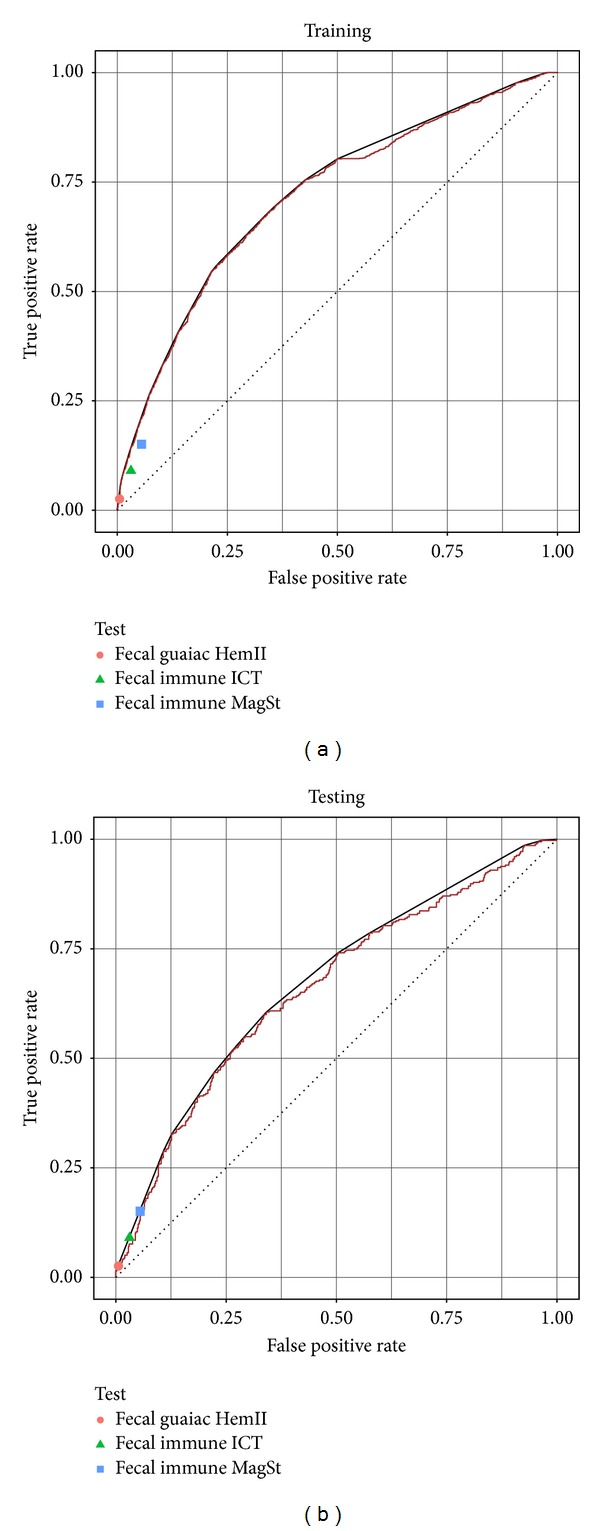
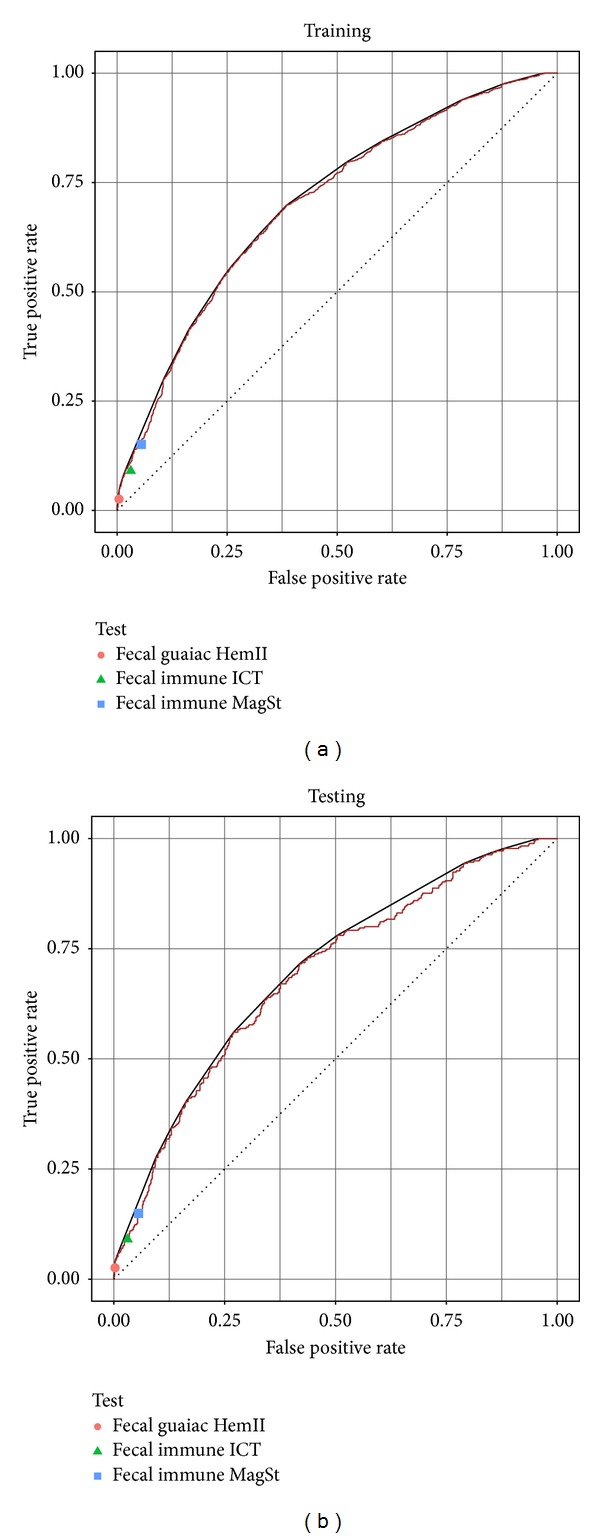
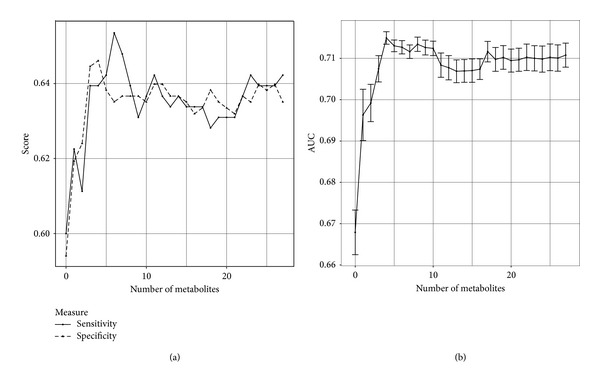
We report an automated diagnostic test that uses the NMR spectrum of a single spot urine sample to accurately distinguish patients who require a colonoscopy from those who do not. Moreover, our approach can be adjusted to tradeoff between sensitivity and specificity. We developed our system using a group of 988 patients (633 normal and 355 who required colonoscopy) who were all at average or above-average risk for developing colorectal cancer. We obtained a metabolic profile of each subject, based on the urine samples collected from these subjects, analyzed via (1)H-NMR and quantified using targeted profiling. Each subject then underwent a colonoscopy, the gold standard to determine whether he/she actually had an adenomatous polyp, a precursor to colorectal cancer. The metabolic profiles, colonoscopy outcomes, and medical histories were then analysed using machine learning to create a classifier that could predict whether a future patient requires a colonoscopy. Our empirical studies show that this classifier has a sensitivity of 64% and a specificity of 65% and, unlike the current fecal tests, allows the administrators of the test to adjust the tradeoff between the two.
我们报告了一种自动化诊断测试,该测试使用单个尿液样本的 NMR 谱图,可准确区分需要结肠镜检查的患者和不需要结肠镜检查的患者。此外,我们的方法可以根据灵敏度和特异性进行调整。我们使用一组 988 名患者(633 名正常患者和 355 名需要结肠镜检查的患者)开发了我们的系统,这些患者均处于结直肠癌发展的平均或以上风险中。我们基于从这些受试者收集的尿液样本,获得了每个受试者的代谢特征,通过(1)H-NMR 进行分析,并通过靶向分析进行定量。然后,每个受试者接受结肠镜检查,这是确定他/她是否确实患有结直肠腺瘤(结直肠癌的前兆)的金标准。然后使用机器学习分析代谢特征、结肠镜检查结果和病史,以创建一个可以预测未来患者是否需要结肠镜检查的分类器。我们的实证研究表明,该分类器的灵敏度为 64%,特异性为 65%,与当前的粪便检测不同,它允许测试管理员在两者之间进行调整。